Visiting Trier, Germany: A Complete Guide on What to See and Do
Located on the Moselle River, Trier is a typical German town, much like dozens of others you can find in the Moselle wine region.
But one thing sets Trier apart: the town claims that it has been continually inhabited since 1300 BC (give or take a few years).
Visiting Trier while you’re in Germany provides a fascinating look at the Roman and Middle Ages time periods, two areas of Germany history that are often lost among the many 20th century war memorials and sites.
While it does require some planning to visit from one of Germany’s major cities, Trier is well worth your time, and it’s one of my favorite smaller cities in the country.
In the guide below, I’m sharing all of my recommendations on what to see and do here, as well as suggestions on where to eat and sleep.
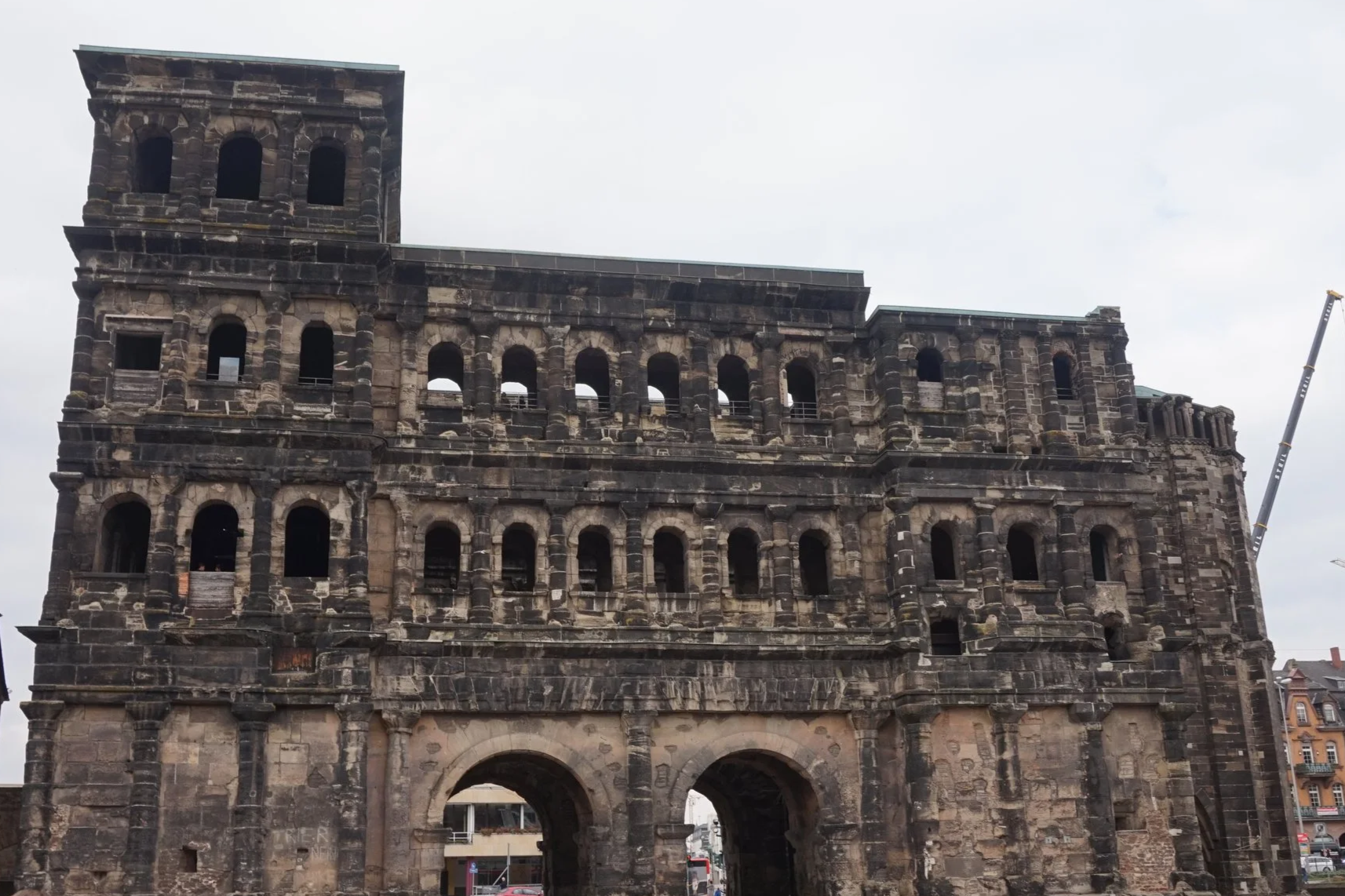
The Porta Nigra, the most easily recognizable Roman building in Trier
This post contains affiliates. If you purchase through the links below, I will receive a commission at no charge to you.
Where is Trier, Germany?
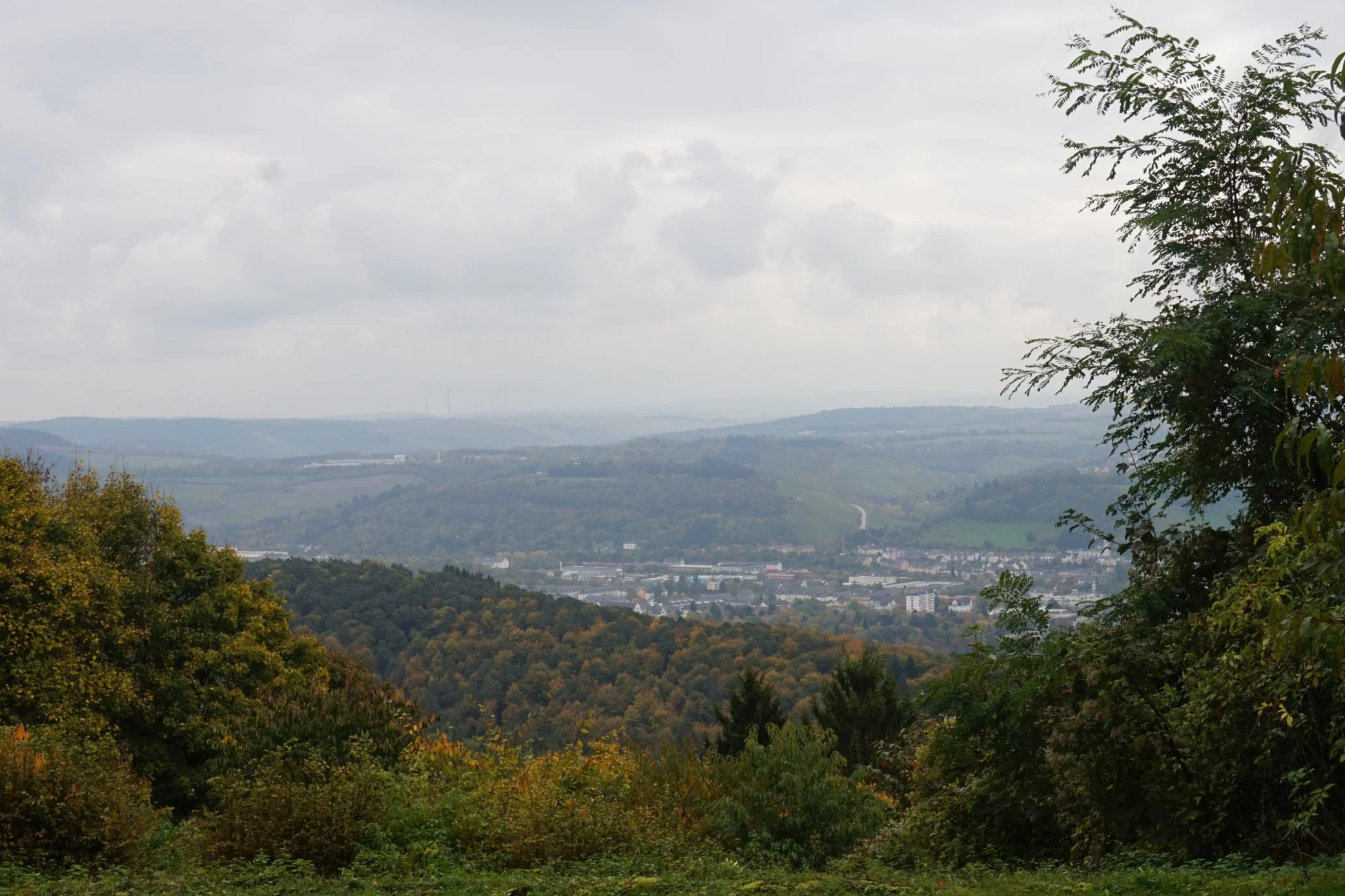
Trier, Germany, from the surrounding hillsides
Given the sheer number of Roman ruins in Trier, Germany, I’m surprised that it isn’t as well known as other outposts of antiquity in Europe like Bath, England, or Ephesus, Turkey.
But, Trier’s geography is what’s working against it. You have to want to go to Trier.
In fact, the closest city to Trier is Luxembourg City, the capital of the beautiful, but tiny European country Luxembourg.
If you do make it to Trier, Luxembourg City is an easy day trip. Here are a couple of helpful posts to guide your time there:
If you’re focusing your time in Germany, Trier is a little over 2 hours by car from Frankfurt, 2.5 hours from Dusseldorf, 3 hours from Stuttgart, 6 hours from Munich, and 8 hours from Berlin.
Trier is in the Moselle Valley, a gorgeous part of southwestern Germany that also bleeds over into eastern Luxembourg and part of France.
It’s named after the Moselle River, which forms the backbone of the valley.
Note: you’ll see it spelled both “Moselle” and “Mosel,” with “Mosel” being the Germany version, and “Moselle” being the English version.
For ease of use, I’ll refer to it as the Moselle Valley/Region throughout this post, but keep in mind that you’ll see it on signs as “Mosel” or “Moseltal” once you’re in Germany.
Whatever you call it, Trier is widely known as Germany’s oldest city, thanks to the unbroken and well documented human settlements that have been here.
Trier’s excellent location on the banks of the Moselle River led to the city’s meteoric growth during the Roman era, and historians believed that as many as 100,000 Romans lived here at its peak (which is about the same as the current city’s population!).
We stopped by Trier in between our adventures in Luxembourg and the cute town of Bacharach while on our 10 day road trip through Germany’s Bavaria region and beyond.
Best Things to See and Do in Trier
If you love learning about history, seeing ruins, and exploring adorable squares and side streets, you’re going to adore Trier.
It has one of the highest concentrations of Roman ruins outside of Rome, and, because of this, much of the city center has been named an UNESCO World Heritage Site.
Porta Nigra
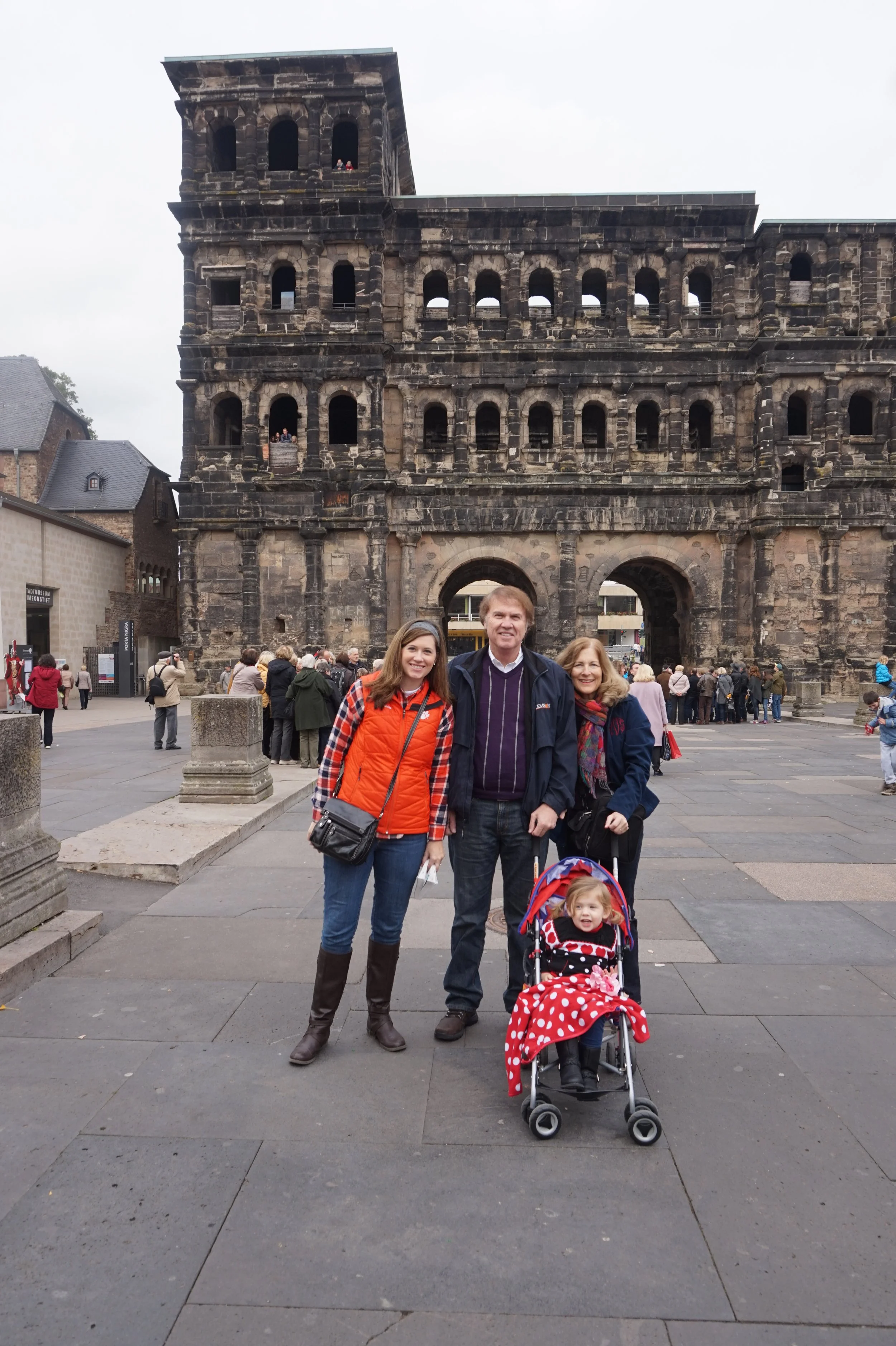
My parents, my daughter, and me in front of the Porta Nigra
Trier was founded in 15 BCE by the Romans.
They were busy fellows, but in between building their empire and trying to obfuscate local culture, they liked to relax.
Trier, in its heyday, was the happening place for the Roman emperors, who would come to the city for their R&R.
Even Constantine (the emperor, not the comic book character) retreated here, the capital of the Roman Empire under his watch, to ponder his vast power.
The city was walled back then and guarded by four gates, each of which was held together skillfully only with iron pegs.
By the medieval period, the Roman Empire and its holdings in Trier were a distant dream, and all but one of the original Roman gates to the city had been taken apart stone by stone by locals.
The last one, the one that still stands today, was saved inadvertently from destruction by one St. Simeon.
Back in the day, he was considered a religious recluse and spent seven years inside the crumbling, drafty ruins of the gate.
The lack of social interaction, the harsh German weather, and absence of indoor heating were not kind to St. Simeon, and the seven years he spent in the gate were his last.
Others were so inspired by his commitment to the cause that they founded a monastery and church in his name within the Porta Nigra. The structure survived for another 800 years until Napoleon dismantled the church (he probably would've liked those Romans so many years before).
Today, there's not much left to the gate inside, but the massive, hulking structure is still worth exploring.
It's dark, ancient facade is at odds with the 19th, 20th, and 21st century buildings just steps away, but I think that's part of its charm.
The layered history of Trier--from the Romans to the medieval period to the 1800s to present--is nowhere more apparent than it is standing in front of the Porta Nigra.
Karl Marx House
Karl Marx's childhood home is just a few steps away from the Porta Nigra, so you can span over 2000 years of history just by walking half a block.
There's a museum inside if you want to learn more about the iconic political writer.
While Marx ultimately fled to England, writing much of Das Kapital in London’s British Museum, he was born and grew up here in Trier.
The building that houses the Karl Marx Museum is the one where the writer was born, though the family moved around the time that he was 18 months old.
The home he moved into is just a stone’s throw from the one where the museum is.
Today, you can walk through the building, which follows the life, writings, and political influence of Marx.
The museum is open daily between mid-March and mid-November. It is closed on Mondays during the winter.
Trier Cathedral
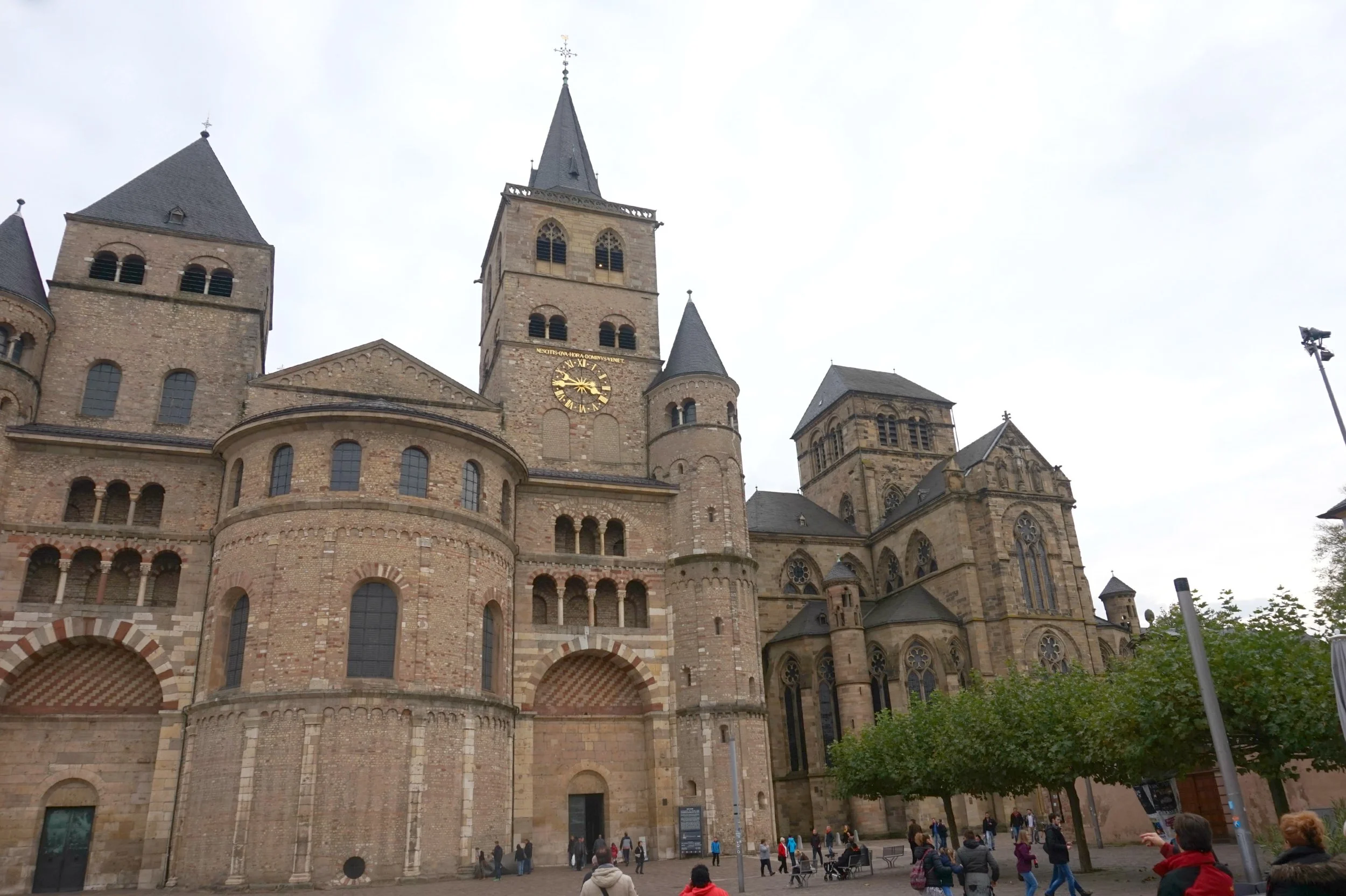
Exterior of the Trier Cathedral (left) and Church of Our Lady (right)
When you turn the corner from Trier's main square in search of the cathedral, you'll probably stop in your tracks when you see it.
The building is massive in a way that your brain just cannot comprehend on first glance. As you get closer, the cathedral looms over you.
Trier Cathedral, sometimes called the Cathedral of St. Peter, was built by Emperor Constantine at the same time as St. Peter's in Rome, and the strong Christian faith that Constantine and his mother (Helena, who was later beatified) is clear in the cathedral's immensity.
Helena, in fact, was so devoted to the idea of a cathedral in Trier, that she offered up part of her palace so that the church could be constructed in its place.
Yet, as big as it is, the original Roman structure was supposed to be four times its original size. The failing Roman empire and loss of power kept Constantine from seeing his full project through to the end.
As with all great European structures, the Trier Cathedral has had several phases to its existences: Constantine built it, the Franks let it fall into ruin, and the Normans destroyed it. It was revived once more in the early 1000s, and has been added onto over the last millenia, resulting in its Romanesque-Baroque-Gothic styling.
If you're interested in religious relics (those holy objects that the medieval churchgoers loved to collect and showcase), you'll find three here: a scrap of what is supposedly Jesus' robe, a nail from the cross, and the sandal of St. Andrew.
Explore more of Germany with these helpful posts:
Church of Our Lady
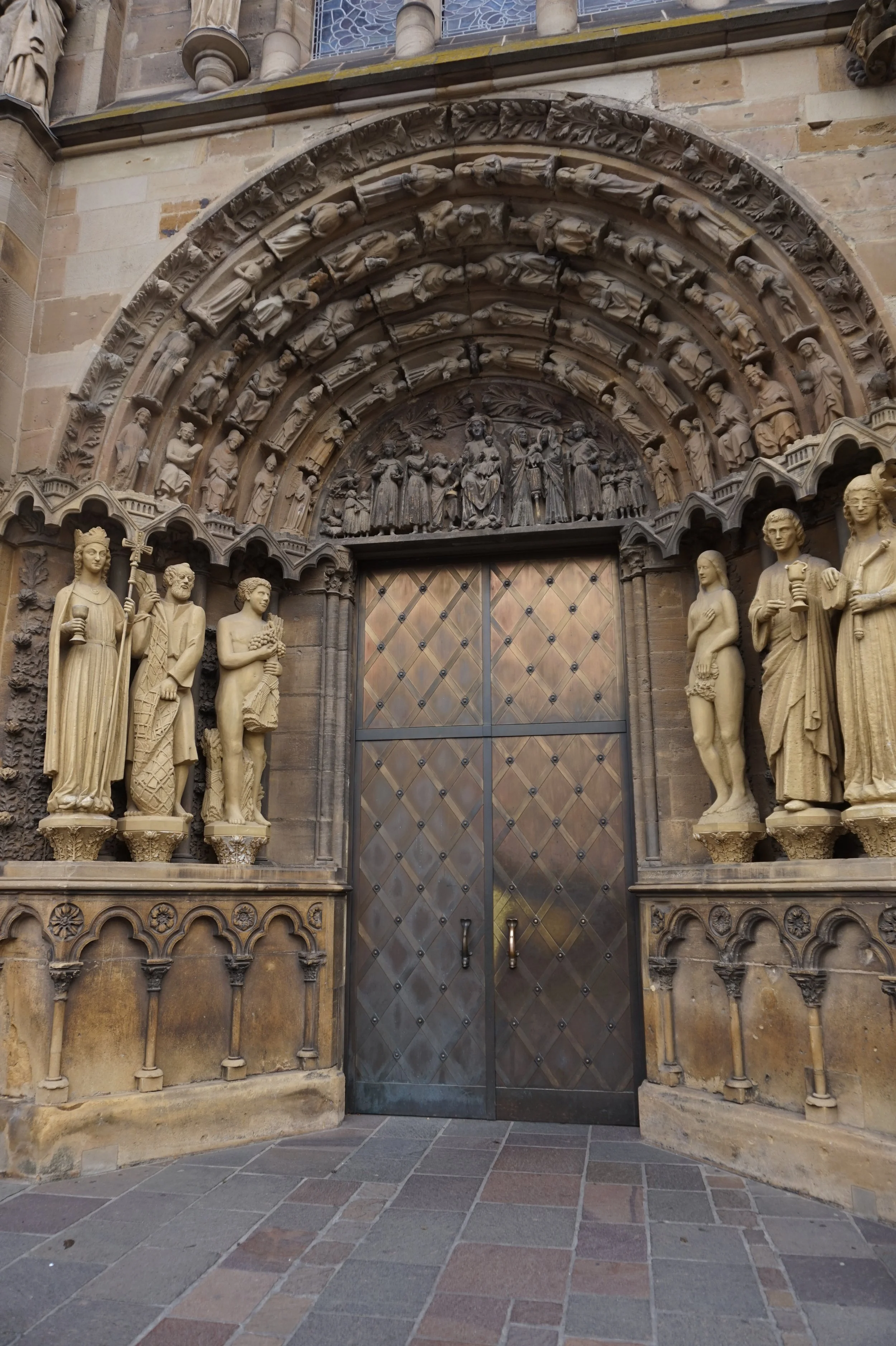
Beautiful carvings on the Church of Our Lady
The oldest Gothic church in Germany, Liebfrauenkirche, or Church of Our Lady, is a gorgeous example of medieval masonry.
It's located right next to the Trier Cathedral, which causes some confusion for visitors, but a quick look at the architecture helps orient you to the difference.
Instead of the more streamlined, curved exteriors of the Roman buildings, you’ll find flying buttresses and sharply detailed statues on the Gothic Church of Our Lady.
In nearly any other city in the world, this church would be the major sightseeing highlight for its intricate detailing and awe-inspiring size.
Yet, amidst the many other historical offerings in Trier, the Church of Our Lady is often skipped over in favor of visits to the Cathedral and Basilica, which is shame.
Yes, it’s another church to visit, but it has very different and equally interesting architecture, carvings, and history than the Basilica and Cathedral.
Trier Basilica
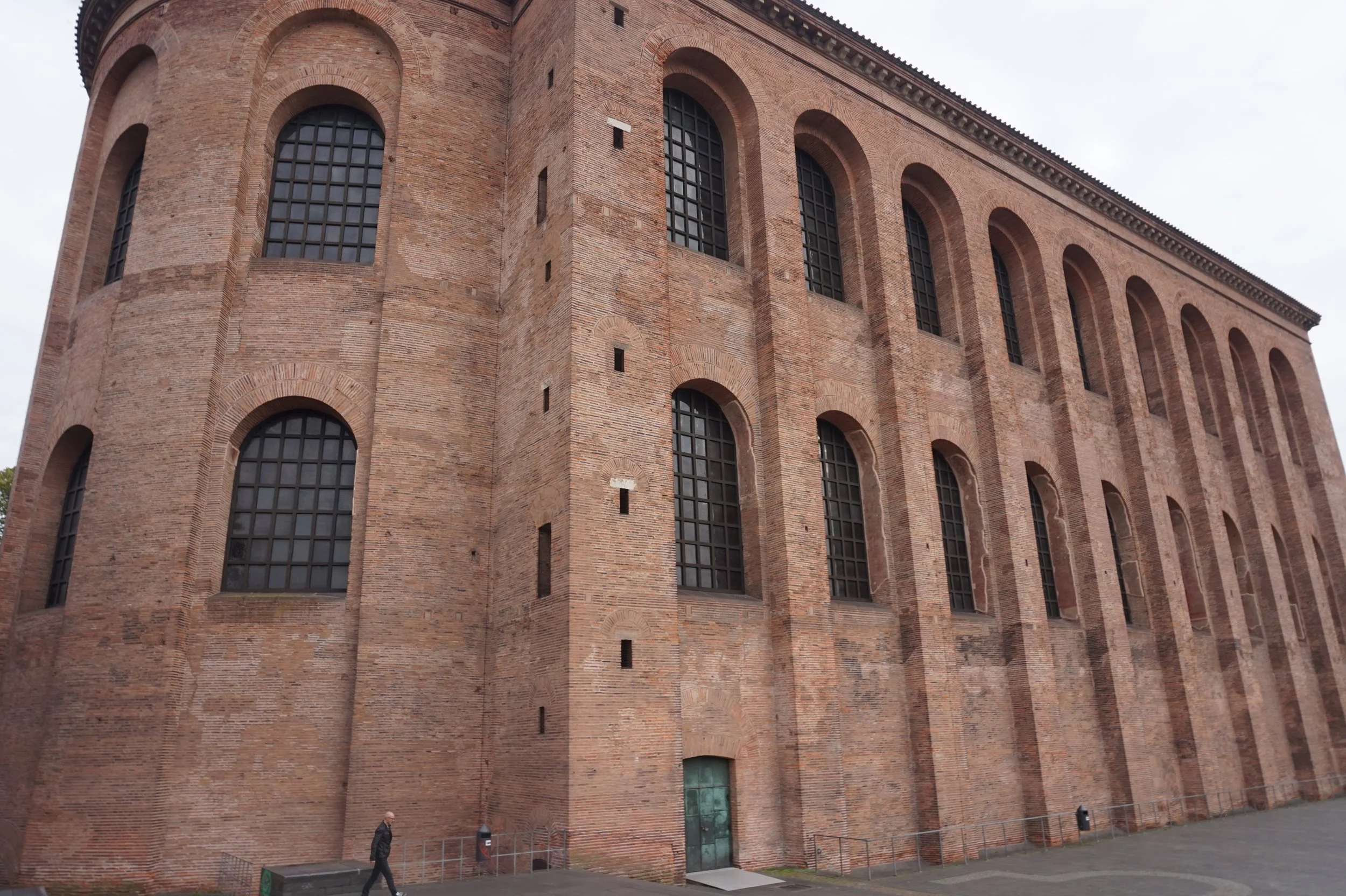
Itty bitty person, giant basilica
The largest remaining Roman structure outside of Rome, the Trier Basilica is another gigantic cannot-miss spot in Trier.
Constantine, that busiest of emperors, also built this behemoth, which could easily fit the Porta Nigra and 3/4ths of a football field inside.
It's now used as a church and is owned by the Lutheran Church in German, but, during its heyday, it was used as a judicial center and would've been where Constantine's throne was placed.
In more recent history, it was bombed during World War II, but the structure was able to be restored to its original Roman state. The only thing the church decided not to restore were the decorative elements on the interior, which is why the brick walls are visible on the in and outside of the building.
Worship services are still held inside each Sunday, but you can also see the structure during set visiting hours.
NOTE: The Trier Basilica is also called the Konstantin-Basilica, or Konstantinbasilica. It’s referred to as the Aula Palatina, too.
Roman Amphitheatre
This beautifully preserved amphitheatre was once the site of fierce gladiator battles and wild animal fights, and, today, it’s part of the protected UNESCO World Heritage Site in Trier.
When you visit, you can walk around the enclosure, and cross into the massive amphitheatre itself. You can easily imagine the roaring crowd of more than 20,000 Romans cheering for (or against!) you as you step into the ring.
The amphitheatre is impressively large at 475 feet across, which makes it longer than an American football field.
Get your kids in free with the family pass, which allows 2 adults to pay for a ticket and bring up to 4 kids along for no charge.
The amphitheatre is open daily. It’s just outside of the city center, and is 1.2 miles on foot from the Porta Nigra. Overall, it’s not a bad walk, but you can also access it on the hop on-hop off bus tour (more on that below).
Römerbrücke
A beautiful bridge, the Römerbrücke, which literally translates to “Roman Bridge,” connects the Trier city center with west Trier.
Like many places in this area, you’re walking in the footsteps of the Romans, who first placed a bridge here when they founded Trier, and parts of the existing pillars are still in use!
You can get incredible views of the Moselle River from the middle of the bridge, which is a mile southwest of the Porta Nigra. There’s a raised sidewalk and cycling path on either side of the road.
Zurlaubener Ufer
It’s hard to find a site in Trier that isn’t related to Roman history, but this is one of them!
This former fishing village dates to the early medieval period, which makes it practically new construction when compared to everything else in this area.
It has adorable cafes with waterfront dining, making this a perfect spot to relax after a long day of sightseeing.
There are several river tours that leave from the dock at Zurlaubener Ufer, but if you’re interested in these, be sure to ask at the ticket counter if they offer specifically English tours.
Most run with just live German commentary, which leaves English speaking guests left to wander what’s being said while they look at the pretty views.
You can find Zurlaubener Ufer about ½ mile northwest from the Porta Nigra. Follow the Lindenstrasse to its end and cross over Ascoli Piceno Strauss. Zurlaubener Ufer will right in front of you by the water.
Hauptmarkt
Every great European town has an old square with shops, restaurants, and a picturesque fountain.
Trier’s Hauptmarket is no exception.
Take a photo by Petrusbrunnen, which is the iconic fountain, linger over lunch at one of the many cute cafes here, and listen to the Glockenspiel chime the top of the hour.
If you’re visiting during the week, you can shop from the many stalls that pop up in the market, selling everything from local vegetables to homemade bread.
It’s also excellent for people watching, so if you need a break from all of the walking, park yourself on one of the benches and hang out for a bit.
NOTE: If you’re visiting in late November or December, check out the annual Christmas market that’s held here!
Best Tours in Trier, Germany
With so much to see and do, joining a guided tour is often the best way to soak in all of the sights.
These are my recommended tours that include a wide range of interests and activity levels so that all of my readers can best enjoy this incredible city.
Hop on-Hop Off Bus Tour
I love a good hop on-hop off bus tour since it immediately simplifies visiting a new place.
You don’t have to worry about reading street signs in a foreign language, finding parking, or navigating down small roads in the city center as you get from one site to the next in your rental car.
Instead, you show up with your ticket, hop onto a clean bus, and let someone else do the driving.
While you ride in the Trier hop on-hop off bus, you’ll be able to pull the free headphones, which you’ll get upon boarding, into the provided audio port at each seat. You can choose from a variety of major languages, and this audio guide plays automatically as you move around the city.
We’ve done these hop on-hop off bus tours in a variety of German cities, including Hamburg and Berlin, and they remain my go to way of getting the lay of the land in a new city.
In Trier, you’ll stop by several of the must-see historic sites that I mentioned above, including Porta Nigra, the Karl Marx-House, and Trier Cathedral.
You’ll also have easy access to the Roman amphitheatre and the Petrisburg Lookout, which aren’t as easily accessible from the Trier city center without a car.
Trier City Walking Tour
If you want to maximize your time in the city center, I’d recommend taking a walking tour of Trier.
These tours are given in German or English, depending on the time you sign up for. (Just be sure to mark “English” in the options when signing up so you can see the availability of those specific tours.)
You’ll follow knowledgeable local guide past the Porta Nigra, the Cathedral, the Basilica, and more as you learn about the city’s architecture, history, eras, and important figures.
At 90 minutes, the tour is long enough to be comprehensive without dominating your entire day here.
Roman Imperial Baths Tour
After you learn about where the Romans gathered, worshipped, and traded, head over to the baths to learn about what they did in their spare time.
The Roman Imperial Baths, or Kaiserthermen in German, are a set of gorgeous ruins from around 350 AD.
You can see the Imperial Baths ruins and the Barbara Bath ruins on this guided tour.
Since the ruins aren’t as robust as the Roman baths you’ll find in Bath, England, having a guide to help you reconstruct what the two sites looked like in their prime is helpful.
NOTE: This tour is available in both English and German, depending on which time you choose. Be sure to select “English” when booking to be shown just the times when the English tour is running.
Where to Stay in Trier
After you explore the historic sites of Trier, it’s time to settle into your hotel.
Here are two options with reasonable rates, clean rooms, a welcoming atmosphere, and unique flair.
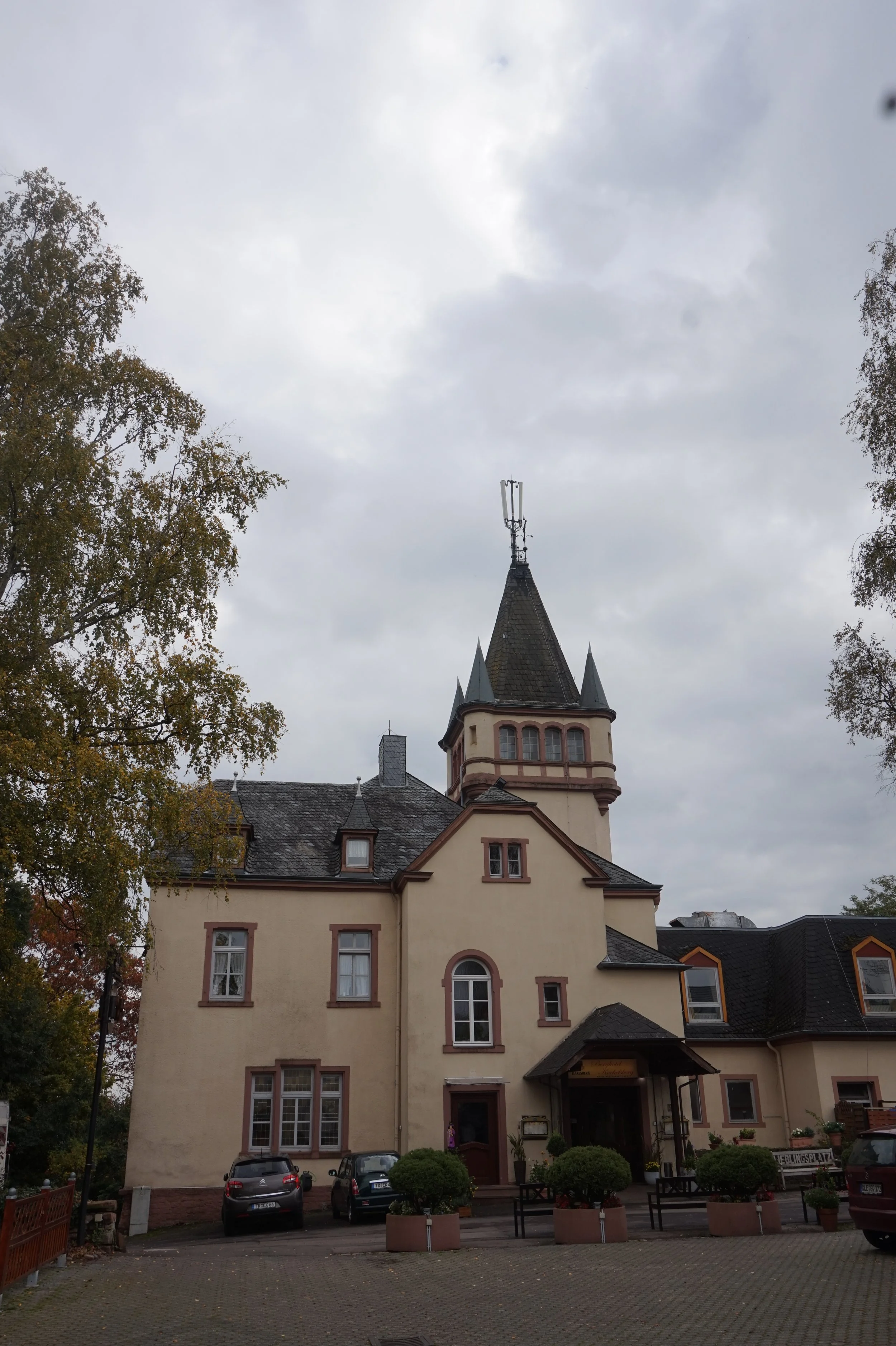
Entrance to the Berghotel Kockelsberg
Berghotel Kockelsberg
If you want to keep the history theme of your Trier visit going, the Berghotel Kockelsberg just outside of the city is an excellent choice.
The hotel's been in business since the mid 1800s, but there's been a structure on the property since the 8th century.
Before it was a hotel, it was a private residence, then one of the buildings of the St. Jakobus Hospital.
We loved staying in such a storied location, and the views of Trier and the Moselle Valley were incredible.
The only downside is that you’ll need a rental car to get here from Trier, but it is an ideal homebase if you’re exploring Trier, Luxembourg, and other areas of the Moselle Valley.
By car, it’s only 8 minutes back to the Trier city center.
Hotel Porta Nigra Victus
If you’d rather stay in the middle of the action, the Hotel Porta Nigra Victus is a great option in the Trier city center.
You’re less than half a block from the Porta Nigra, and 2 blocks from the Hauptmarkt.
Don’t get this hotel confused with the other hotels in the area with similar names, such as the Hotel Porta Nigra or the Mercure Hotel Trier Porta Nigra.
The Hotel Porta Nigra Victus has great customer service, and the welcoming front desk staff speak both German and English. If you need a quick snack among your sightseeing, definitely stop by the cute coffee shop on the ground floor.