A Guide to Bacharach on the Rhine: Where to Sleep, Eat, and Explore
Visit Bacharach on your next trip to Germany, where you can wander cobblestone streets, find beautiful views of the Rhine, and explore a tiny town straight out of a fairy tale.
Located near the famous Loreley/Lorelei rock in the Upper Middle Rhine Valley, Bacharach is a great place to base your vacation as you sightsee at the many castles, museums, and scenic overlooks in this area of Germany.
Or, if you’re looking for a quaint little spot for a getaway, Bacharach is perfect for that, too.
We stopped here as part of a much longer road trip through Germany, Switzerland, Austria, and Luxembourg, and Bacharach quickly became one of our favorite stops thanks to its beautiful architecture, hidden side streets, and many historic sites.
In the guide below, you’ll find everything you need to plan your own trip to Bacharach, including what to do in the town and nearby, where to stay and eat, and how to get here.
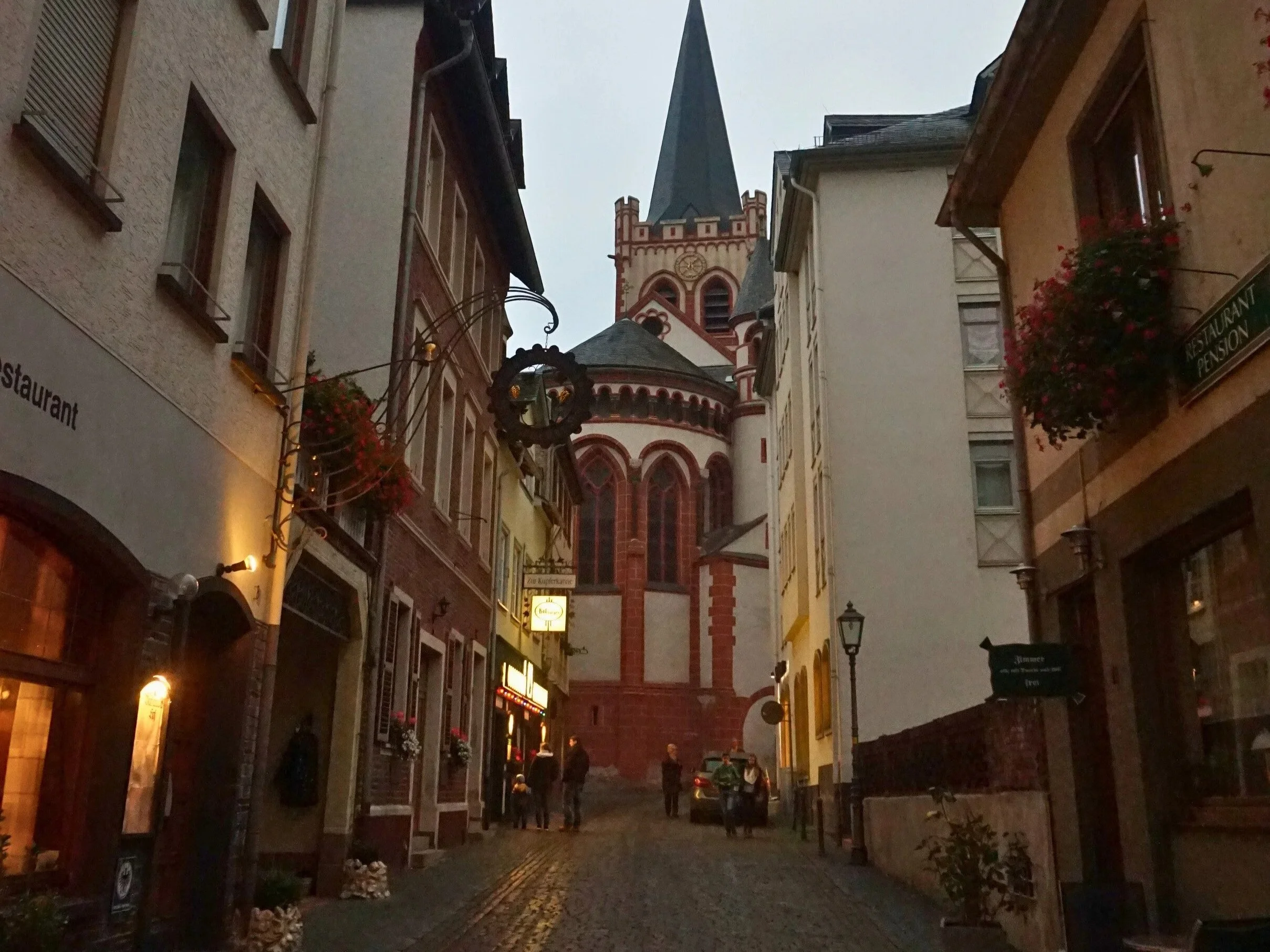
Evening in Bacharach, Germany
This post contains affiliates. If you purchase through the links below, I will receive a commission at no charge to you.
Where is Bacharach, Germany?
Bacharach is one of those places that you have to want to get to, but, honestly, that’s one of my favorite types of places to stay when we’re traveling.
It isn’t known for its food and beverage like Munich, or its layered history like Berlin, but little Bacharach is still absolutely worth visiting on a larger trip to Germany.
Bacharach is located on the western bank of the Rhine River, about halfway between Frankfurt and Trier in western Germany.
Exploring the Rhine Valley: Important Notes on Getting Around
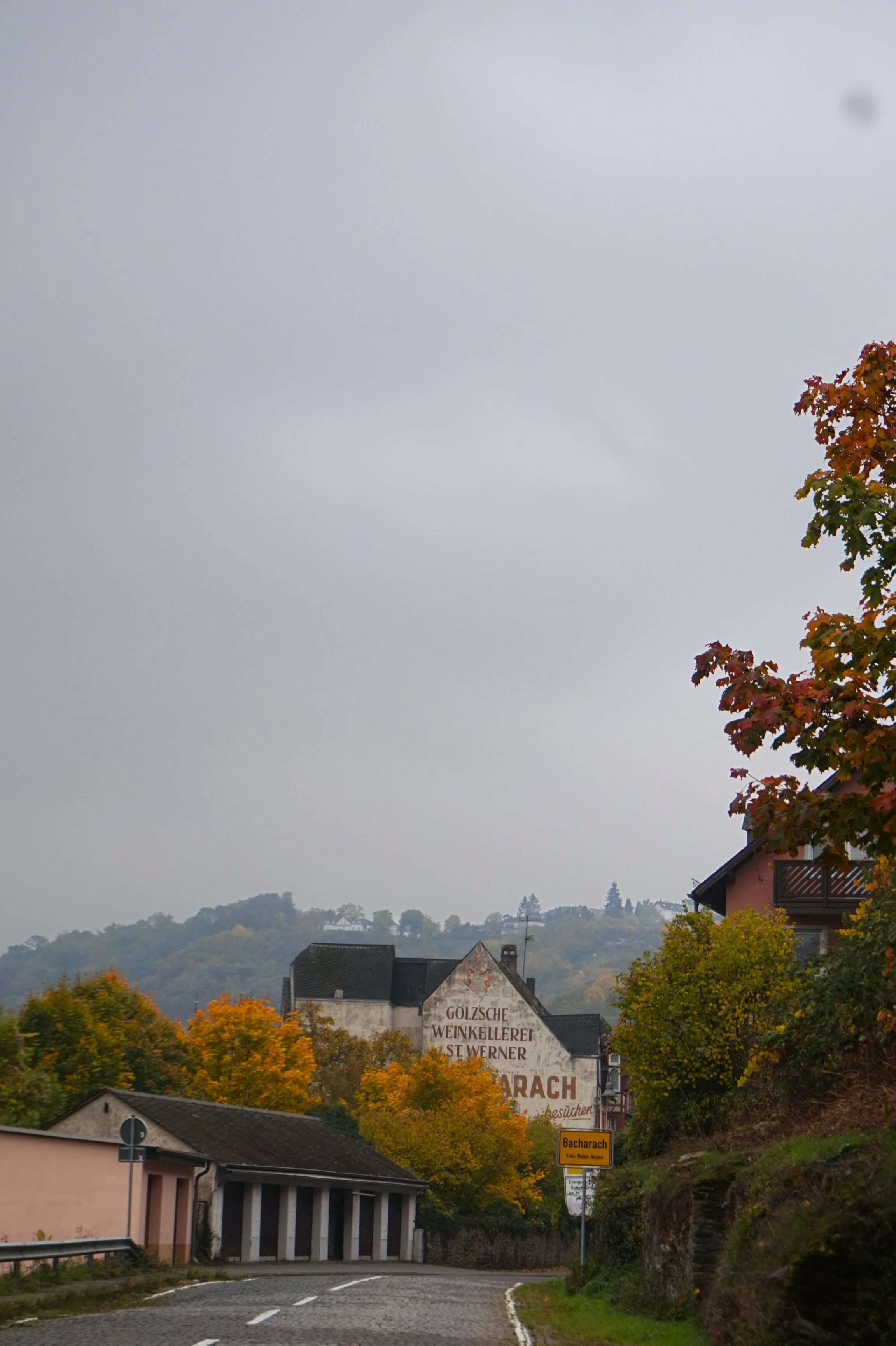
Town limits for Bacharach, Germany
When exploring in the Rhine Valley, it is important to note that, for much of it, there is only a 2-lane road on either bank of the river with few bridges crossing it.
If you miss one of the bridges or there’s construction going on (as was the case while we were visiting), you might need to drive from miles before you get to the next Rhine River bridge crossing.
There are ferry crossings along the length of the river, but these will need to be timed carefully so as not to pull too much time from your overall vacation.
Most of them operate on a rough schedule of 20-30 minute departures, but the ferries are small and can only hold about a dozen vehicles or so.
If you have the bad luck to get stuck behind a large tour bus or if you’re trying to cross on a busy day, you could be delayed for more than an hour.
If, at all possible, try to access Bacharach from the western side of the Rhine. This road is called the B9 or Bundesstraße 9.
Closest Ferries to Bacharach
If you end up on the eastern side of the Rhine, you’ll need to access a ferry to get over to the correct side of the river for your stay.
There is a ferry that runs roughly ever 15-20 minutes during the day and into the early evening at Kaub, called the Englesburg-Kaub ferry.
The access points for this ferry are only 1.7 miles north of Bacharach on the B9.
The closest ferry south of Bacharach is the Lorch-Neiderheimbach ferry 2.7 miles below Bacharach. It runs every 20-25 minutes.
Public Transportation vs. Rental Car to Bacharach
I’ve traveled to Europe many times, and I love how you can get around even without a car to most places.
When I went to Hamburg and Berlin on a different trip, I didn’t use a rental car at all, but relied on bikes, walking, buses, and the trains to get everywhere I wanted to go.
The good news for visiting Bacharach is that there is a train station in town, and it is walkable to the recommended hotel. It would be easy to get a train from Munich, Cologne, or Frankfurt to Bacharach. (And usually for pretty cheap, too. Tickets between Frankfurt and Bacharach are usually around $25 per person.)
The bad news for visiting Bacharach by train is that you’ll need to get around just by walking or biking once you’re onsite, and this area isn’t the best for that unless you’re only staying in the town of Bacharach and not doing any sightseeing in the surrounding area.
If you want to see the castles, museums, and historic ruins that the Rhine Valley is known for, I’d recommend bringing a rental car.
Germany uses the same driving conventions as the U.S. (right side driving with the steering wheel on the left side), so driving here is so much easier than when we’ve done road trips in Scotland and in Ireland.
Visiting Bacharach: An Overview
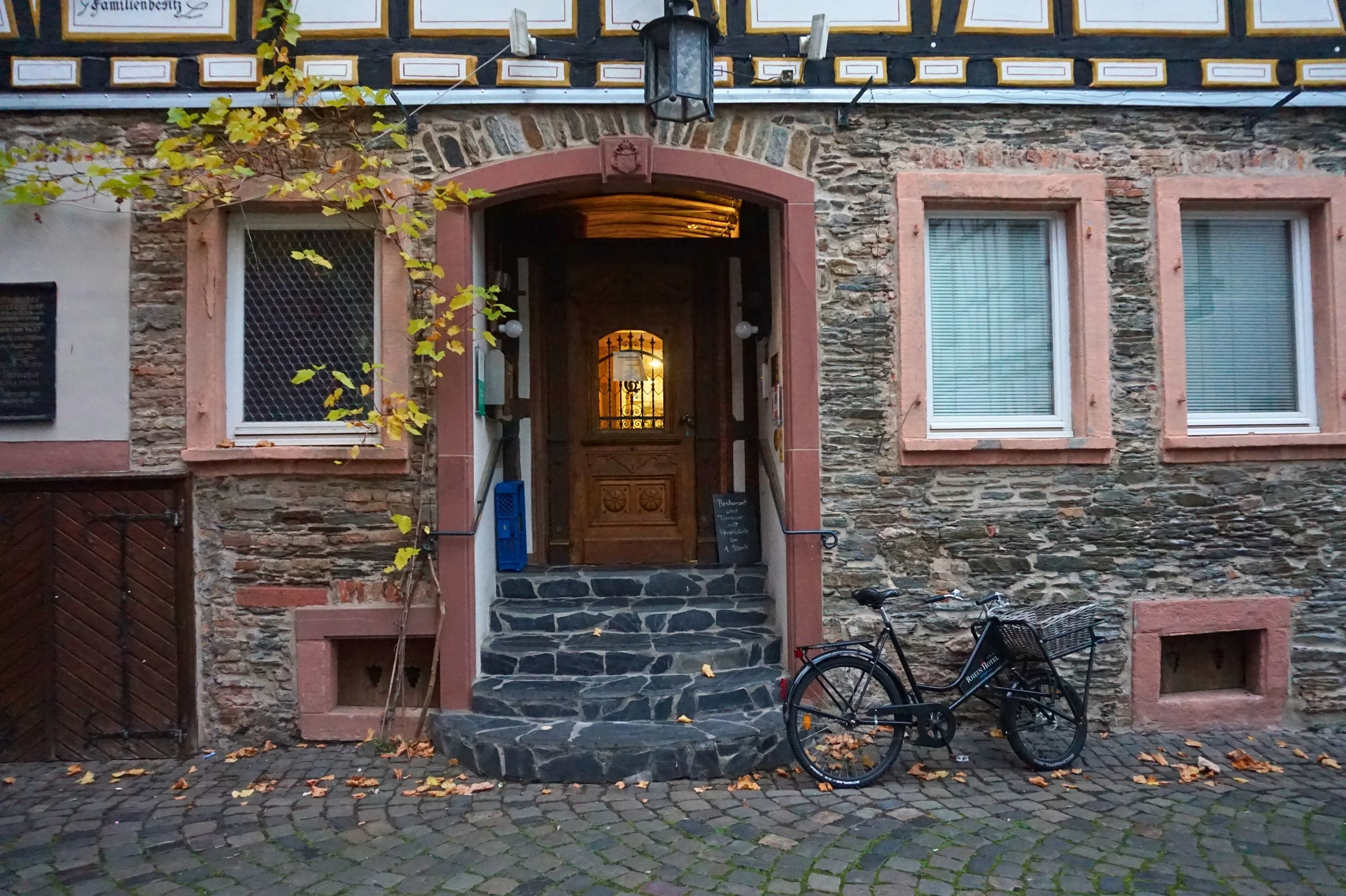
One of the homes in Bacharach
On our 10 day road trip in Germany, we tried to get a taste of as many areas of the country as possible, stopping in Bavaria, winding our way up the Romantic Road, and stopping over for a few days in the Rhine area.
After much research, my mom, sister, and I settled on Bacharach as our Romantic Rhine headquarters, largely due to the fact that we kept reading how cute, quaint, and adorable it was.
Bacharach had some big shoes to fill on the adorable town front as we'd left Rothenburg ob der Tauber in our rearview mirror that morning.
While it was completely different than the walled medieval beauty we'd recently explored, Bacharach's wandering cobblestoned alleys, enviable position along the Rhine, and its imposing castle made us happy that we'd stopped there.
If you're planning a trip, know that Bacharach's charm is its first and foremost attraction.
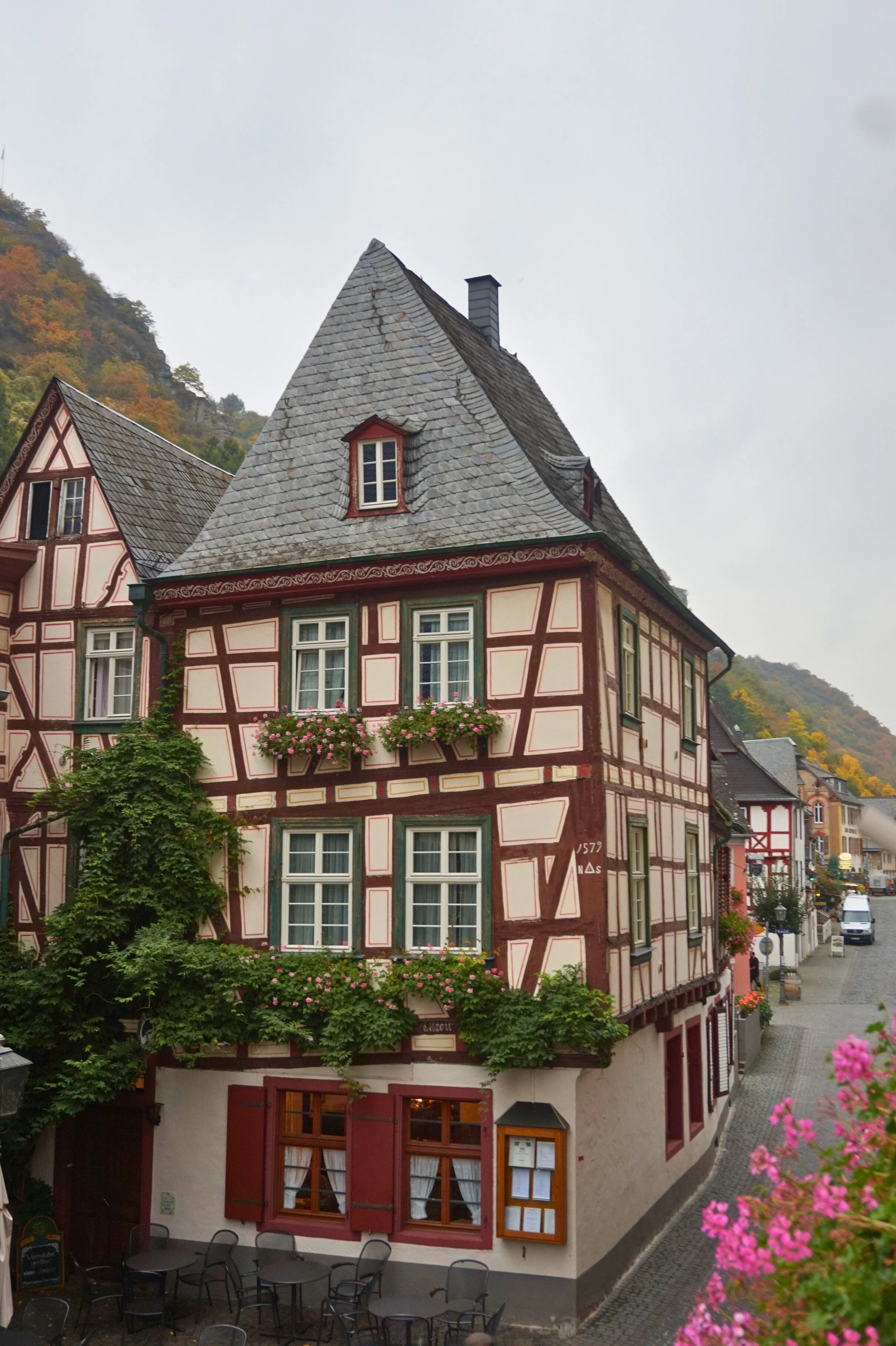
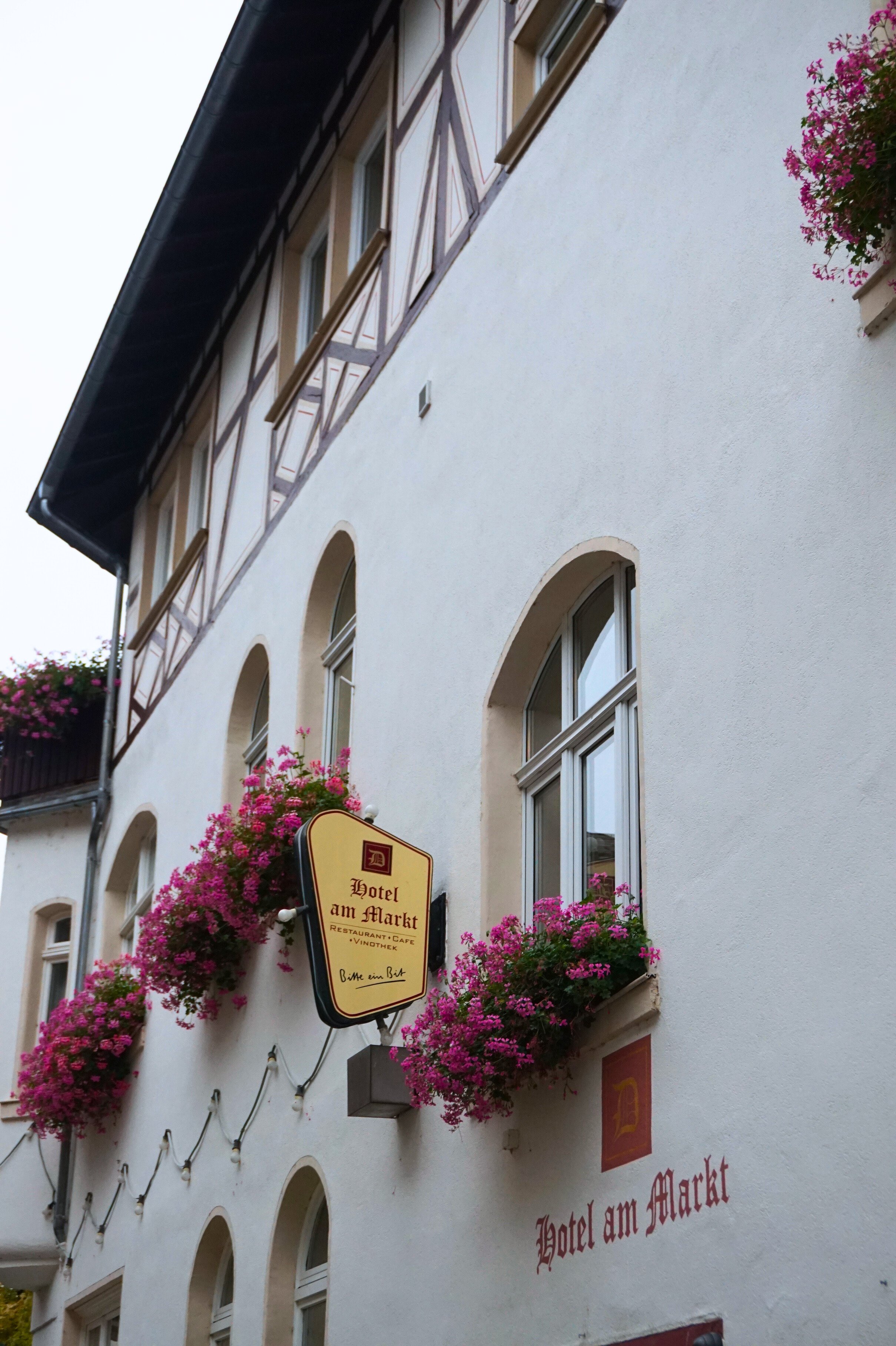
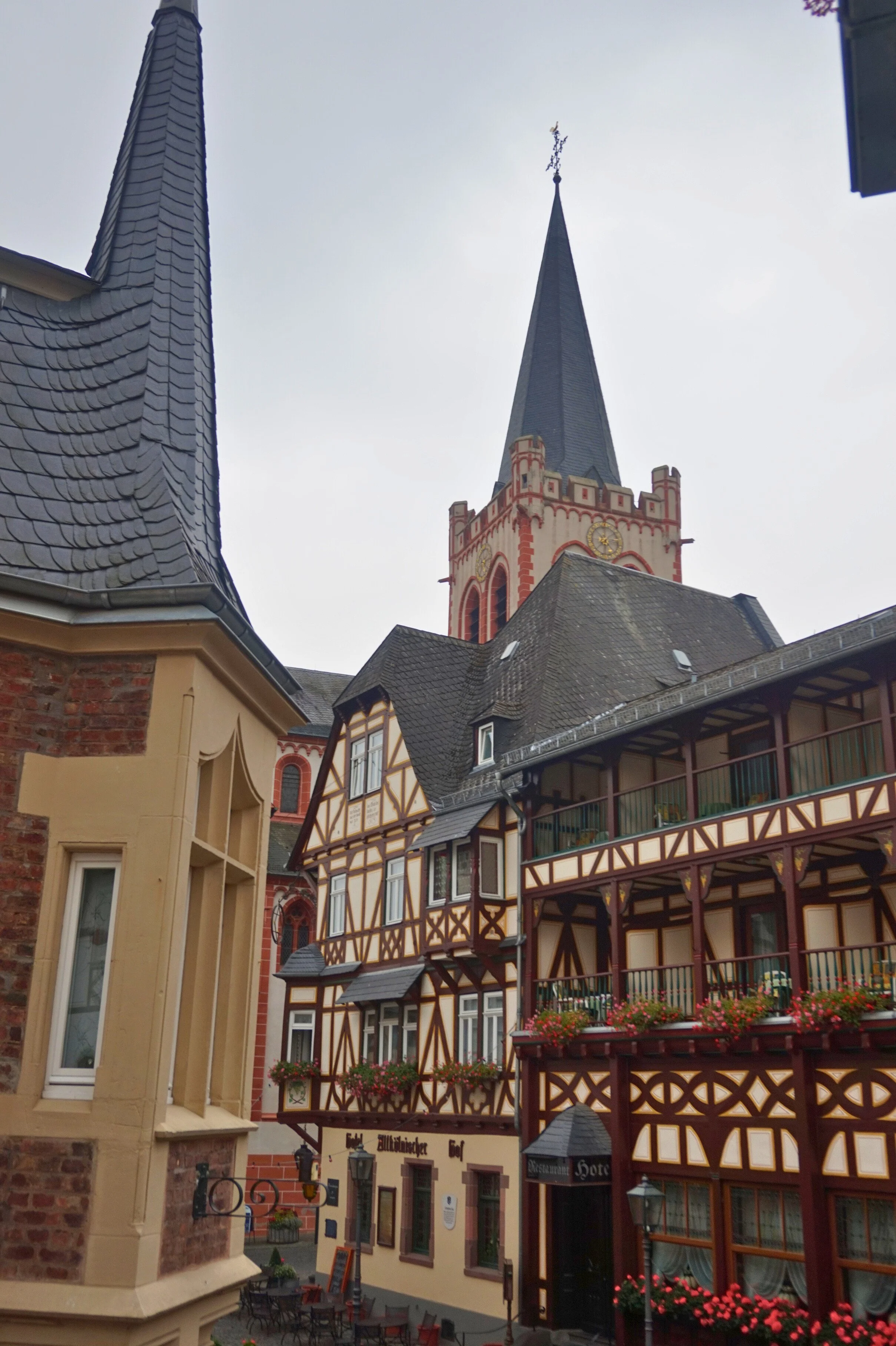
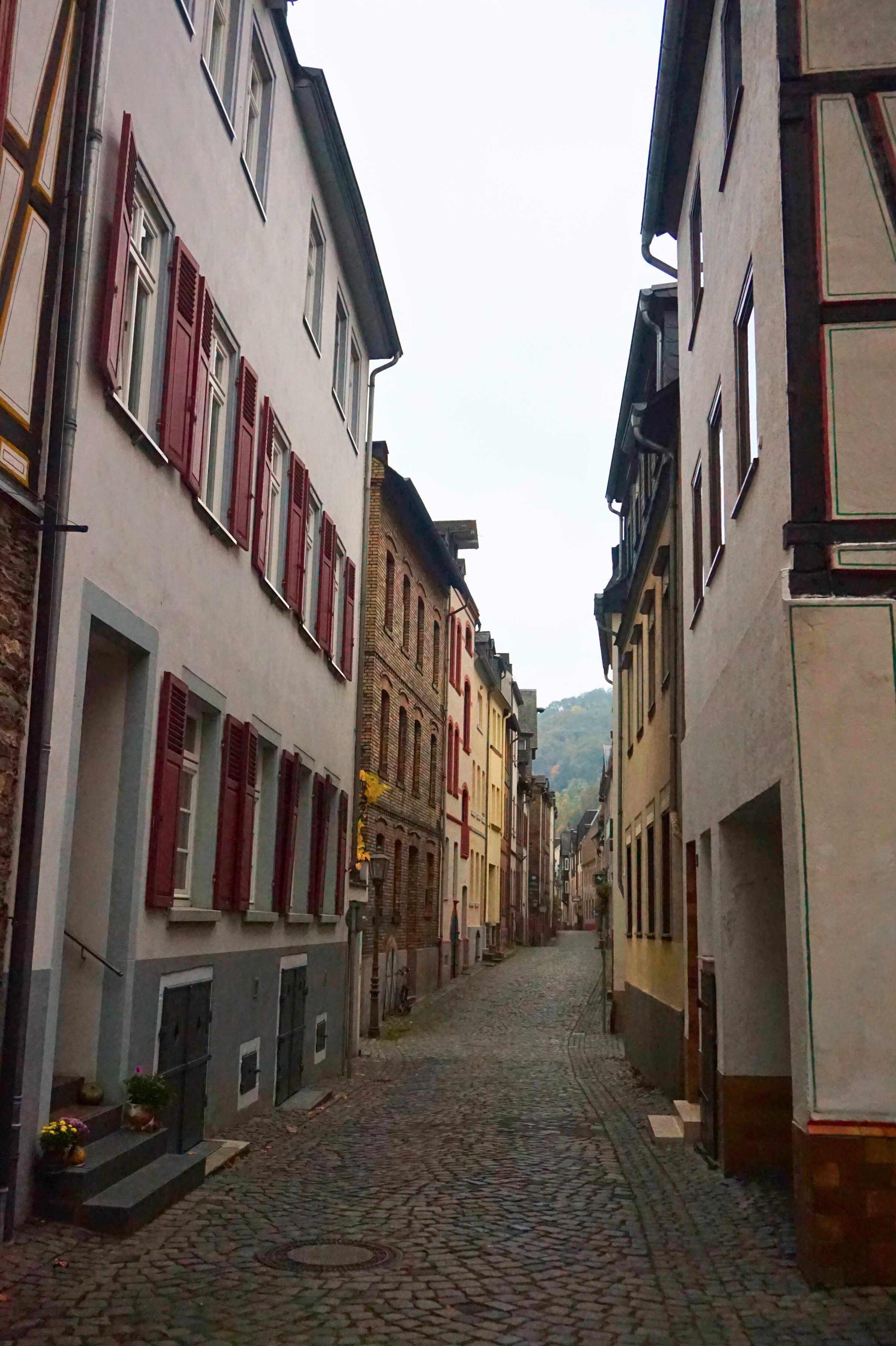
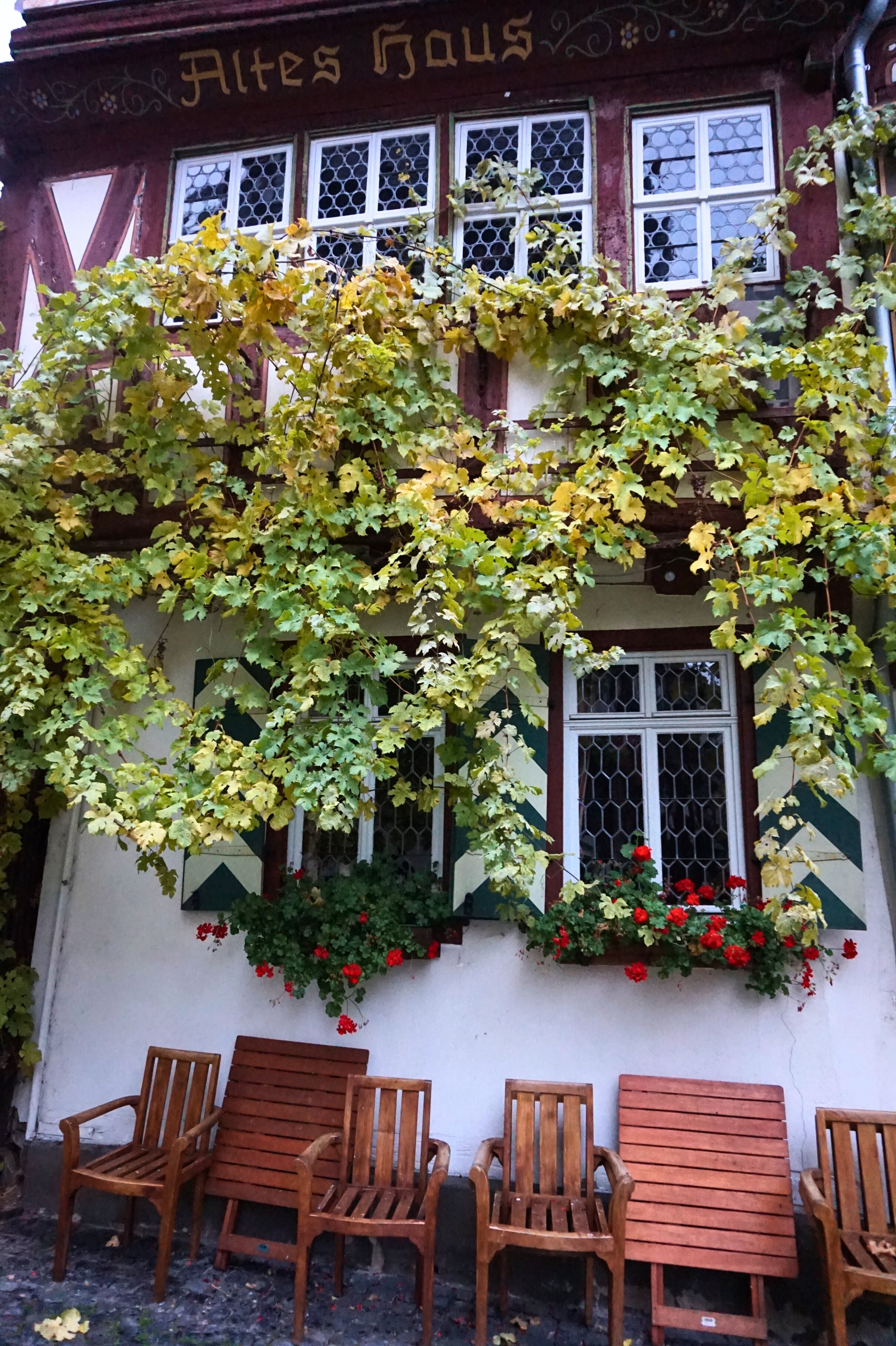
You won't find museums or big name stores here: the tiny streets are filled with small bars and restaurants, sweet art shops, and half-timbered houses dripping with vines.
We took time to stop and smell the metaphorical roses while we were in Bacharach which was quite a welcome change of pace after the non-stop touring in Munich, the Alps, and the Romantic Road.
Read more about Germany in these posts:
What to Do in and around Bacharach
Visit Stahleck Castle.
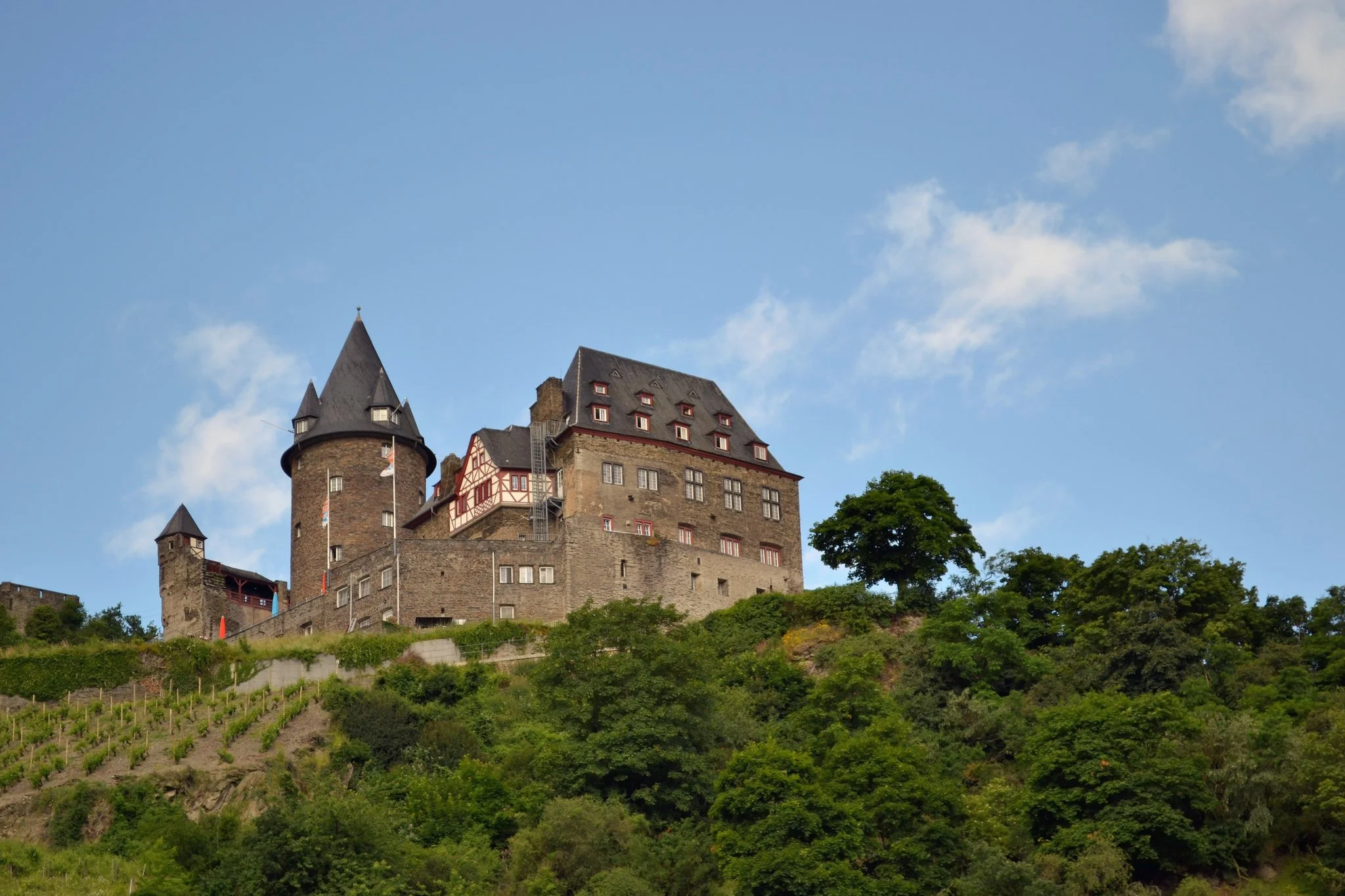
Stahleck Castle
That imposing hunk of a building on the ridge above Bacharach, is a youth hostel (and yes, you can actually stay in it!).
It's had quite the storied history: it was the first large castle in the area back when it was built in the 12th century, was fought over for much of the 12th and 13th century, and ended up in the hands of the royal family, the Wittlesbachs.
During their ownership, the castle served as a election spot for Ludwig IV as well as the wedding location for Emperor Charles IV and his wife Anna.
The castle saw some tough times during the Thirty Years' War when it was nearly completely destroyed, and the ruins were left for nearly three and a half centuries.
In the early years of the 20th century, the castle ruins were fortified by its new owners, the Rhenish Association for Landmark Preservation, an endeavor that was stalled by World War I.
Finally, after World War I ended, the Association slowly began to turn the castle into a youth hostel, and, in 1926, the castle opened for its first visitors in several hundred years. The youth hostel was instantly popular, and demand for its beds outpaced the restoration efforts.
However, in 1935, the castle was rededicated as one of the Jugenburgen or youth castles that was a part of the early Nazi Youth regime.
The Nazi party oversaw additional reconstruction on the property until the castle was repurposed as a military hospital in the early 1940s.
During this time, the children who'd been taken from their homes in Luxembourg and Austria were placed here in an effort to educate them in the Nazi party politics. Those who protested were put under house arrest and then sent to the front.
After the war, the castle again became a youth hostel despite the poor economic conditions that Germany was facing. Since the late 1940s, it has remained one of the largest--and most popular--places to stay in the Rhineland.
Explore the Werner Chapel Ruins.
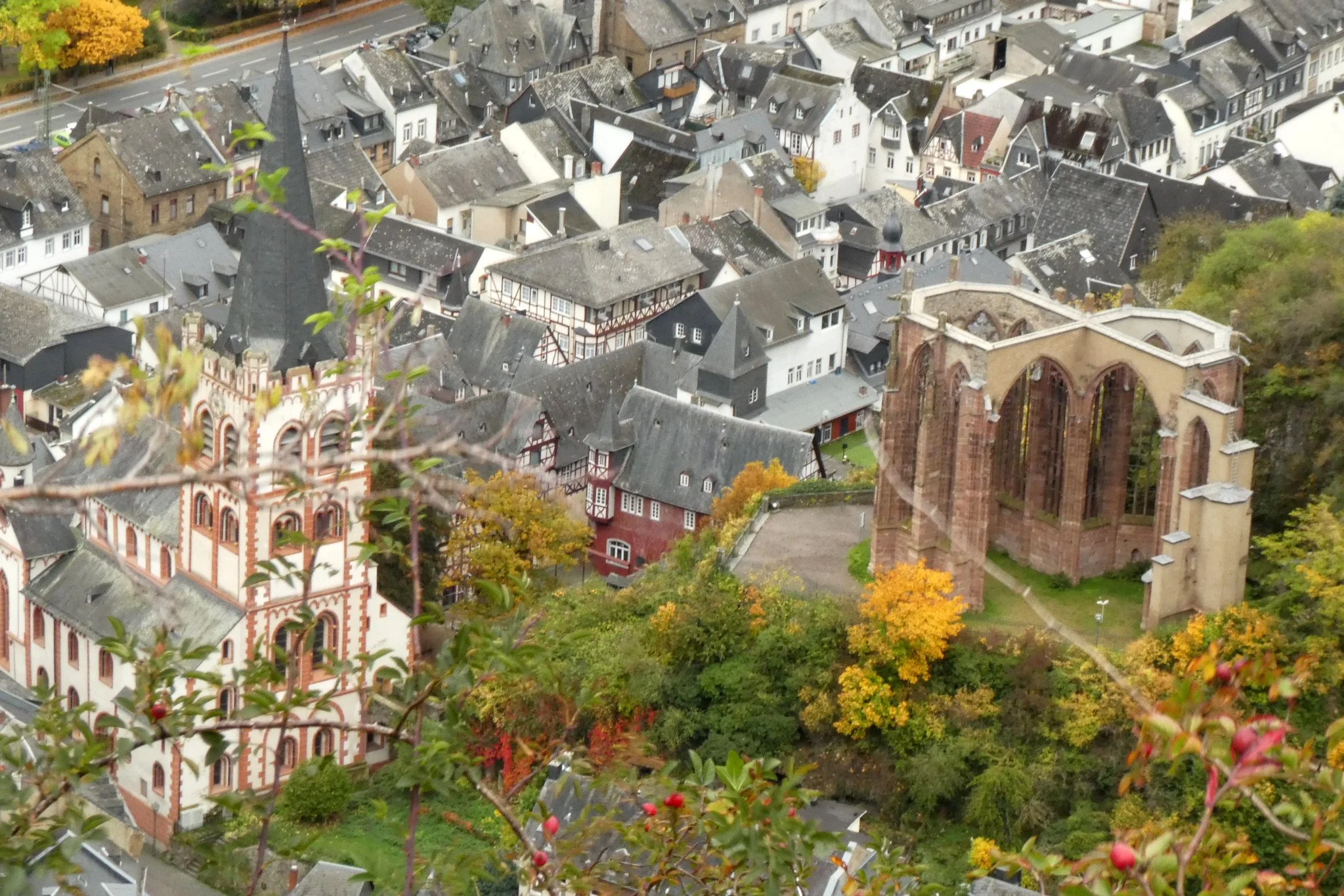
Werner Chapel Ruins on the right | source
If you’re a fan of poking around ruins, stop by the Werner Chapel Ruins, or Wernerkapelle, in German.
On this spot in the 13th century, a teenaged boy named St. Werner of Oberwesel was killed.
His death, which was blamed (mostly likely erroneously) on the local Jews, led to a wide-spread backlash against the German Jewish population.
By the 15th century, St. Werner's Chapel became a pilgrimage site.
Besides being a beautiful ruin, the site is a haunting reminder to each of its visitors of how quickly wariness of our fellow humans can lead to anger, hatred, and murder.
Get inspired by the Rhine.
The Rhine River dominates nearly everything here: the economy, the culture, and the landscape.
So, it’s no wonder that the town has a large public park on the shores of the Rhine called “An den Ufern der Poesie,” or “On the Shores of Poetry.”
At the heart of the park is a sculpture dedicated to three Romantic poets who had close ties to Bacharach and/or the Rhine River:
Victor Hugo, the French writer who visited here in 1840 and 1860, and called it “the most beautiful and mysterious town in the world,”
Clemens Bretano, a German writer who penned the poem “Lore Lay,” and
Heinrich Hein, a German Jewish poet who wrote the poem “The Lorelei”
If you’re traveling here with kids, there’s a playground, or Kinderspielpatz, at the southern end of the park.
On the northern end of the park, there are two sculptures worth checking out:
The Ravens Chair or Der Rabenstuhl, which is a chair sculpture made from bronze casts of books, and it’s an ode to the Romantic poets who gained inspiration here. It’s also one of 4 sculptures by the artist Liesel Metten.
The Loreley Sculpture, which is in homage to the famous Loreley Rock that’s right around a bend in the Rhine from Bacharach.
Wherever you are in the park, you’ll get gorgeous views of the river, so you can watch the boats and cruises make their way along the water.
TIP: See Bacharach from a new perspective when you take a day cruise along the Rhine! Enjoy a brunch buffet as you float through the Upper Middle Rhine Valley on a 2.5 hour experience.
Marktturm
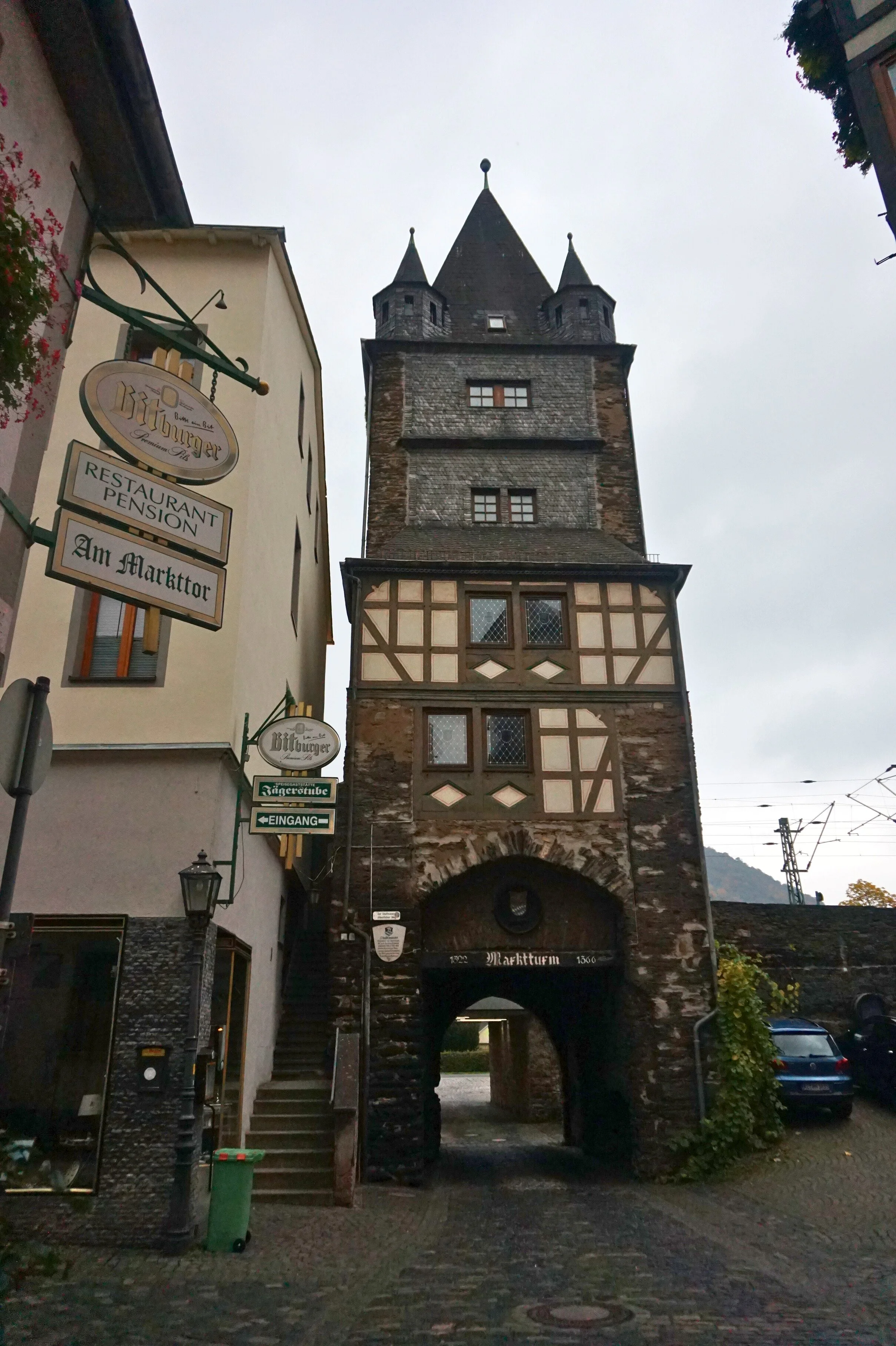
Marktturm
Bacharach is a walled medieval town, and the Marktturm houses one of the major gates. There used to be 16 built into the city’s walls.
Nowadays, anyone can enter Bacharach, but the medieval towns had these gates for protection.
A small entrance area meant it could be easily defended if needed.
You can’t go into the tower today as someone lives there, but you can walk through the old gate.
The name “Marktturm” literally means “market tower,” and it’s a throwback to when this part of town had a thriving wine market.
See if you can find the dates 1322 and 1366 written on the tower overhead!
NOTE: If you want to see more of the town’s original towers, there are 3 more on the hillside of Bacharach that require a bit of a hike.
But if you’re willing to work a little for some history and some great views, you can visit Liebesturm, Halbrundturm, and Sonnenturm.
You can access the footpaths to these from the hostel.
Pfalzgrafenstein Castle
This tiny castle in the middle of the Rhine was built as a toll station to collect fees from passing boats, which went into the pockets of the lords of the castles on either side of the river.
So, while it looks like a castle, it’s really a souped up medieval toll booth!
It’s still well worth a visit, both for the excellent historical tours and the views of the river.
To get here from Bacharach, you’ll need to take B9 to the Englesburg-Kaub ferry, cross the Rhine, and then get on a second ferry from Kaub to Pfalzgrafenstein Castle.
Rheinfels Castle
If you’re looking for a real German castle experience, head north 15 minutes up B9 from Bacharach to St. Goar.
Here, you’ll find Rheinfels Castle, which dates to the 1200s, and has a castle tour, beautiful hike, and gorgeous views of the river. Much of the property is in ruins, but embrace your inner Romantic poet and reveal in the beauty of what has been broken.
Definitely go on the guided tour of the mines below the castle!
Recommended Hotel in Bacharach
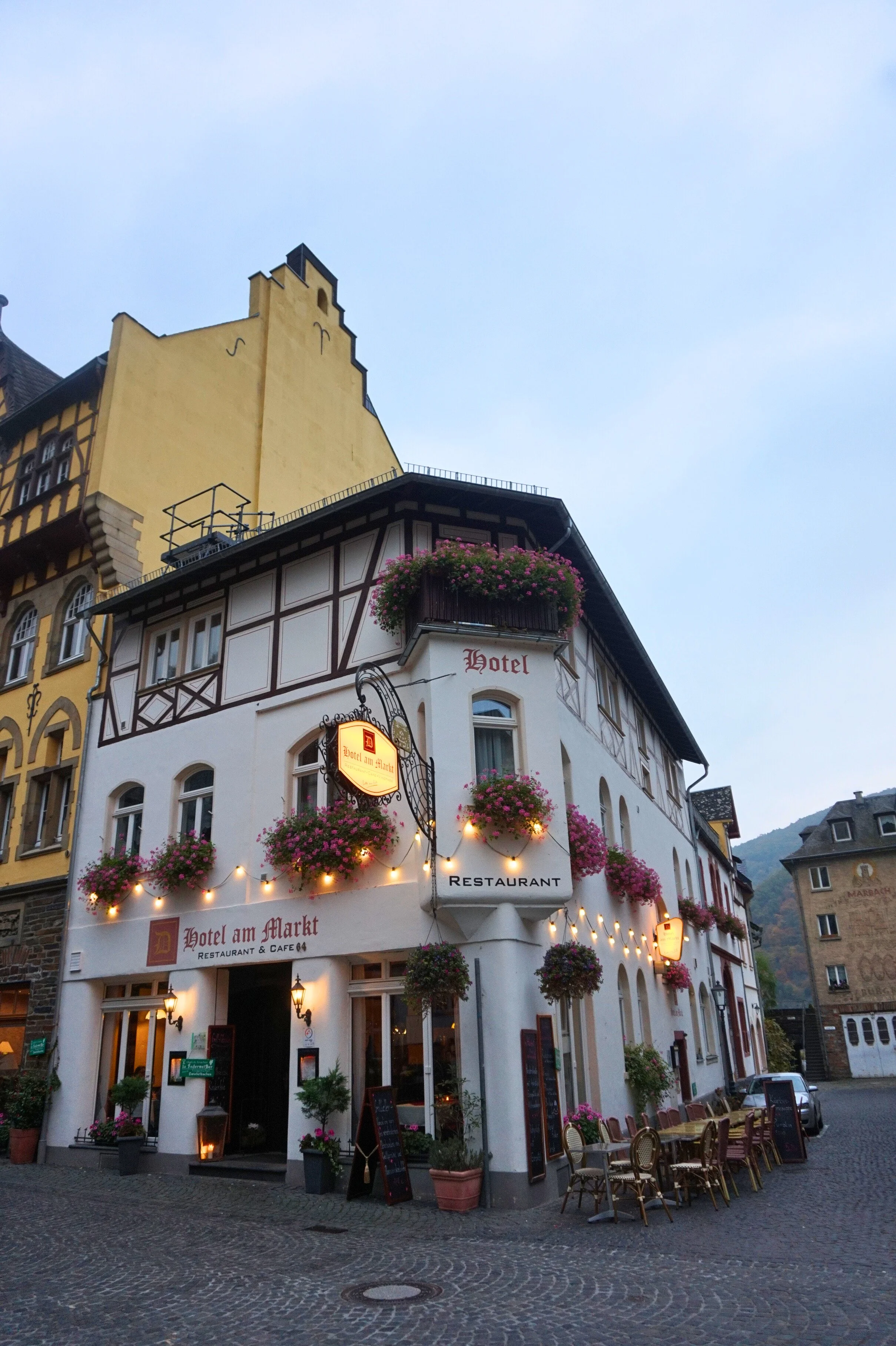
The exterior of Hotel am Markt
To get the most of out of Bacharach, plan to stay at least one night.
As you walk the cobblestone streets with the locals as the sun goes down, you’ll really get a feel for why Victor Hugo called the town, “the most beautiful and mysterious town in the world.”
I highly recommend the Hotel am Markt on Oberstrasse, which is one of the main thoroughfares inside of Bacharach’s walls.
There are 12 different hotel rooms here, each with its own decor and layout.
You’ll find everything from a room for a single traveler to the attic suite and family junior suite, which will host up to 4.
If you’ve ever tried to find family rooms in Europe, you’ll know how awesome it is to find a room big enough for 4 people!
I visited here with my toddler daughter, my sister, and my parents.
We had to have 2 bedrooms to accommodated us all, so keep that in mind as an option if you have a larger party.
The rooms are large by European standards with clean, well kept bathrooms and thoughtful touches throughout.
The entire hotel has had a renovation in recent years, too.
We also ate at the hotel's restaurant, which turned out to be quite a good meal, and it was very convenient as we only had to walk up two flights of stairs to return to our room.
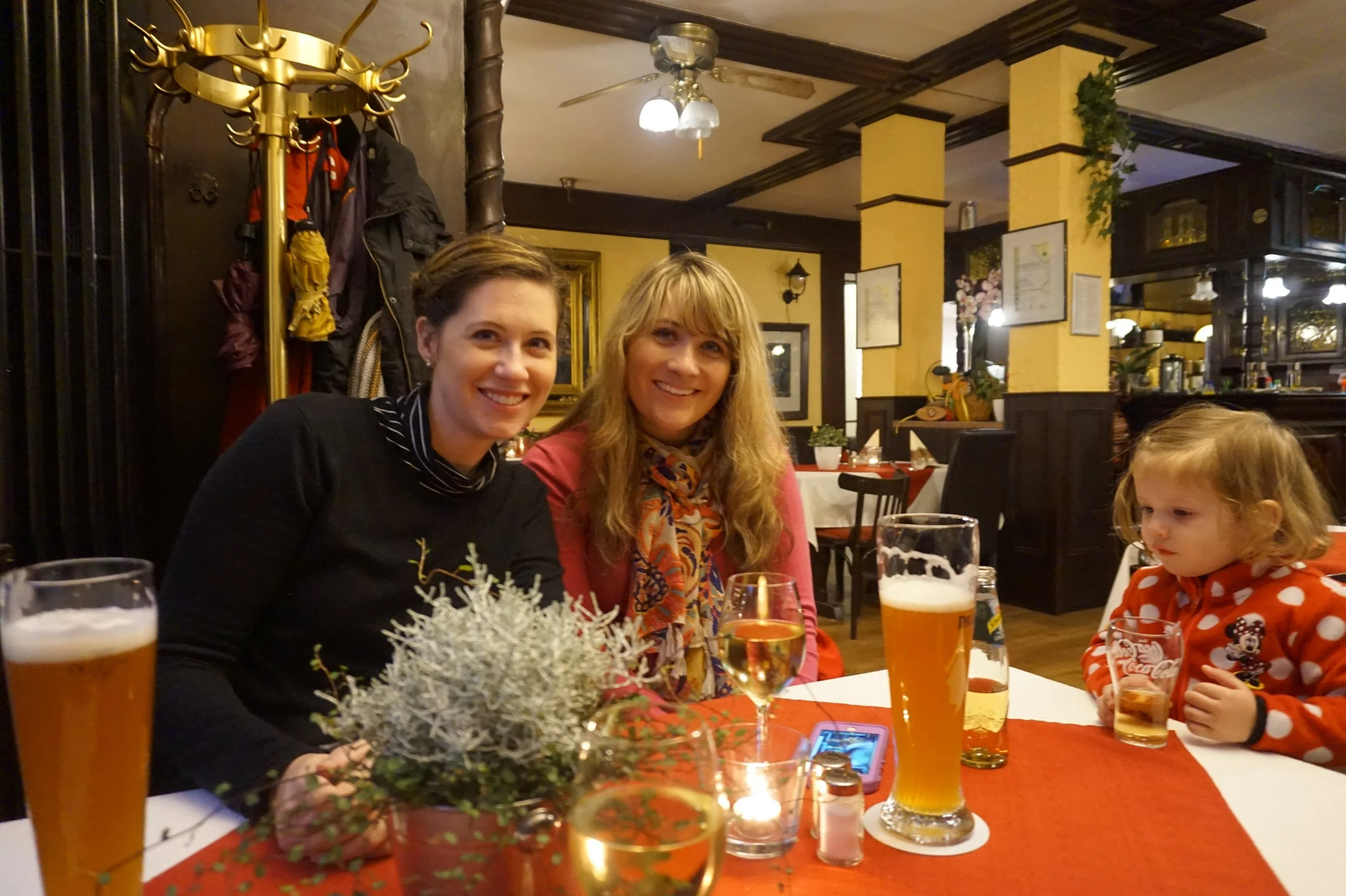
Dinner with my sister and daughter at the Hotel am Markt
Tips for Visiting Bacharach
Bacharach is a great base for your Rhine Valley explorations.
Sandwiched in between St. Goar and Bingham am Rhine, this quaint town is at the center of the Middle Rhine Valley.
During the warmer months, sit by the river and wave to the many (many!) river cruise boats that pass the town if you're feeling lazy.
Since most of the Rhine is within an hour's drive or so, you could explore everywhere from Mannheim and Worms to Bonn and Koblenz.
Driving in Bacharach is a bit of a challenge.
Unless you've reserved a parking spot at your hotel ahead of time, use the car park across Highway 9 (next to the river) and carry your luggage into town.
We drove into the town since it was the off season and very quiet, but my dad, who's usually a very confident driver, was second guessing a few of the tight alleyways that double as roads there.