A Guide to Melrose Abbey: Must-See Historic Ruins near Edinburgh, Scotland
Melrose Abbey, located in the Scottish borderlands, is an excellent, and less crowded, option if you want to see historical ruins while visiting Scotland.
It’s an easy day from Edinburgh, and you’ll be able to explore the church ruins and the graveyard. This area is best known for being the burial spot for Robert the Bruce’s heart. (The rest of his body is in a church in Fife, Scotland.)
Scottish king Alexander II is buried here as well, and you can see his grave on the self-guided tour.
This lesser known tourist site remains a great way to introduce yourself to Scottish history since it does have so many ties to important people and moments.
In the guide below, you’ll learn about everything you need to know about visiting Melrose Abbey from how to get there and the best things to do, to where you can eat, sightsee, and sleep nearby.
As with all of my guides, there are plenty of kid-friendly suggestions, but any first time visitor will be able to plan a trip, too.
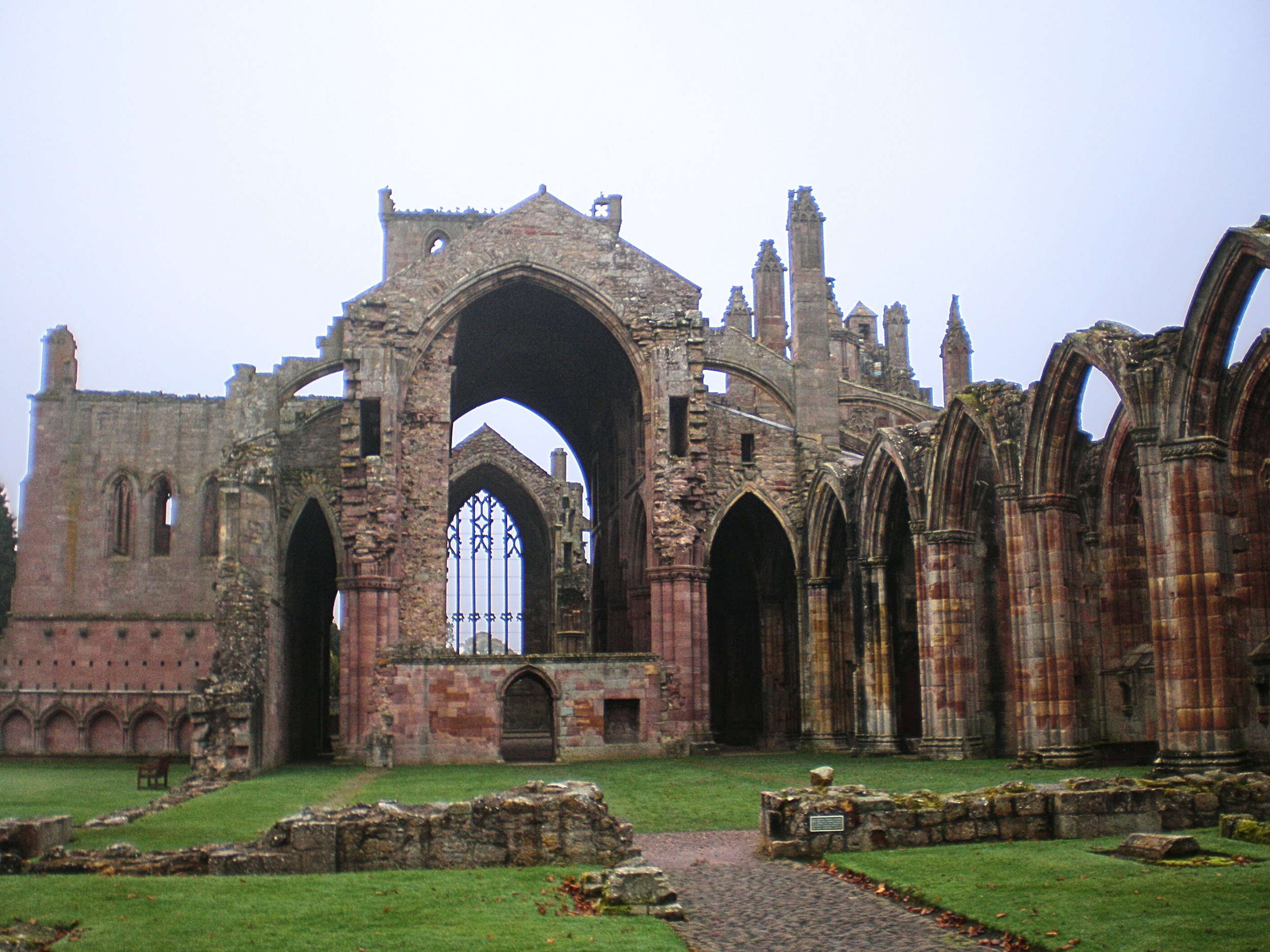
The ruins of Melrose Abbey
This post contains affiliate links. If you choose to purchase through one of the above links, I will receive a commission at no additional charge to you.
What is Melrose Abbey?
PIN ME!
An abbey is a property where monks (also called brothers) would live and work in a religious community.
Melrose Abbey is one founded by the Cistercian order of monks, whose communities focused on agriculture, engineering, and metalworking.
Founded in 1136, Melrose was the first Cistercian monastery in Scotland, following closely behind other influential Cistercian monasteries in the UK: the more well known Tinturn Abbey in Wales (1131), and just before Ireland's Mellifont Abbey in 1142.
[We managed to squeeze a quick trip to Mellifont Abbey in on our 10 day Ireland road trip, which I also cannot recommend enough!]
When it was established, Melrose Abbey drew on an earlier monastic tradition in the area: there had been a monastery just a few miles away from the 600s to 800s.
When King David I began to scout places for the first Cistercian monastery, he originally wanted to put it on the same, older abbey site, but the land where Melrose was ultimately located was much better for the agricultural focus of the monks.
Interestingly, that same King David is the one who, according to legend, also founded the Holyrood Abbey that you can see at Holyroodhouse in Edinburgh.
Here are 2 itineraries that include Holyrood Abbey, if you want to add that into your Scotland trip, too:
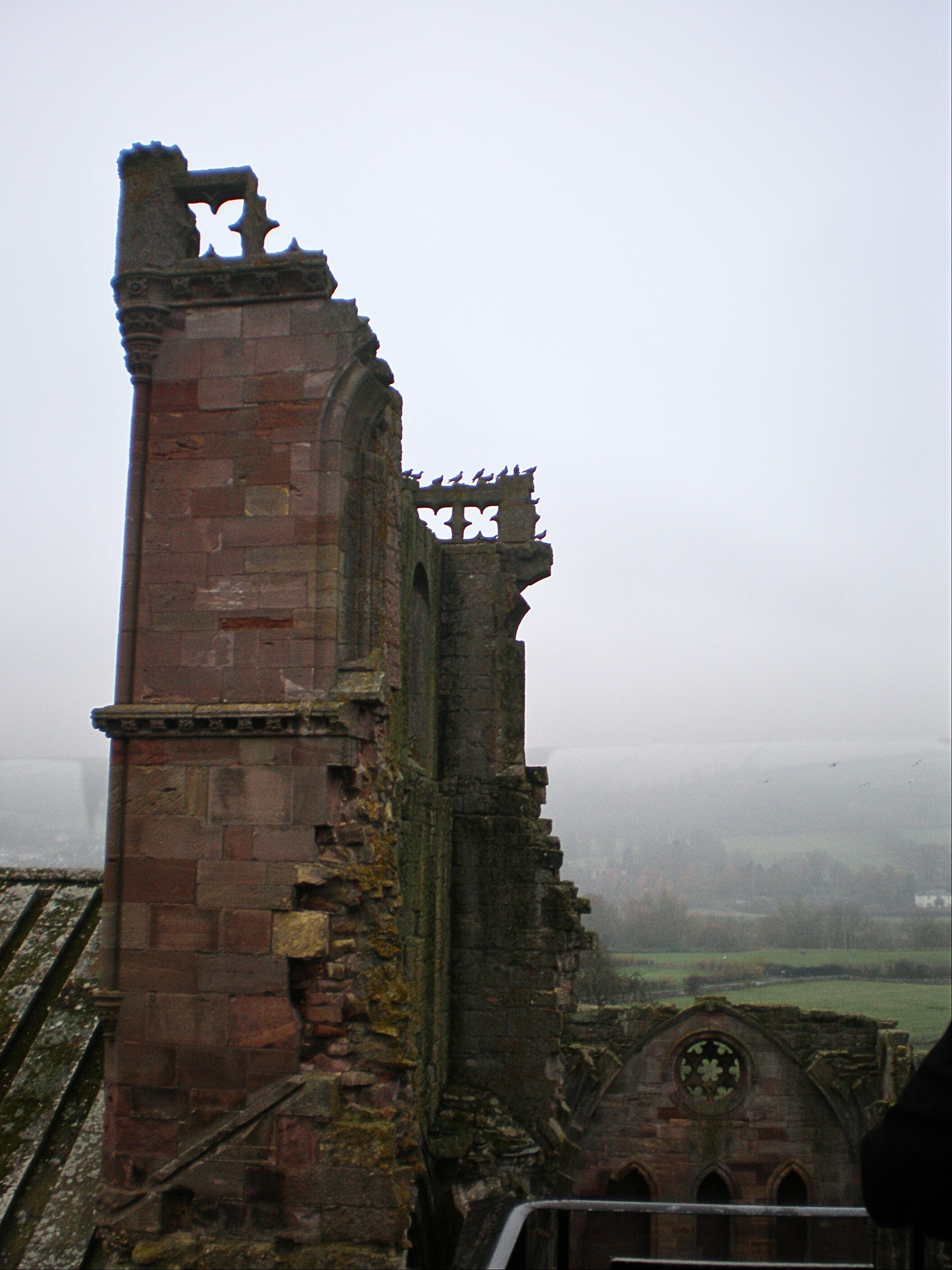
The ruins of a tower on top of Melrose Abbey
How Long Should My Visit Take?
The property isn’t huge, so you should be able to hit the highlights with time to linger over the most interesting areas in 1-2 hours.
Our visit was on the longer end of that span, as we got really interested in reading various gravestones and looking at the many carvings on the exterior of the church.
If you happen to be visiting while the free guided tours are going on (everyday but Sunday and Monday), make time to go on that, too.
The docents are extremely knowledgeable about the property, and they will point out many architectural and historical elements that you wouldn’t know about otherwise.
Taking one of these tours is free with admission, and it will add about 20-30 minutes to your overall visit.
When is the Best Time to Visit Melrose Abbey?
Unlike nearby Rosslyn Chapel, Melrose Abbey typically isn’t flooded with visitors, so you don’t have to be quite as particular with your timing here.
But, don’t think that lower crowds means that it isn’t worth a stop!
For guaranteed low crowds, visit in the mornings or on a weekday.
If you’re visiting on a weekend (especially during the summer), arrive as close to opening time as possible. During the late spring and summer, the abbey opens at 9:30 AM. During the fall, winter, and early spring, it opens at 10 AM.
How to Get from Edinburgh to Melrose
After our trip to Roslin, where we explored Rosslyn Chapel and Rosslyn Castle, the little white Hyundai hatchback rental car headed off on its merry way.
We were headed to Melrose, which is home to gorgeous abbey ruins and quite a bit of Scottish history. It was built by the Cistercian monks over 900 years ago. It's been ruined for some time now, but the remaining bits are still breathtaking.
If you want to see Melrose Abbey and any of the other area attractions, you’ll need a rental car.
In general, getting from Edinburgh to Melrose is pretty easy, and, if you wanted to base yourself in the city, you could do Melrose as one of your day trips from Edinburgh.
There's also a direct train from Edinburgh to Melrose that makes for a great way to see the abbey ruins without the need to rent a car.
Another option would be to take a guided tour of both Melrose Abbey and Rosslyn Chapel, which takes the stress out of getting here completely.
This tour leaves from Edinburgh and makes a day trip of both historic locations, as well as the home of poet Sir Walter Scott and the gorgeous Dryburgh Abbey.
However you get to Melrose, it's worth it, as the abbey at Melrose and the Melrose Abbey cemetery are hauntingly beautiful and filled with plenty of history.
>> Explore Edinburgh and beyond on a 7-day road trip through Scotland here. <<
Melrose Abbey and British Literature
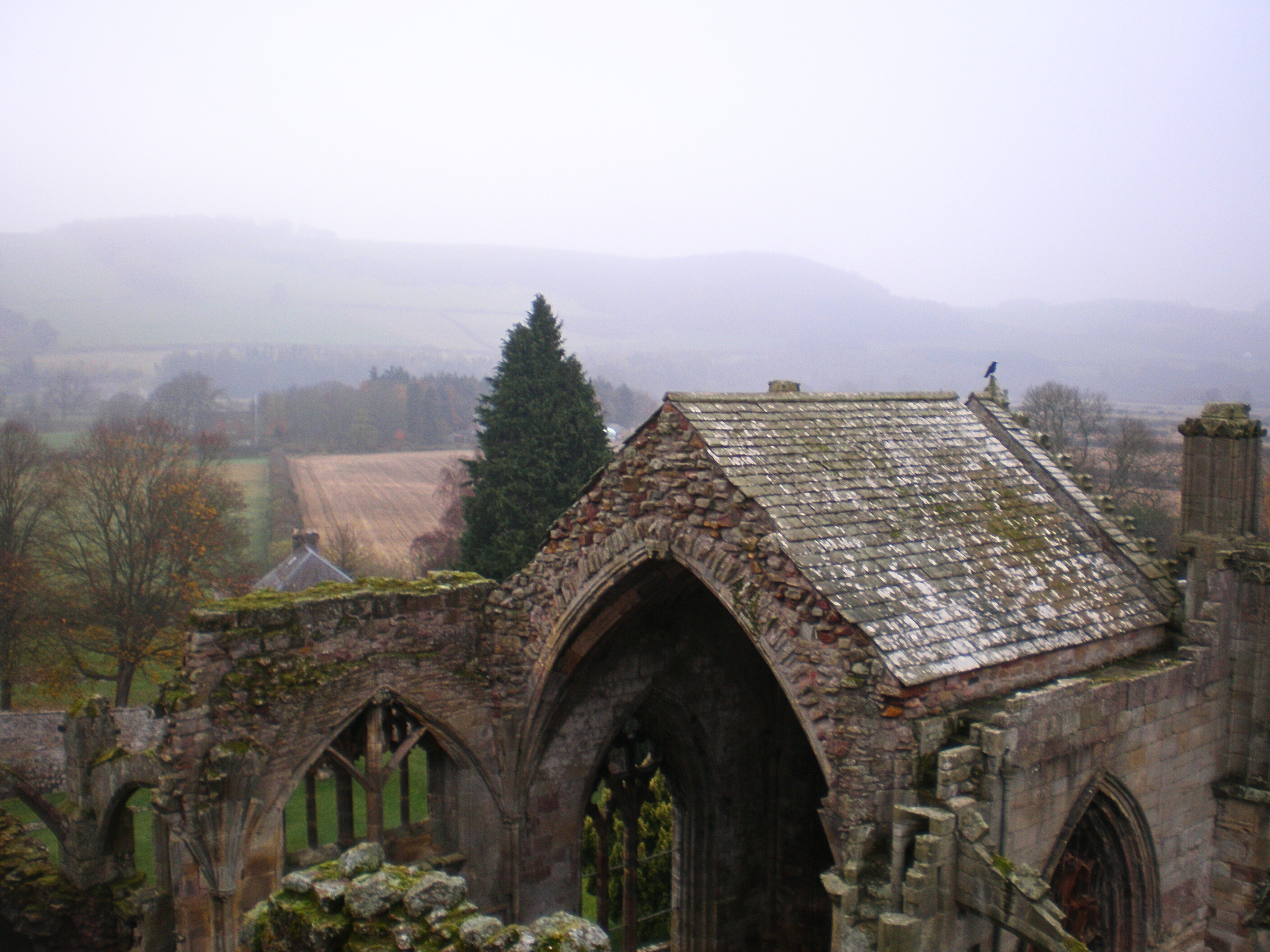
Melrose Abbey on a foggy morning
During the Romantic period, there were a lot of poets and writers wandering around these old ruins by moonlight looking for inspiration.
William Wordsworth wrote his famous poem "Lines Composed a Few Miles above Tinturn Abbey" in this manner, and it tends to be the go-to poem for British ruins.
However, Sir Walter Scott, another one of these moonlight-loving, wandering Romantic poets, focused on several historic ruins near Edinburgh, including Melrose in his poem "Melrose Abbey."
In it, he recommends:
If thou wouldst view fair Melrose aright,
Go visit it by the pale moonlight;
For the gay beams of lightsome day
Gild but to flout the ruins gray.
You won't get to heed his advice since the abbey isn't open at night, but the poem is well worth a read before you visit.
NOTE: Sir Walter Scott also immortalized Rosslyn Chapel and Doune Castle in poems. You could easily string together a short road trip to see those sites and Melrose Abbey over 2 or so days.
Explore more of the British Isles with these posts:
Points of Interest at Melrose Abbey
Robert the Bruce's heart is buried here (maybe).
The leading theory, based largely in legend, is that it belongs to this figurehead in the quest for Scottish independence against the British, but all that we really know is that there is a heart buried on the grounds.
There’s a small plaque commemorating Robert the Bruce to the left of the abbey, but that’s not where the heart is buried. It’s inside the abbey somewhere.
There is a bagpipe-playing pig water spout on the right side of the abbey, which is the best motif I’ve seen yet in church carvings.
You can find the carved pig by walking into the graveyard to the right of the abbey, and looking in the corner near the back end of the lower roof area.
As with Rosslyn Chapel, we were the only ones there (I highly recommend visiting Scotland in the off-season!), so we were free to wander the property once we'd had a quick chat with the man at the Melrose tourist information booth.
The abbey tours are self-guided, so grab an audioguide and go at your own pace.
There are three main areas of interest:
the interior of the chapel,
the ruins of the Cistercian living/work quarters, and
the Melrose Abbey cemetery.
Be sure to spend time in each to get a full picture of the property’s history and architecture.
The Chapel Interior
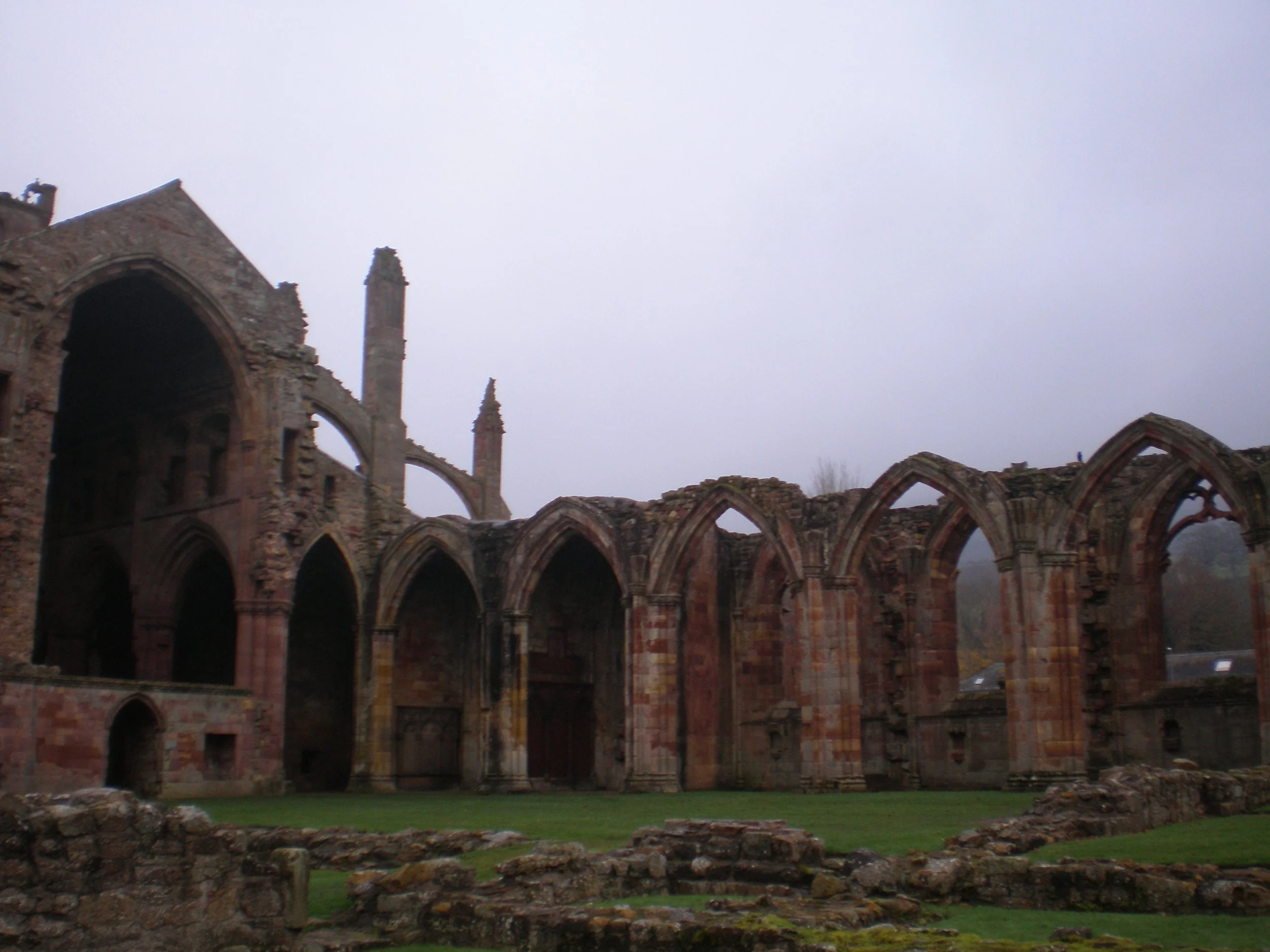
So many Gothic arches, so little time.
2026 NOTE: There is an architectural study currently being done on the church ruins to determine how to be stabilize them for future generations. Until this study and any required work is completed, you can tour around the exterior of the abbey, in the graveyard, and through the monks’ living/working areas.
Going inside the chapel and up onto the roof is a really special addition to the experience of visiting here, and I hope they reopen to visitors soon.
We started in the chapel ruins as a way to get a feel for the entire property and learn more about the Cistercian community that called this place home for over 400 years.
Although the Cistercians were a religious community, they welcomed interaction with the town that grew up around them.
This differs from other religious communities, some of which live hermetic lives devoted to silence, self-reflection, and prayer.
When you walk through the abbey's chapel, you can see the two main worship areas: the one at the front and closest to the alter was for the Cistercian monks, while a second worship area in the back was for laypeople and community members.
Although the abbey no longer has windows or a roof in places, it's easy to see how impressive this space must have been during its most prosperous.
After you've had a moment to take in the alter area and the cavernous interior of the main worship space, head up to the roof via a winding spiral staircase set back into the stone walls.
On your way, look for an inscription that reads:
"Be halde to ye hende."
Translated from Middle English, that means "Keep in mind your ending," which is a way to remind those reading the inscription that they should work through the days with their mind on their lives' end (and, for the religious, that meant their salvation and afterlife). T
he inscription by John Morow was so beloved by the community that it's now been adopted by the town of Melrose as their motto.
The huffing and puffing that you'll do climbing the spiral staircase will be rewarded when you get to the roof and are able to gain a new perspective on the abbey, town of Melrose, and the beautiful surrounding area.
Even with the fog that lingered over our visit, we were able to see into the countryside just outside of Melrose.
Melrose Abbey Buildings
As you wander the grounds of the abbey, you'll see stones in the shapes of the now completely destroyed buildings.
Walking along these pathways gives you a better idea of how the religious community here managed to work to support themselves and the town of Melrose despite the limited offerings here during the abbey's heyday.
This is where the audioguide comes in handy, as you can learn about each of the plots of land and how the community used each of them.
In the Commandator's House, you can walk through a small museum that showcases the many artifacts that were discovered when the abbey went through a restoration in the late 1990s.
Most of the Melrose museum pieces date from the property's most productive phase during the Middle Ages, and, while it is a limited collection, it is arranged for maximum impact and learning opportunities.
As I mentioned earlier, Melrose Abbey is known for the fact that Robert the Bruce's heart is buried here. This is another must-see along the walking tour around the property.
Robert the Bruce (1274-1329) was also known as Robert I, and served as the Scottish king from 1306-1329.
He's a national hero thanks to his campaign against the English to recreate an independent Scotland, and, because of that, he's revered in much the same manner as William Wallace, who you probably know from the movie Braveheart.
The rest of Robert the Bruce is buried in Fife at Dunfermline Abbey, roughly an hour and 45 minute drive from Melrose.
The Melrose Abbey Cemetery
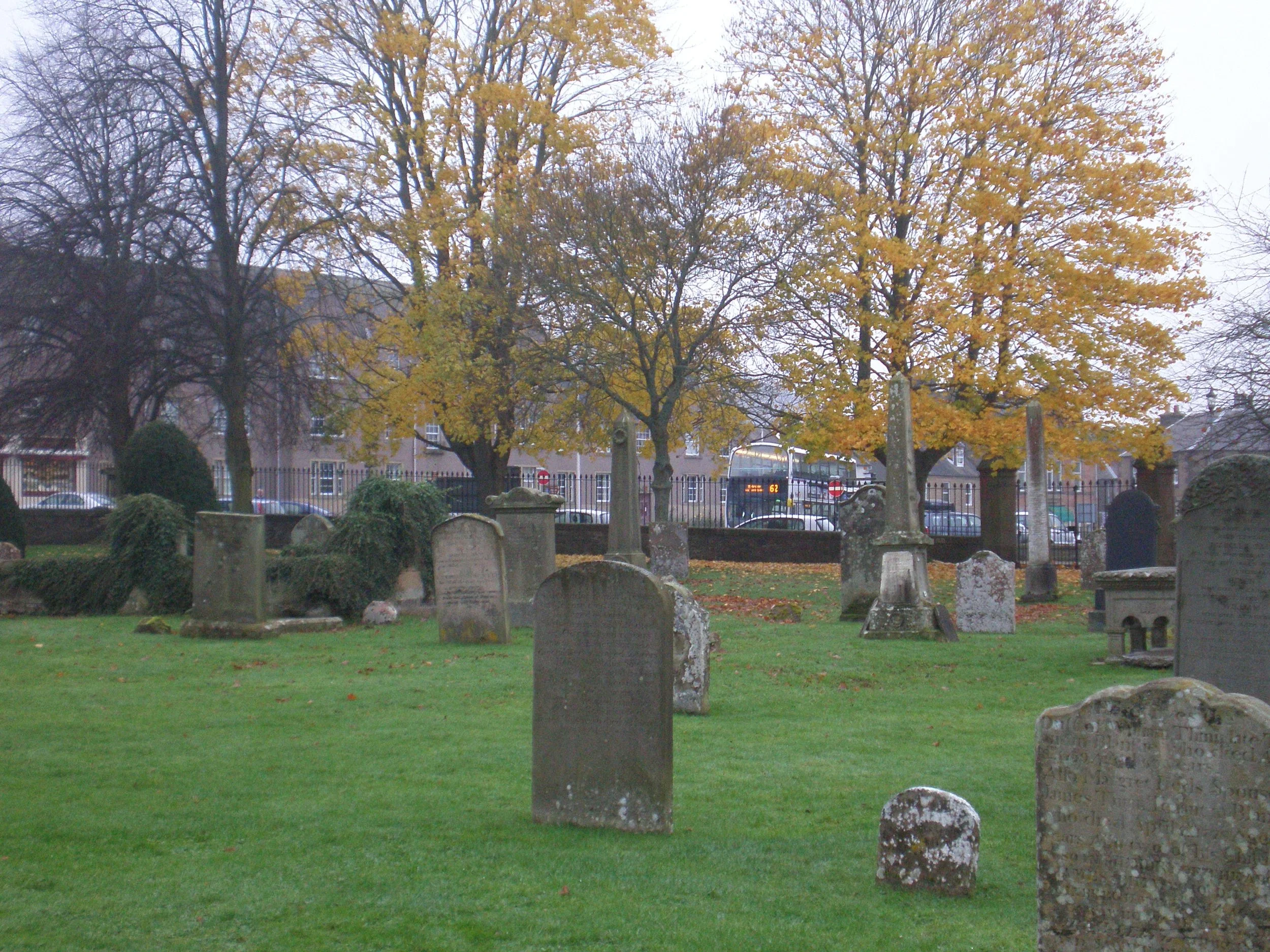
Although Robert the Bruce is the most famous of Melrose Abbey's permanent inhabitants, there are several others of note to look for as you walk through the cemetery.
Among the people buried here are:
King Alexander II, the Scottish king who ruled slightly earlier than Robert the Bruce;
the man who invented the kaleidoscope, Sir David Brewster;
the fourth abbot of Melrose Abbey and, later, the Bishop of Glasgow, Jocelin; and
St. Waltheof of Melrose.
While you're reading the tombstones, don't forget to look for the rainspout that's decorated like a pig playing the bagpipes.
Those monks in charge of carving the exterior had a sense of humor as you can also find a chef, angels in flight, and devils.
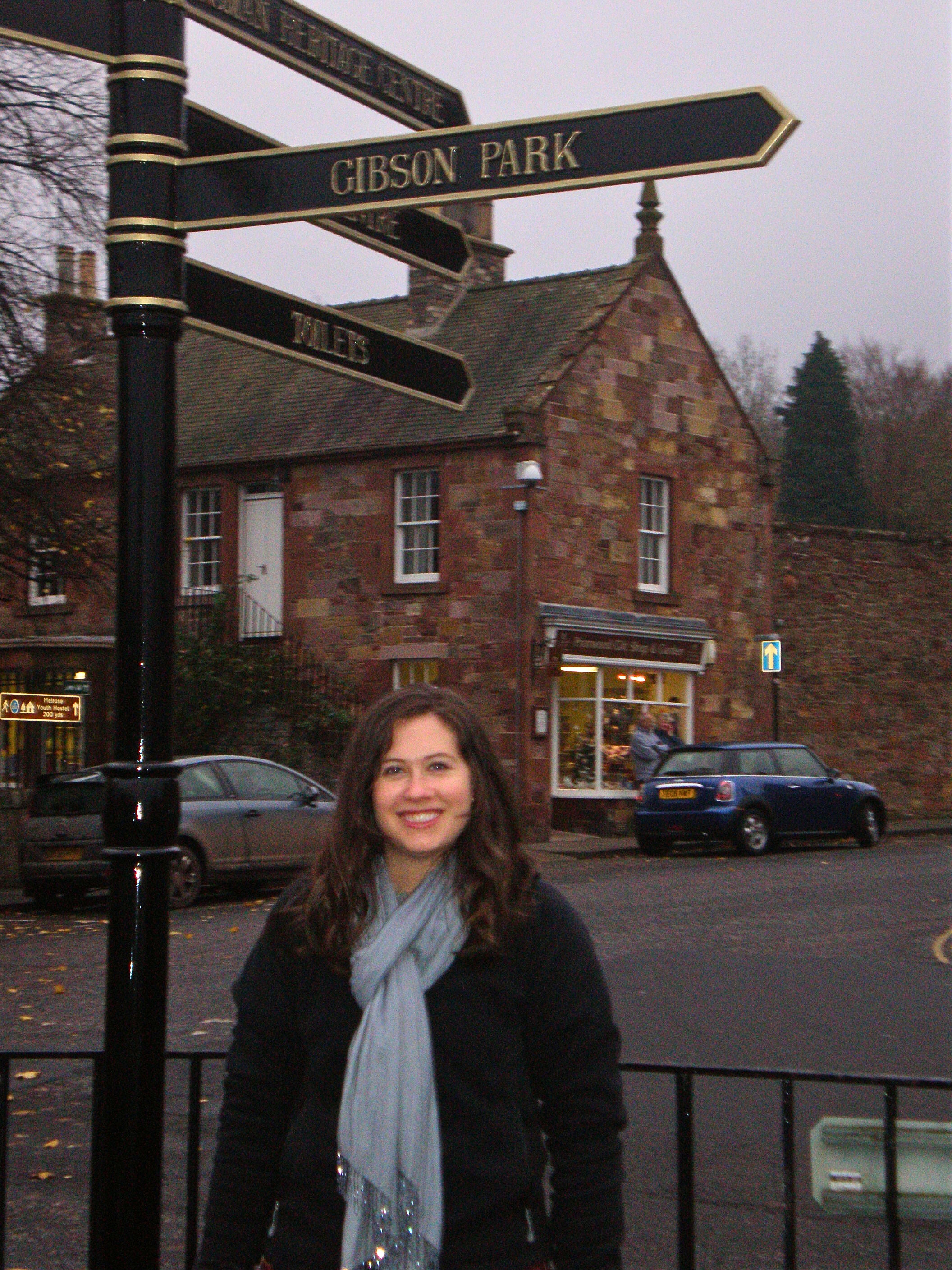
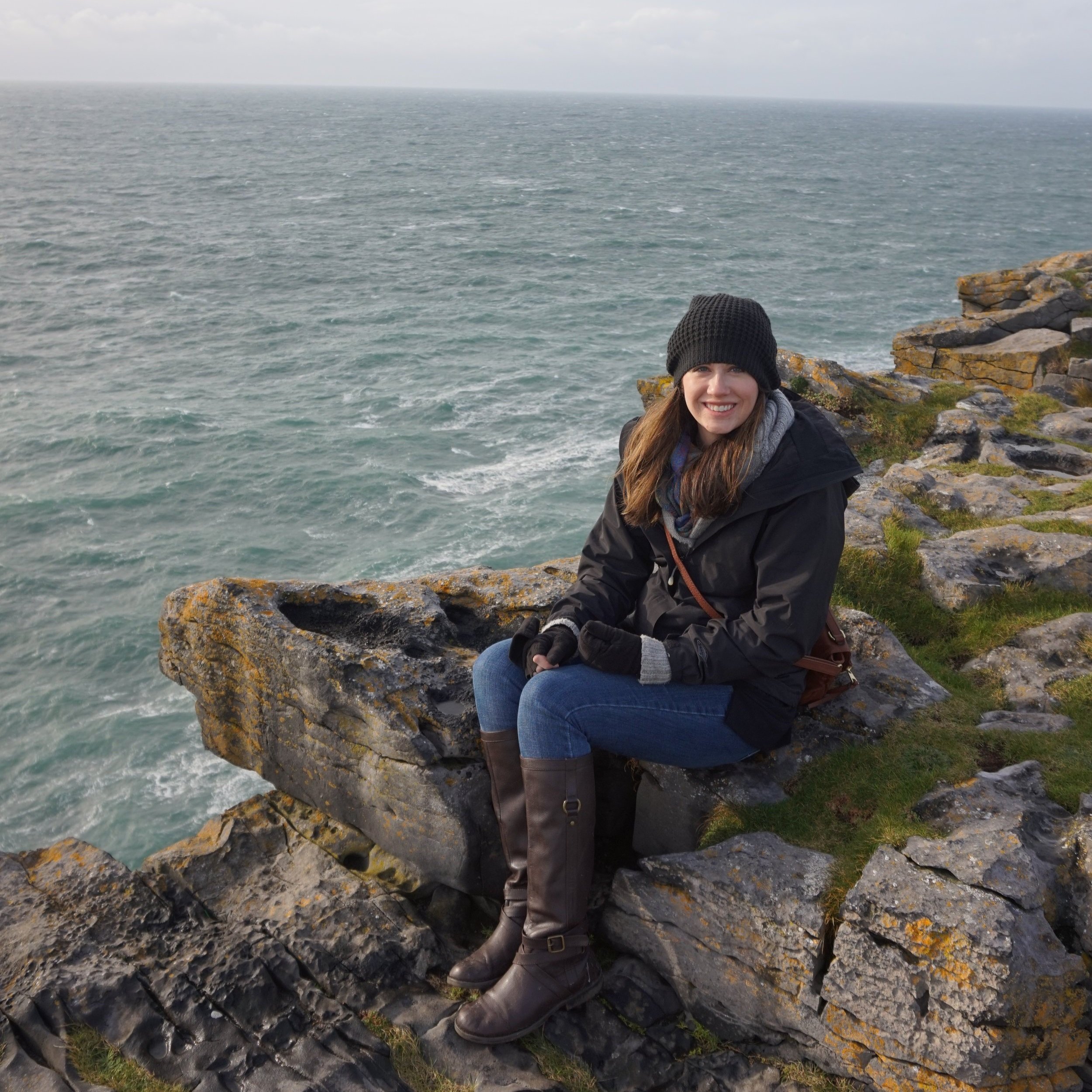
Me on the road in front of Melrose Abbey
On a personal note, we discovered something quite fun as we were leaving the cemetery and heading back into the car park: a sign with my mom's maiden name on it.
One of the things on my travel bucket list is to visit the 4 places that my ancestors lived.
We ended up seeing where the Buchanan clan hailed from on this trip, Loch Lomond, and it was fun to find all of the references to Gibsons along the way.
The Gibsons are a sept, or branch, of the Buchanan clan).
Apparently, my ancestors were roaming around this area of the world, too!
[Note: We visited here before we had kids, but now, I have a son named Gibson, so this is even more awesome.]
What to Know before You Visit Melrose Abbey
It is open year round.
There are shortened hours from October to March, but you can visit it any day of the week all year other than December 25 and 26, and January 1 and 2.
Use the Explorer Pass to get in for free.
Otherwise, a visit costs £8.50 for adults, £5 for kids 5-15, and £6.80 for seniors. Kids under 5 are free. All admissions come with a free audioguide. [Prices correct as of 2026.]
This pass is a great option if you’re seeing Melrose as part of a larger visit to other areas of Scotland.
Once you purchase the pass, which is good for 2 weeks, you can also visit Edinburgh Castle and Stirling Castle for free, and many, many more of my favorite Scottish historic sites like Doune Castle, Iona Abbey, St. Andrews Castle and Cathedral, and Urquhart Castle.
Melrose, Scotland, isn't a huge town, so parking is limited.
If you're planning on visiting during peak times, you'll want to head towards the paid parking lot across the street from Melrose Abbey.
If you get there early enough (or if you're lucky enough!) you might be able to find a parallel parking spot right alongside the road in front of the abbey.
The ground on the abbey property is uneven, so wear sturdy shoes.
Add in the high likelihood that it will be raining and/or foggy during your visit, and you're looking at some uneven, slippery surfaces.
Avoid any turned ankles or slips by leaving your platform shoes at the house and wearing some practical footwear with gripping soles.
I recommend tennis shoes with thick soles or waterproof Chelsea boots.
There aren't any food options on-site.
If you're one to need a snack break (or if you're traveling with a snack-loving kid), you'll either need to pack something to take in with you, or leave the property when you're ready to eat.
There is a cute cafe called Marmion’s Brassiere across the street from Melrose Abbey on the other end of the paid car park on Buccleuch Street. You can see the side of the restaurant from the fence in front of the abbey.
You can get coffee, tea, and pastries here if you’re looking for something light, or a full meal of steak, pasta, fish, or burgers.
You can stay on-property.
If you’re looking for a place to stay that’s incredibly memorable, consider booking the abbey’s Cloister House.
It’s located on the property just behind the abbey ruins, which you can see from several areas of the house.
While it was built in 1810 for the church’s minister, the interior has been redone to include modern conveniences while retaining its historical charm.
Guests also get free passes to the abbey.
We love staying in historic properties and hotels whenever we can, so this option would be a no-brainer for me.
You can book the Cloister House here.
If the Cloister House is booked for your vacation dates, I recommend staying just a few minutes’ walk from the abbey at the King’s Arms Hotel.
The hotel is located in a building that dates to the late 1700s, and its location on Melrose’s High Street means that you can easily walk to the abbey and nearby shops and restaurants.
Or, you can stay in and eat at the hotel’s adorable restaurant and bar on the ground floor, where you’ll find everything from personal pizzas to tacos, burgers, and steaks.
There’s much more to do in this area than just the abbey.
If you are able to extend your time in this part of Scotland, you’ll have plenty of things to add to your itinerary.
Abbotsford House, the home of poet and writer Sir Walter Scott, is 2 miles west of Melrose.
Dryburgh Abbey is another ruined abbey, but the property is, on the whole, in much more of a complete state than Melrose Abbey. It’s also the burial place of Sir Walter Scott if you’re interested in following his entire life story!
There’s a gorgeous hotel on the abbey grounds that’s well worth a night or two if you want to feel like royalty on your vacation.
Head way back into Scotland’s history with a trip to the Trimontium museum in Melrose. It’s less than a block from the abbey’s entrance gates, and includes a fascinating look at the culture, accomplishments, battles, and clothing of the Roman soldiers who lived here between roughly 100 and 300 CE.
What parts of Scotland have you visited? Are you interested in seeing historic ruins in Scotland when you visit next?