14 Historic Sites and Tours in Dublin for History Buffs
While you’re in Dublin, don’t miss these incredible historic sites!
There are many ways to approach Dublin, but my favorite is through the history, and, thankfully, history buffs will find plenty to see and do in Dublin after they've sampled that first pint of Guinness and gotten their first glimpse of the River Liffey.
Dublin, as Ireland’s capital city, has seen many of the country’s most important moments, and you’ll find everything from the country’s oldest university to sites tied to Irish independence.
Here are my favorite historic spots in Dublin, so brush up on your Irish history, strap on your walking shoes, and dive into this incredible city.
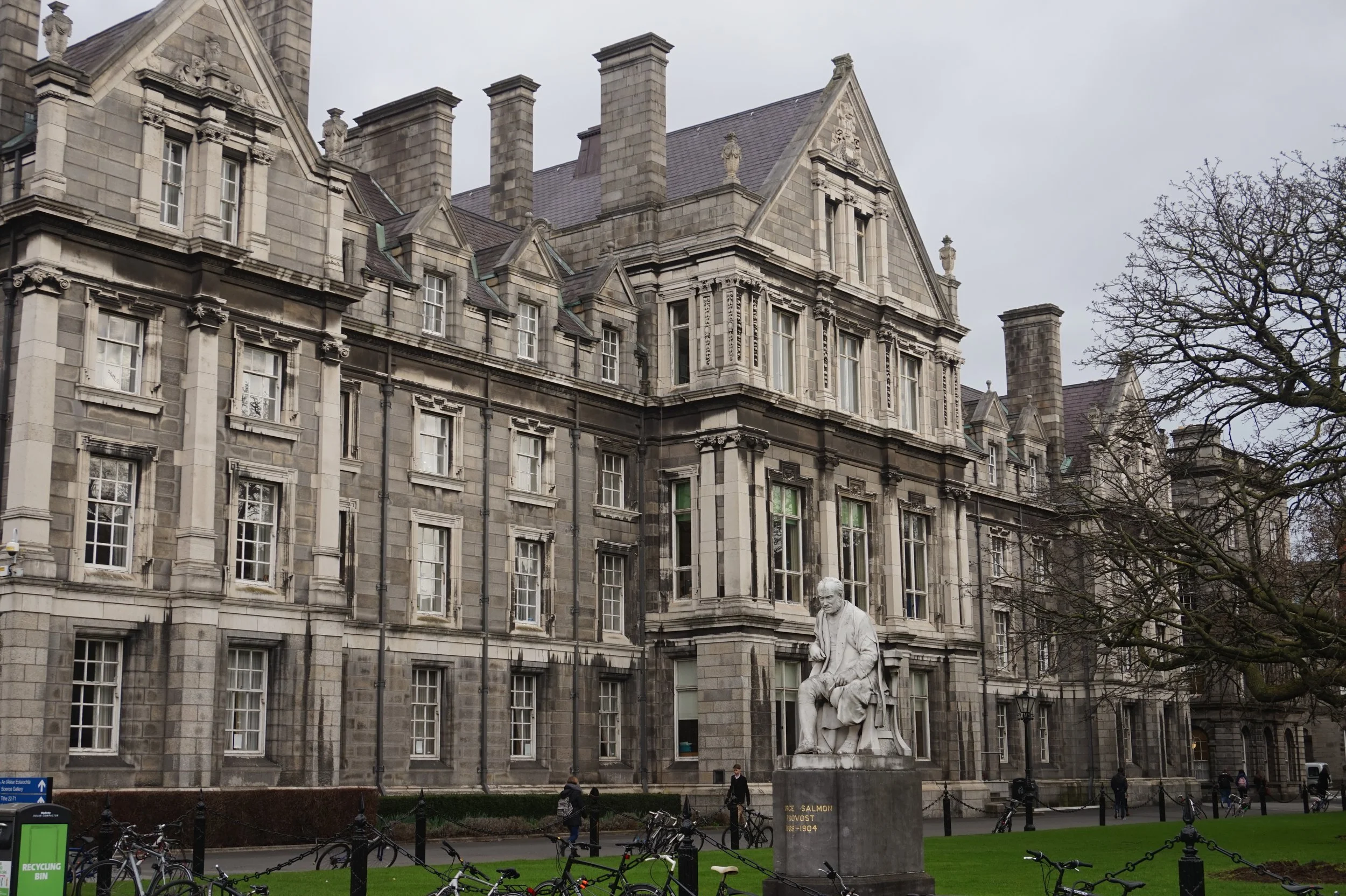
Exterior of Trinity College Dublin
This post contains affiliates. If you choose to purchase through one of the links, I will receive a commission at no additional charge to you.
Best Dublin Historic Sites to Visit
1) Book of Kells
You're not a book nerd until you add seeing a centuries-old volume to your travel bucket list.
As a proud literature nerd and former English professor, I immediately knew that I had to get to the Book of Kells while we were in Dublin.
And it did not disappoint!
This important book is located at Trinity College, which is Ireland’s oldest university. If you’re interested in visiting other UK universities like Oxford University, St. Andrews, or Cambridge, you’ll definitely want to wander around Trinity College before or after your visit to the Book of Kells.
When you enter the space at Trinity College, you’ll wander among the informative displays in the exhibit before filing into a dimly lit chilled room.
There, you’ll be able to see the Book of Kells, which is a series of 4 illustrated copies of the New Testament Gospels.
The text, which dates to around 800 AD, was every bit as beautiful as I'd hoped.
Tickets
If you're planning a visit, know that there's a different page on display every day, so every walkthrough will bring a new surprise. The Book of Kells is located inside the Long Hall on Trinity College's campus.
Tickets can be purchased ahead of time online so you don't have to wait in line. However, these tickets are more expensive than the ones at the doors, so you'll have to do a cost-benefit analysis there.
You'll get a better deal if you book a combo tour ticket with the Book of Kells access, Dublin Castle, and Christ Church. This included a knowledgeable guide and skip-the-line access at Book of Kells.
NOTE: There's no photography allowed inside the Books of Kells exhibit.
Visiting with Kids
Definitely take your kids to see the Book of Kells while you’re in Dublin!
Young readers will love seeing the elaborate, handwritten pages, and kids interested in history will get a lot out of the helpful interpretive materials.
This exhibit is best for kids 8 and up, as anyone younger just isn’t going to have the scope for history and literature that would take to truly appreciate it.
The Book of Kells official website has some great free workbooks for kids if you want to emphasis that teaching moment further or prep your kids to visit.
Need to brush up on your Irish history before visiting Dublin? This book is hilariously effective and it's illustrated, so it ticks all of the major must-read boxes.
2) Long Hall, Trinity College
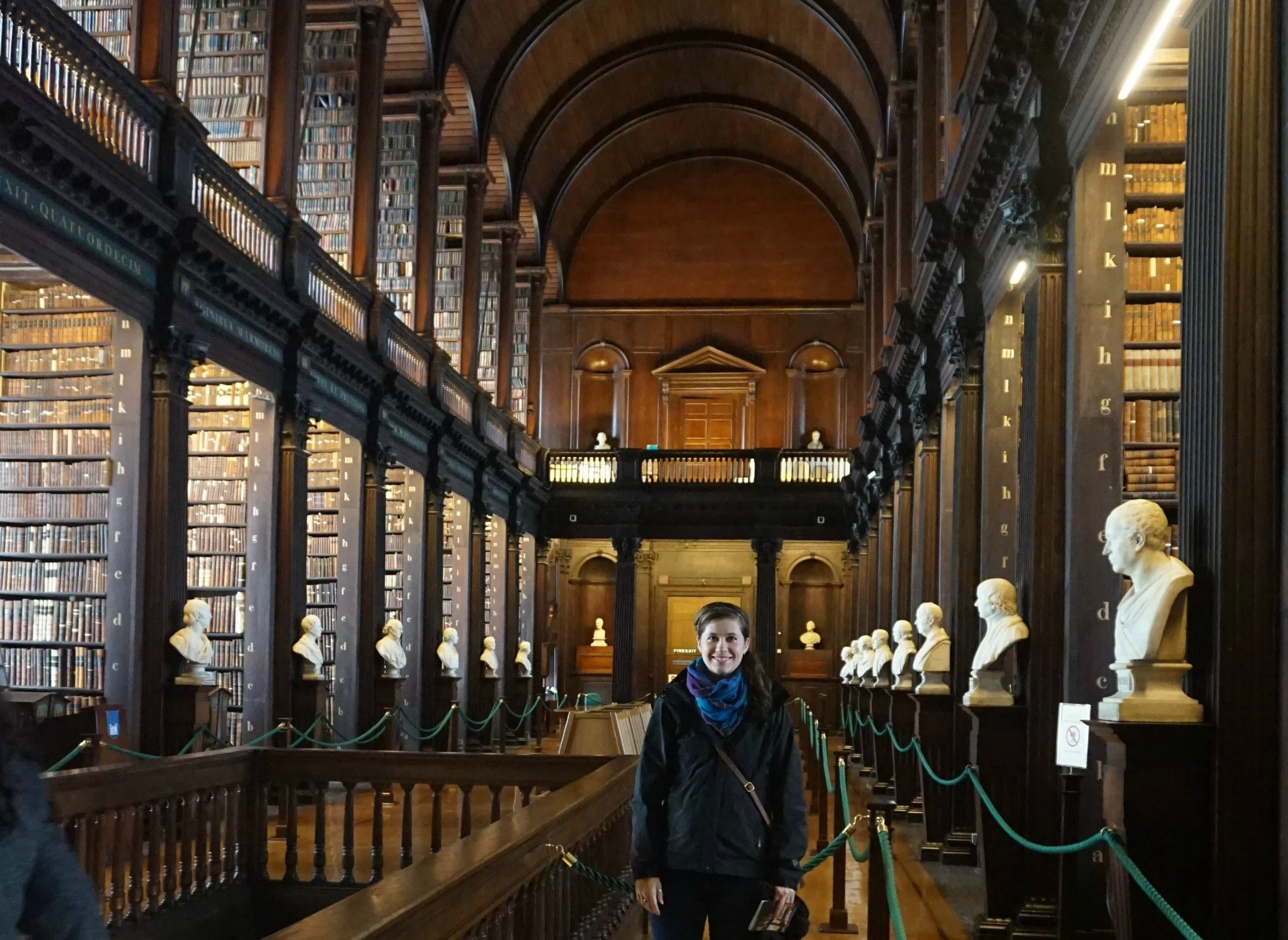
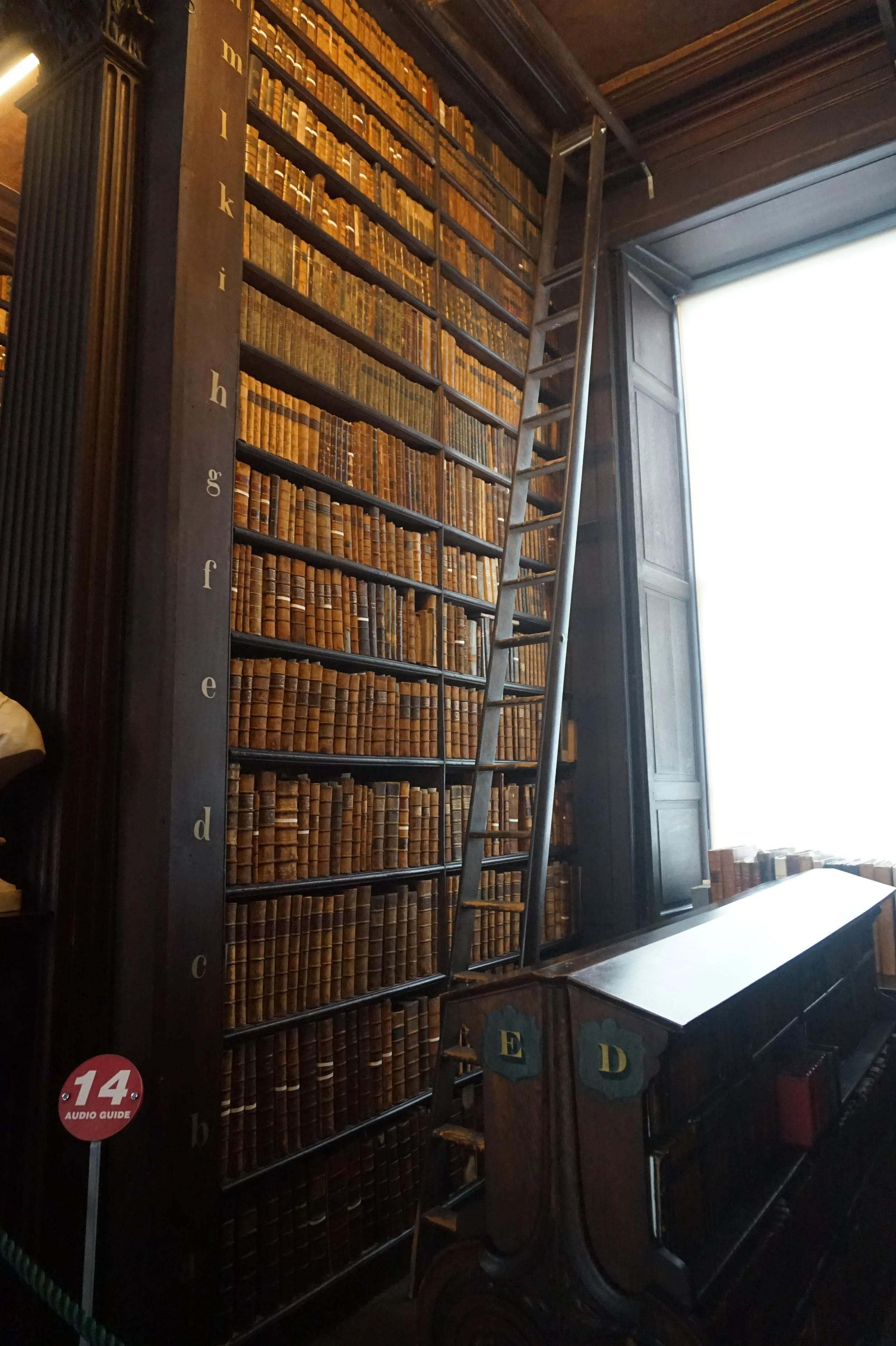
It's kind of cheating to do separate entries to the Book of Kells and Long Hall since access to both comes via the same area of Trinity College, but I loved both so much that I decided give each its own spotlight.
While the room, with its vaulted ceiling and towering stacks of books is impressive enough on its own, both the hall and its contents have deep historical roots.
The hall dates back to the early 1700s, while that distinctive ceiling was added in the mid-1800s.
The building in its original form couldn't hold any more books, so those in charge at Trinity College decided it would just be easier to add a barrel ceiling instead of building a completely new library.
The end result is an iconic, striking piece of architecture, and one of the world’s most beautiful libraries.
Once you manage to pull yourself away from staring at the structure of the library, you'll notice the immensity of the collection.
There are over 200,000 volumes kept here, and they're the oldest, most historical of Trinity College's holdings.
You'll find:
an original copy of the 1916 Proclamation of the Irish Republic, the document of the Easter Rising, probably the most crucial of the Irish War of Independence,
a 15th century wooden harp and
14 marble busts of writers, philosphers, and Trinity College patrons. Look for Jonathan Swift, who's satirical essay "A Modest Proposal" famously suggested that Irish parents just eat their kids so they wouldn't have to deal with the burden of feeding them any more.
The library originally filled up so quickly because it had a copy of every free book that had been published in Britain or Ireland during that time.
Tickets
A visit to Long Hall is included in your Book of Kells ticket price, and bundling your Trinity College visit with a ticket to Dublin Castle is a great way to save money.
Unlike in the Book of Kells room, Long Hall allows you to take as many photos as you'd like, so bring your camera.
If you’ve ever wanted to do a library themed photo shoot, this is the place to do it.
Visiting with Kids
There’s not much here that screams “kid-friendly,” especially for younger visitors, but older kids will enjoy the architecture and seemingly endless stacks of books.
If I’d gone here as a kid, I would’ve felt as if I’d walked right into a Harry Potter novel or movie, so keep that in mind you have children with similar interests.
The films weren’t ever shot here, but the overall look of the Hogwarts library in the movies was heavily influenced by the stacks, dark wood, handlettered signs, and gilded spines here.
3) National Museum of Ireland, Archeology
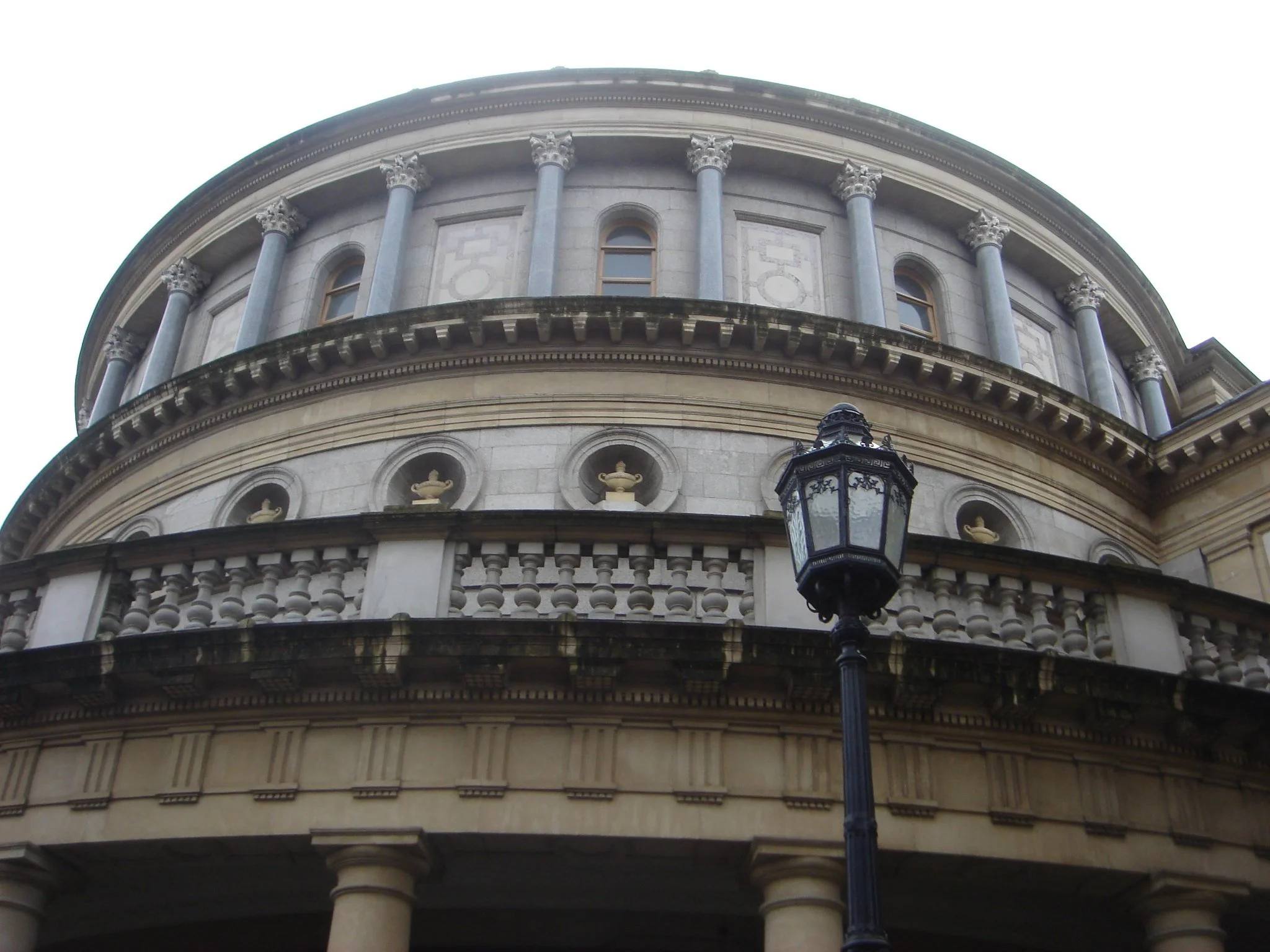
Exterior of the Museum of Ireland Archeology building | source
It might be small compared to some of the other museums you've seen, but you definitely should NOT pass up an opportunity to visit the Archeology section of the National Museum in Dublin.
There are 4 different locations of the National Museum of Ireland, each of which focuses on a different historical theme:
Archeology is located on Kildare Street, and focuses on items from prehistory to the Vikings,
Collins Barracks is located on Benburb Street, and looks at military history and decorative arts,
Natural History is located on Marrion Street, and showcases all things natural history, and
Folklife is located in County Mayo (3.5 hour drive), and focuses on daily life and artifacts of the Irish people
Of these 4, the Archeology branch and the Natural History Branch are the most convenient from the Dublin city center as they are easily walkable from Temple Bar, the River Liffey, and Dublin Castle.
These 2 are right next to one another, so if you’re also interested in learning about the flora and fauna of Ireland after you’ve walked through the Archeology branch, it’s excellent, too. (More on that branch below.)
If you wanted to go through my recommended historical sites in chronological order, this is where you’d want to start as it focuses on the most distant parts of Irish history.
You'll find some incredible prehistoric artifacts, or artefacts, if you prefer the British English version, including a massive, handcarved, 50-foot-long boat that dates to 2500 BC.
One of the most interesting exhibits is the one that centers on the Bog People called Kinship and Sacrifice.
I'd originally read about the Bog People during a British and Irish Poetry class in grad school, and was stunned that the preservation of these ancient bodies was even possible.
Seeing them in person is even more awe-inspiring and should not be missed.
As a result of human sacrifice, these men and women were killed and then thrown into the bogs of County Offaly and County Meath.
Instead of breaking down the bodies as most soil does, the bodies were instead preserved in the cold, moist peat.
When they were discovered in the early 2000s, the bodies looked so fresh that they were originally treated as recent murder victims. That is, until it was discovered that the bodies dated to between 400 and 200 BC.
TIP: If you want to learn more about the Bog People, I'd suggest reading The Bog People by P.V. Glob, which is an excellent overview of the bodies who were found in the marshes of Northern Europe.
The book predates the discovery of the Irish Bog People, but much of the research and observations in this book still hold true to the people in the Kinship and Sacrifice exhibit.
Irish poet Seamus Heaney, who is one of my favorite writers, wrote a gorgeous collection of poems centered around his musings on the intersection of Irish history and Northern European history, and are a must read if you're interested in how Ireland is treated in contemporary poetry.
"The Tollund Man," "Punishment," and "The Tollund Man in Springtime" are great ones to start your reading and even more powerful after you’ve seen the bog bodies.
The National Museum of Ireland is within easy walking distance of both the River Liffey and Trinity College, so stop by after you visit the Book of Kells.
Tickets
Entry is free, so come and go as much as you'd like during your time in Dublin.
Visiting with Kids
While younger and more sensitive children might be frightened by the bog people, the displays in that area of the museums are done very well so as to make the experience as approachable and informative as possible.
There are multiple signs letting you know when you’re entering the bog people exhibit so you can choose to skip it if you don’t think your kids are up to that area.
While I’ve talked about the bog people exhibit a lot since it’s clearly my favorite, there’s so much more to this museum than that.
There are exhibits on Vikings, medieval religious objects, Egyptian relics, and much, much more. Whatever area of ancient history your child is interested in, you can probably find a related item or exhibit here!
I also recommend downloading and printing out one of these educational packets for kids that will help guide your family through the museum.
Plan more of your Ireland vacation with these helpful posts:
4) National Museum of Ireland, Natural History
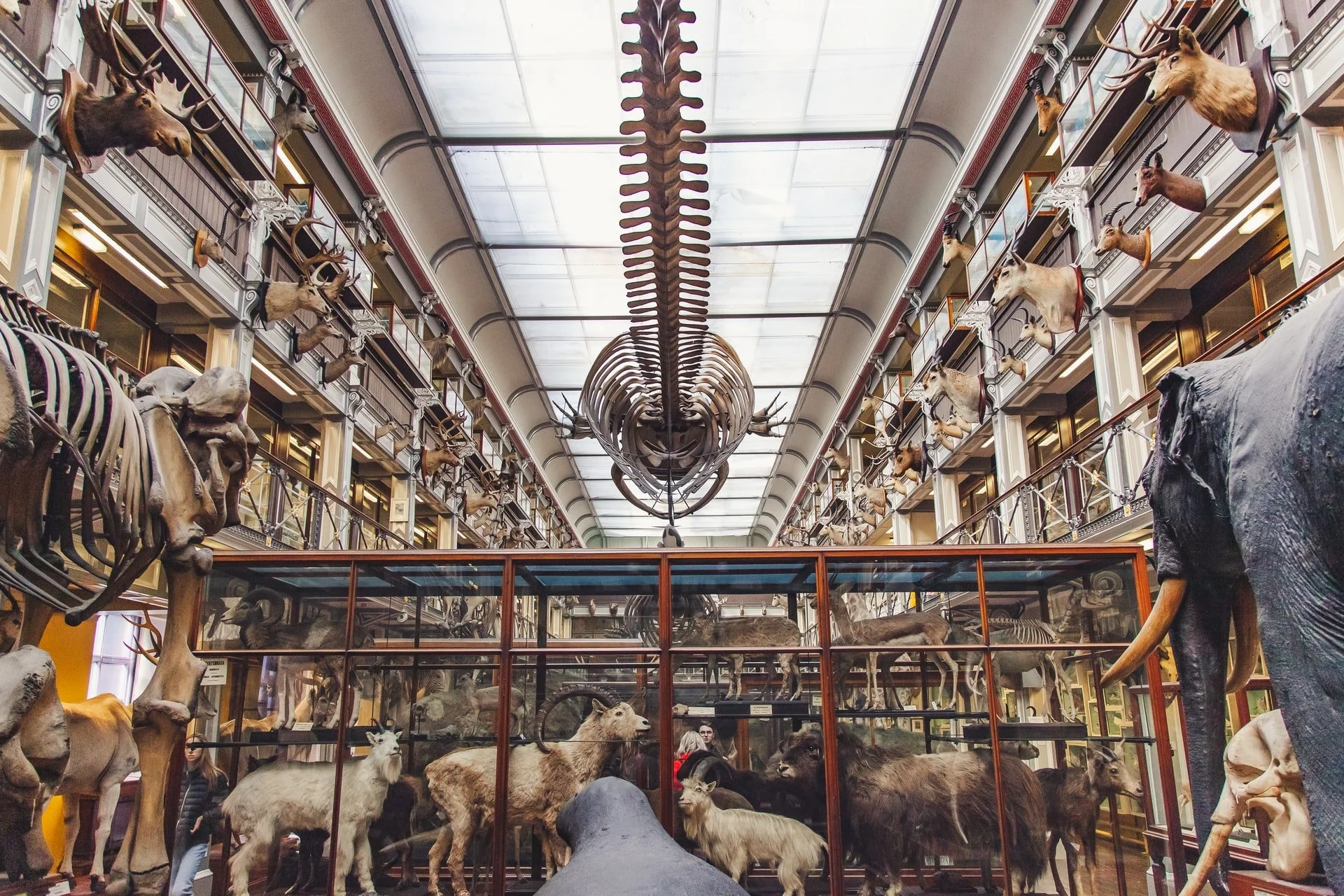
So much taxidermy, so little time
A glimpse into the Victorian obsession of collecting and categorizing the world, the Natural History branch of the National Museum is an interesting (if a bit morbid) look at the animals who share the planet with us.
One of the must-visit specimens is right at the front door: a giant Irish deer looms over you, its massive antlers stretching further than you'd think was possible.
The remainder of the ground floor is devoted to specimens of animals native to Ireland.
There's a lot to see here, and, while it is very well categorized, you might find it a bit overwhelming to take in all at one time.
You'll want to explore the second floor as well.
Here, you'll find a huge room filled with stuffed animals, but not the fluffy kind you hugged as a kid.
There's everything from an elephant to a lion, which allows you to get up close and personal with these animals without the worry of getting eaten or trampled.
Like I mentioned, it's a little macabre to walk around all of these dead animals, but it makes for a fascinating glimpse into the natural world and Ireland's history.
he Natural History branch of the National Museum is on the same block as the Archeology branch, but the entrance to the Natural History building is on a separate street (Marrion Street).
Other highlights:
Check out the samples of nearly 12,000 Irish insects.
See the record trout caught in County Westmeath in 1894. It weighed 26 pounds!
Tickets
This branch of the National Museum has free entry. Feel free to stop in as many times as you’d like while you’re adventuring around Dublin!
NOTE: This branch of the museum is closed for refurbishment in 2026. A reopening date has not been announced.
Visiting with Kids
My family found this museum fascinating, as it’s a bit like a zoo where the animals stay very, very still.
The taxidermied animals allow visitors to focus on the details of teeth, fur, feathers, tusks, and hoofs in a way that you couldn’t in a zoo with living animals.
That being said, I know that some kids are very sensitive to the idea of dead animals, so you’ll have to use your best judgment when planning a visit.
You won’t have to go far into the museum to see the first taxidermied animals as they practically hover over the front door.
On the plus side, you can try it out to see if your child is okay with the concept free of charge, and, if it is too weird or upsetting, you can head out to explore elsewhere in Dublin.
The staff does a great job of making this place feel accessible and not scary, so feel free to have them chat with your kids to get out any questions or concerns before heading further into the museum.
5) Kilmainham Gaol
Although the Gaol is best known for its ties to the 1916 Rebellion and the Anglo-Irish War (1919-1921), it actually follows the much larger struggle of the Irish against the English, which predates the 1916 Rebellion by 200 years.
The gaol was built in 1796 as a replacement for a now-destroyed jail near Mount Brown; it housed everyone from petty criminals to children of debtors.
This was back when, if you couldn't pay your bills, the authorities just threw your entire family in jail with you.
The jail you visit now is a result of a refurbishment and renovation in the mid-1800s: the new design was based on the Panopticon (Michel Foucault, anyone?), so that a single jailer could keep an eye on the more than ninety cells at once.
During the clash with Britain in the early 1900s, the jail became known for the rebel leaders who were held here, including Anne Devlin, Robert Emmet, and Henry Joy McCracken.
Today, it's one of the most visited sites in Dublin, and is a haunting reminder of the sacrifices that the leaders of the revolution undertook for their cause.
TIP: The gaol is a bit far to walk on foot from central Dublin, so you should consider using public transportation or the Do Dublin Hop-on Hop-off bus tours. I recommend the later for the ease of use, and the guided commentary you’ll get along the way.
If you want to use public transportation, board one of the city buses (#69 or #79 from Aston Quay, or #13 or #40 from O'Connell Street will get you there) or the Luas Tram (red line).
Tickets
Tickets are required to enter the gaol; to make sure that you actually get a ticket, you can pre-book for a time and date on their website.
Online prices are cheaper. You'll save a euro or two per ticket by pre-booking. If you're traveling with kids, go for the family ticket which will save you even more.
Visiting with Kids
The gaol is a good way to introduce the fight for Irish freedom to your kids without it being overly intense or scary.
In the tour, you’ll walk through several areas of the prison, including the Panoptican, the Stonebreakers’ Yard, the chapel, and the cell corridor on the West Wing.
While the struggles of the Sinn Féin prisoners (and the subsequent executions here) are discussed, the exhibits are done so respectfully and are not gruesome. The emphasis is very much on their fight for freedom at all costs.
Get your kids ready for a visit with the free educational digital download with gaol history and activities here.
6) Dublin Castle
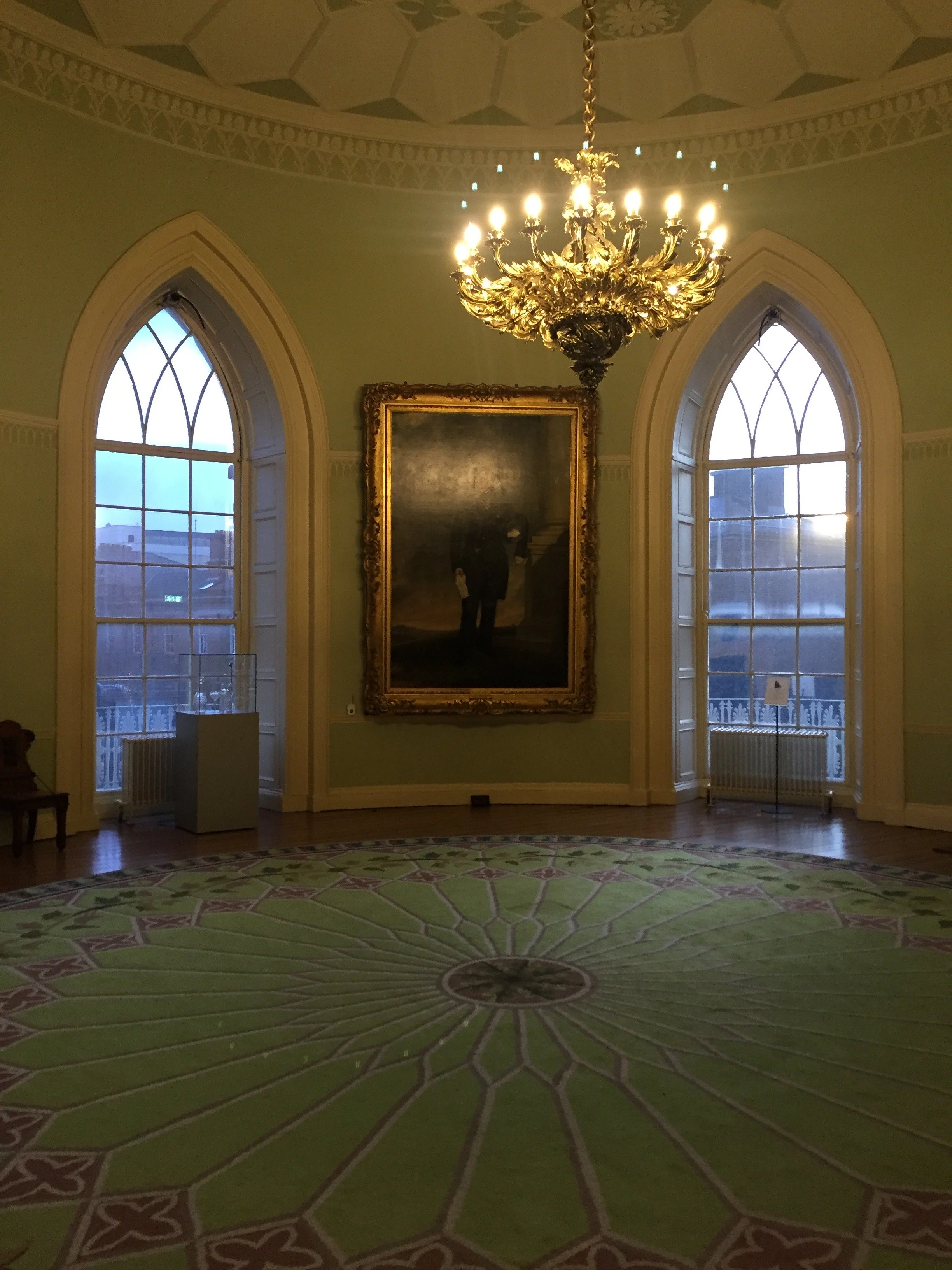
Inside Dublin Castle
In European history, so many things are literally built on top of what came before.
For example, Dublin Castle has had 2 major time periods, and, instead of destroying the building to make room for the new one, the leaders just added on some new rooms and kept going.
The first iteration of Dublin Castle dates to the 1100s, when it was built by King John of England, who also served as first Lord of Ireland.
During this phase, it served as a center of English rule in Ireland. Over the years, the castle was expanded to accommodate the growing government, and much of what you see today was built in the 1800s.
The castle became a focus during the Rebellion as it was a physical reminder of the oppression and broken promises by the English government.
Because of this history, the English government conceded victory to the Irish rebels by handing over the key to leader Michael Collins in 1921.
The final, current phase is as the administrative seat of Ireland's current government.
Since 1921, the Irish republic has used the complex for state functions, dinners, and conferences. It's not quite the castle you're probably imagining (with Gothic spires and sweeping staircases), but its deep political ties make it worth a visit.
You're welcome to pop in the front door as long as there aren't any functions scheduled, but this won’t let you tour the entire place.
Tickets
If you'd like to see the entire building and get a guided tour, I’d recommend buying a tour bundle, which will save you money and allow you to see Dublin Castle in tandem with other attractions in the city. This tour bundle includes the Book of Kells, Long Hall, Dublin Castle, and Christ Church Cathedral.
You can get free admission the first Wednesday of every month.
Visiting with Kids
Dublin Castle has some great programming to check out if you’re visiting with your family.
They regularly offer fun, kid-friendly tours focused around tours like secret agents and treasure hunts, and there are also family workshops that engage kids with an element of the castle’s history, architecture, or artwork through hands-on activities.
I also highly recommend using the free family trail worksheet to guide your kids through the castle. The scavenger hunt style worksheet will keep them engaged while they’re learning.
7) General Post Office

Exterior of the General Post Office in Dublin
This massive Greek-style building looks like many other government buildings around the world, but this one has done more than help letters on the way to their final destination.
During the Easter Uprising, the leaders of the rebellion chose the General Post Office (also referred to as the GPO) as their headquarters
Inside the post office, which has been completely reworked as a museum to the Irish fight for independence, you can walk through more than 100 years of history and rebellion.
There are interactive exhibits, audio and visual interpretive areas, and information about the men, women, and even children who fought here and elsewhere in Ireland.
Located on O'Connell Street, the Post Office is an easy walk from the River Liffey and central Dublin.
Tickets
You'll need to buy a ticket to the Post Office to enter, and a self-guided tour is included in the price. You can access the audio tour for free on your phone, or rent a headset for €2.00.
If you want to do a guided tour, they are offered twice daily at an additional cost.
Visiting with Kids
While some of the finer details of the often complicated rebellion may go over younger kids heads, there’s still plenty here to see and do while you’re visiting with your family.
Many of the exhibits are hands-on, so kids can explore at their own pace.
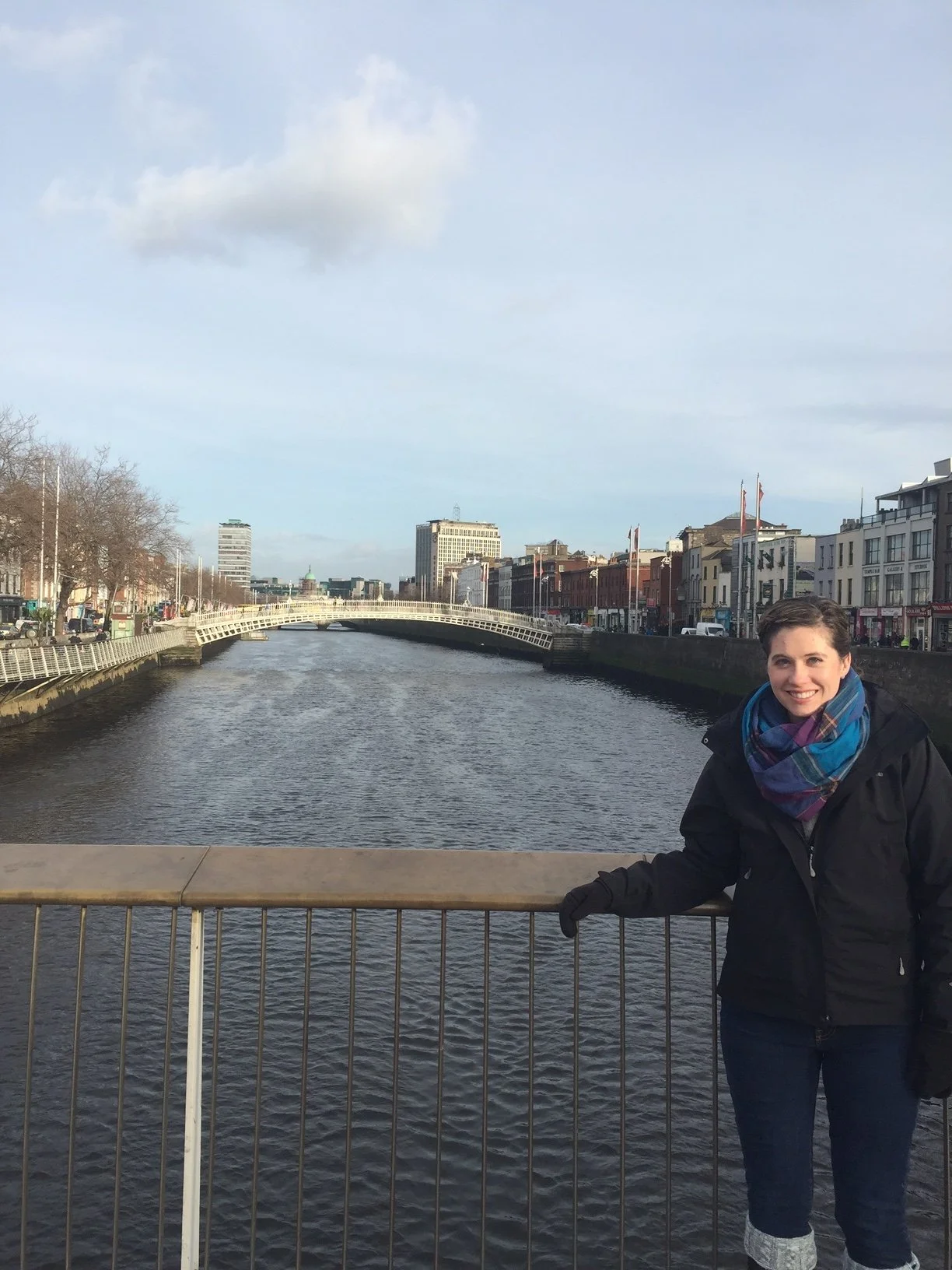
On Ha’Penny Bridge
8) Ha'Penny Bridge
This bridge, which dates back to 1818, was the first bridge to cross the River Liffey. The name comes from the original toll cost (half a penny), though the cost was raised to 1.5 cents (penny ha'penny) before the toll was discontinued in 1919.
Today, Ha'Penny Bridge sees more than 27,000 people cross it daily, and it links Temple Bar on one side of the Liffey with Bachelors Walk on the other.
NOTE: If you're interested in staying right next to the bridge on your next trip to Dublin, I recommend one of the AirBnBs in Ireland we used while on our trip.
Officially, the bridge's name is the Liffey Bridge, but it's mostly widely known as Ha'Penny Bridge. It's also been known as Penny Ha'Penny Bridge and Wellington Bridge unofficially.
The builder of the bridge ran a ferry service across the Liffey until he came up with the idea (and funds) to build Ha'Penny.
Dublin officials allowed him to build the bridge and gave him a license to collect a crossing toll for 100 years.
If you’d like to see the bridge from a different perspective, try the guided River Liffey cruise, where you can go under the bridge while touring the city by water.
Did you know? It was the first iron bridge in Ireland.
Tickets
Ha’Penny Bridge is free and open to the public 24/7.
9) The Little Museum of Ireland
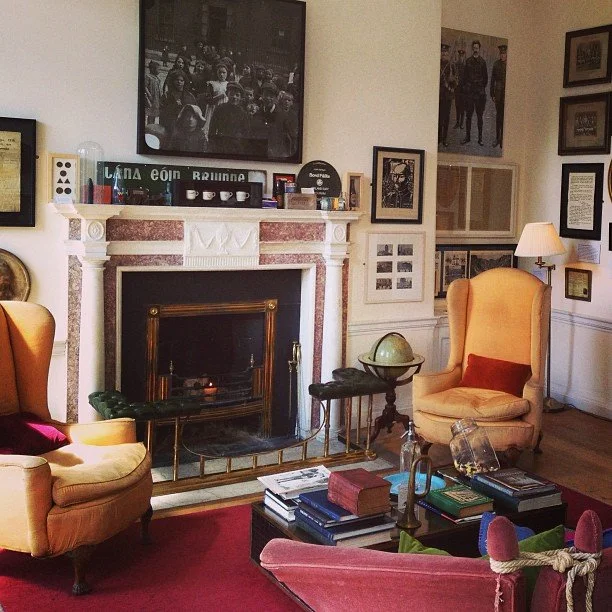
Interior of the Little Museum | source
Dive into the modern history of Dublin at the Little Museum.
This quirky museum, which isn’t as little as the name implies, is packed with pop culture, political moments, and impactful moments from 1900 onward.
It specifically focuses on Dublin’s changes and population during that time.
At the heart of your experience is a guided tour, which is one of the best you’ll find anywhere in Dublin. The guides are knowledgeable, creative in their delivery, and often laugh-out-loud funny.
You’ll come away feeling like you’re a small part of the ever changing history of Dublin after this tour!
Tickets
The tours here can, and do, fill up quickly, so it’s important to book your Little Museum tickets and tour time slot ahead. This is especially true if your overall itinerary is limited, and you don’t extra time to come back if the tours are filled when you first stop by.
If you also plan to do the Do Dublin hop-on hop-off tour bus, you get FREE entry into the Little Museum when you show your Do Dublin ticket.
The only downside to this is that you can’t book ahead. That being said, the front desk at the Little Museum works hard to get those bus patrons onto the most convenient upcoming tour.
10) Temple Bar
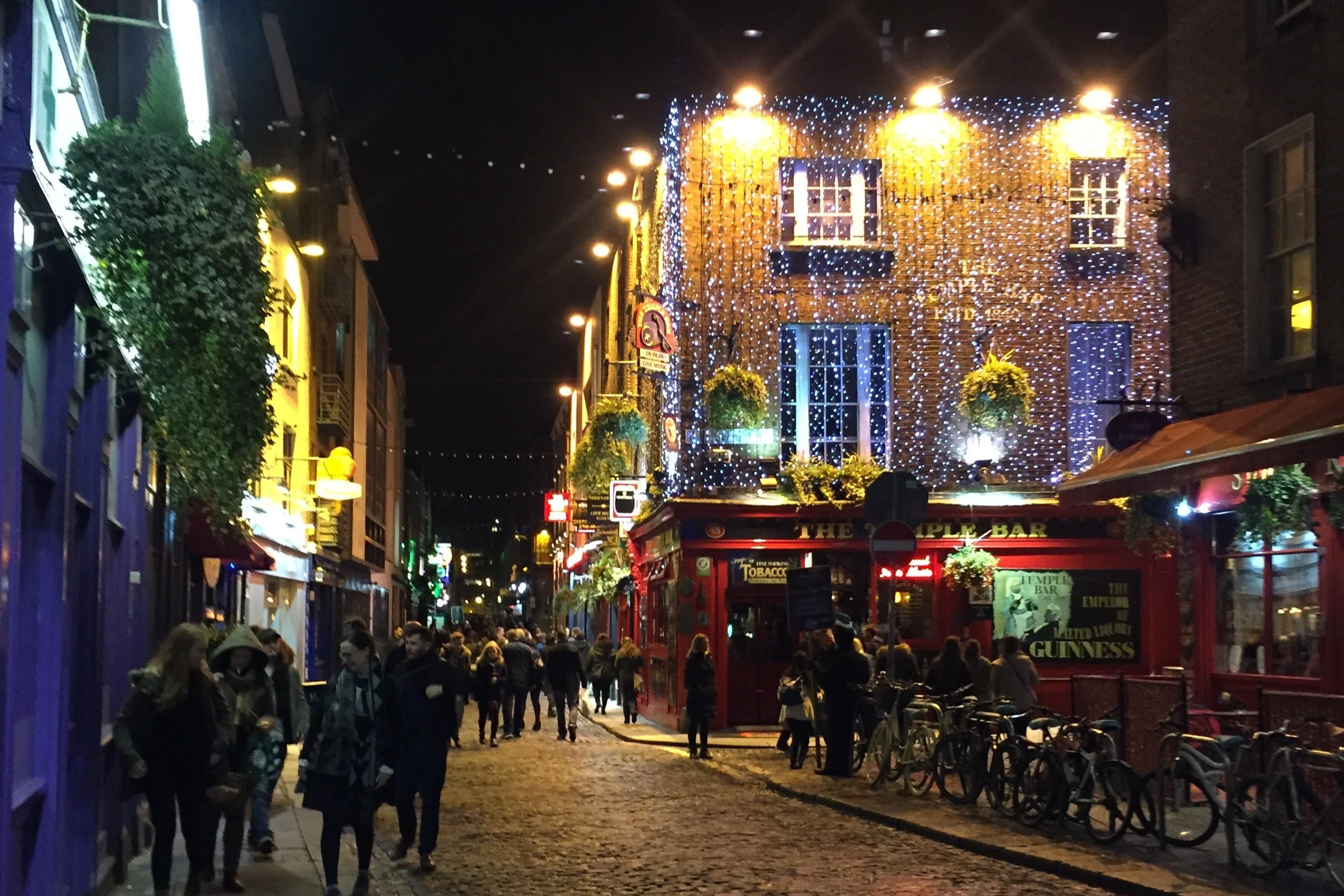
Temple Bar at night
This area of the city is known today as the vibrant center for nightlife in Dublin, and it’s well worth poking your head into a pub or two while you’re in town. (There will be live music, bad dancing, raucous sing-a-longs, and a great time to be had by all!)
But, this area is interesting for history buffs, as well.
It was settled as early as the 1200s, then slowly became a posh side of town as wealthy families moved to this part of the city for the river breezes.
But by 1960 or so, the area had fallen from grandeur, with plenty of crime and boarded up buildings.
Local groups and the city government worked hard to reimagine this once-thriving part of Dublin, and, by the mid-1990s, bars, restaurants, and shops had moved in.
The most famous of spots in Temple Bar has to be the often-photographed, bright red Temple Bar pub. It’s been at the corner of East Essex Street and Temple Lane since 1840.
Best History Tours in Dublin
While all of the historic sites mentioned above are incredible, I also highly recommend jumping on a walking tour while you’re in Dublin.
Doing so put you right in the middle of the action as you walk directly in the footsteps of Dublin’s most famous citizens.
Here are 4 fantastic walking tours that all have a significant focus on an element of Dublin’s past.
History and Food Walking Tour
Learning about history can work up an appetite, and this food and history tour is the perfect solution!
You’ll wander through multiple areas of Dublin, including Temple Bar, as you sample everything from pastries and desserts to a traditional Irish coffee.
Each of the food stops at local restaurants pairs with a story or two from Dublin’s past, so that you’ll come away from this guided tour with a better understanding of the city’s history and a full stomach!
Dublin Mythology and Folklore Tour
While it’s not a traditional history tour, this mythology and folklore walking tour showcases the rich culture, legends, and beliefs intertwined with Dublin’s history.
Myths and folktales are some of the best ways to understand a culture. If you understand what actions the stories uphold or reject, you’ll also get a glimpse into the larger political and cultural climate.
This isn’t a ghost tour, but rather, it’s a history tour told through stories of fairies, superstition, legendary warriors, and Celtic mythology.
If you’ve ever wondered who Finn MacCool is or where Tir na nÓg is located, this is the tour for you.
1916 Rebellion Walking Tour
To talk about the history of Dublin is to talk about the 1916 Rebellion.
While Ireland and England had been on unsteady terms for centuries, the tension exploded with the Easter Rising.
This carefully planned event was led by the Irish Republic Brotherhood, who set up key strongholds in the city against British forces, including the GPO (General Post Office, see above for tour details).
While the Easter Rising only lasted a week, it set into motion an intense, and often violent, clash between the Irish and the English, and later led to the founding of independent Ireland in 1922.
Learn about the important figures, locations, and moments in this part of the city’s history with this fantastic walking tour.
Haunted History Walking Tour
Finally, if you like your history a little on the spooky side, this is the walking tour for you!
With tales of ghosts, witches, and serial killers, you’ll learn about the darker side of Dublin’s past as you walk around Dublin Castle, along the River Liffey, and elsewhere in the city center.
The guides do an excellent job of interweaving the macabre and spooky into verified historical accounts, so you get a tour that’s authentic and well researched with none of the theatrics you sometimes find on ghost tours.