Visiting Munich with Kids: What to See, Do, and Eat
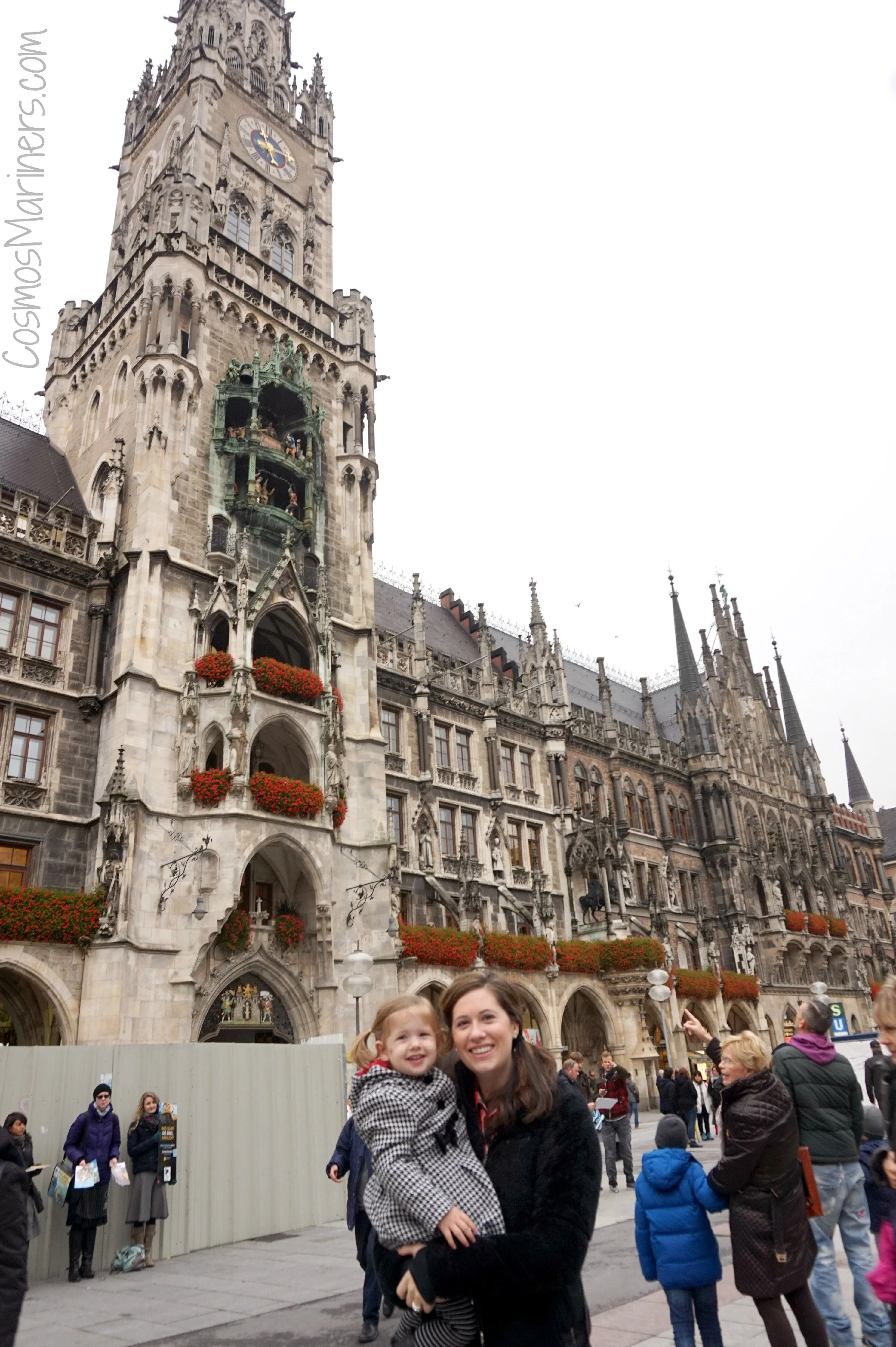
With my daughter in front of the Rathaus and Glockenspiel at Munich’s Marienplatz
Thinking of taking your kids to Munich, Germany, but aren’t sure they’ll have a good time?
You have nothing to worry about because Munich is an incredible city with a rich history, delicious food, and plenty of things for any family to enjoy.
It’s very European, yet it retains a distinct Bavarian feel.
Nearly all of the stereotypical German icons you can think of come from Munich and the surrounding area, like lederhosen, pretzels and mustard, Oktoberfest, and tiny towns with mountain views.
Your family can walk through centuries of history, snack your way through food tents, and pop into a museum or two, all within the safe and easy to navigate Munich city center.
If you and your kids have never been to Germany before, Munich is an incredible place to start your adventures.
Below, I’m sharing all of my favorite things to do with kids while you’re in Munich, including must see museums, restaurants, hotels, and more.
This post contains affiliates. If you purchase through the links below, I will receive a commission at no charge to you.
Visiting Munich: An Overview
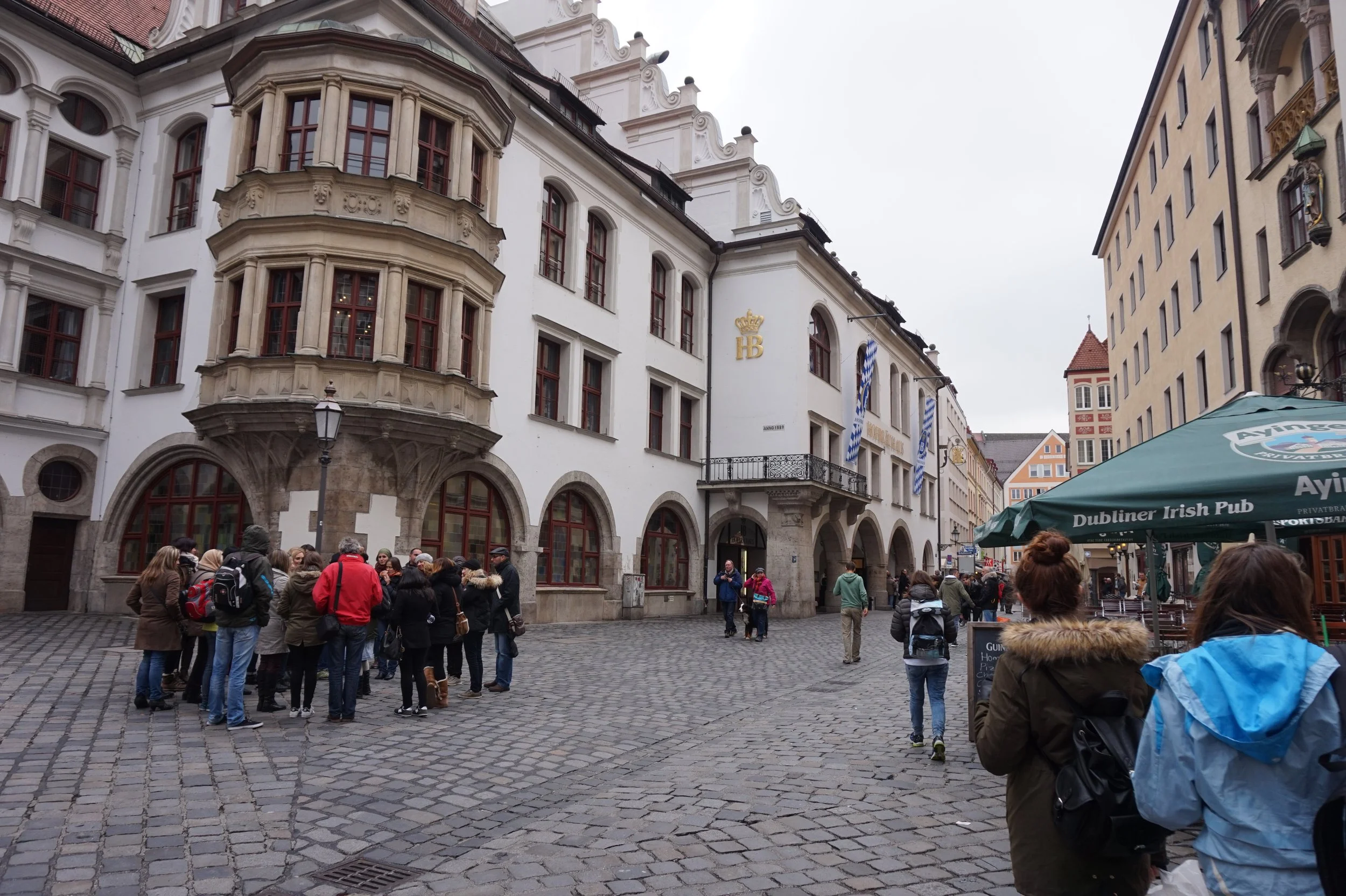
The famous Hofbrauhaus in Munich and other shops
For fellow history buffs, Munich is a fantastic place to visit since there's been a documented settlement here since the 8th century.
Those first recorded Münchners were Benedictine monks, and the city takes its name from the Old High German word "Munichen," or "Monk."
If you're interested in later history, there's plenty of that as well, as Munich was the governmental center for the Bavarian dukes back before Germany became a unified country. Ludwig the Bavarian (who built Ettal Abbey) and Ludwig II (who's known for his work on Neuschwanstein Castle both lived here, albeit about 500 years apart.
In recent history, Munich served as a favorite haunt of Hilter and the Nazi party.
Before he rose to power, he was arrested here for a failed insurrection, and he held his first meeting of the National Socialist party in the Hofbrauhaus.
Because of his knowledge of Munich, Hitler chose an area just outside of the city for his first concentration camp, Dachau.
During World War II, Munich's buildings suffered severe damage from bombings and few of the older buildings still stand in full.
Munich's history--both the good and the bad--is literally carved into its structures, and it is a city that is not afraid to hold that history up for anyone's perusal.
Today, it’s a highly walkable, safe city that’s a great introduction to travel in Europe!
What to Eat in Munich with Kids
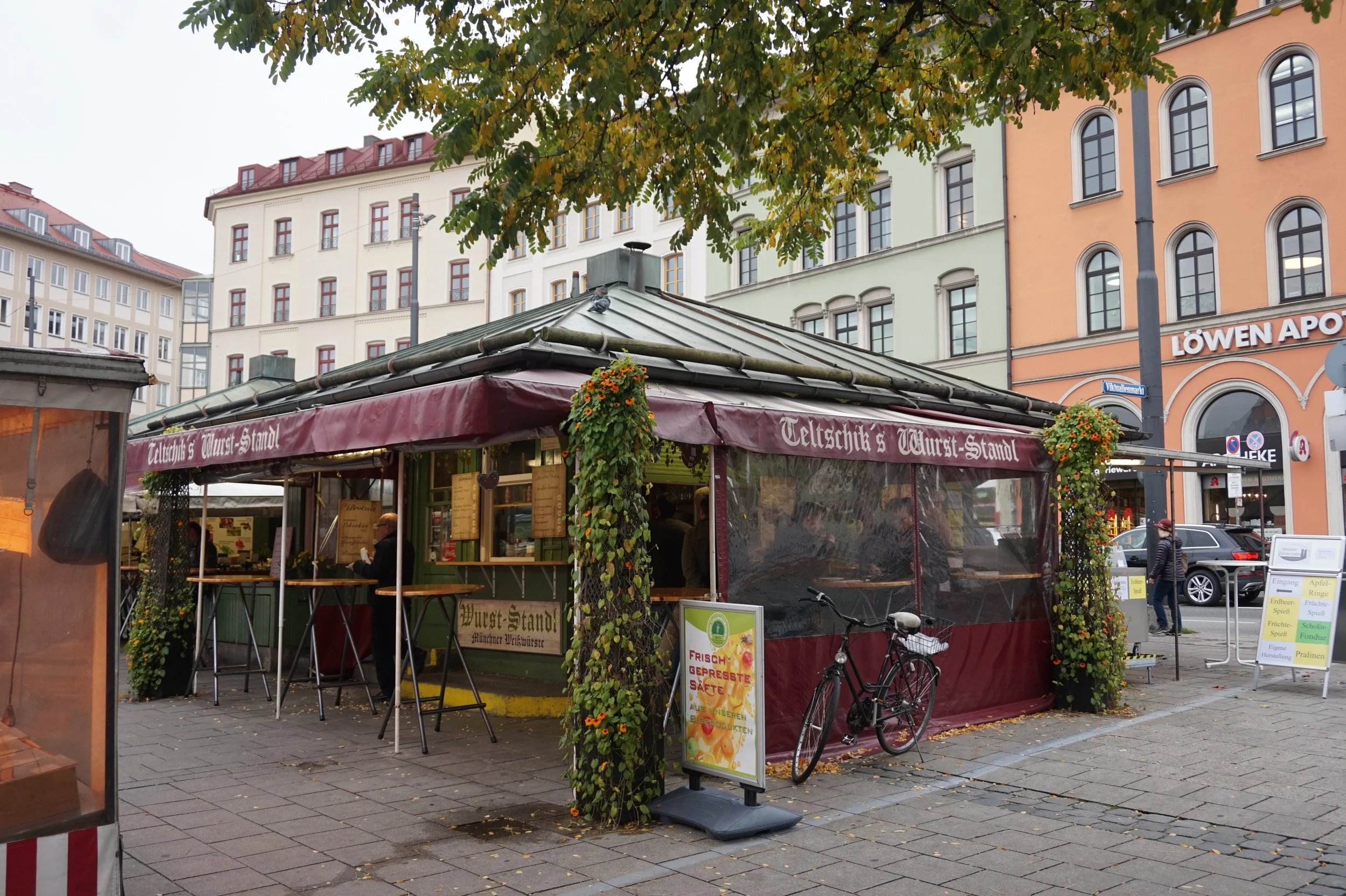
Sausage stand in the Viktualienmarkt
From the pretzels to the beer to the sweets, you can't go wrong in Munich.
Although traditional German food often gets a bad wrap in the culinary department, I thoroughly enjoyed the tasty treats we had while in town.
Make sure to wander the Vikualienmarkt to see what fresh produce, meats, and pastries are for sale.
There are several grab-and-go food stands offerings paninis, bratwurst, pretzels and more.
At Teltschik's Wurst-Standl, my family and I ate some delicious sausage with mustard and a huge, soft pretzel.
It was the perfect start to my German culinary sampling!
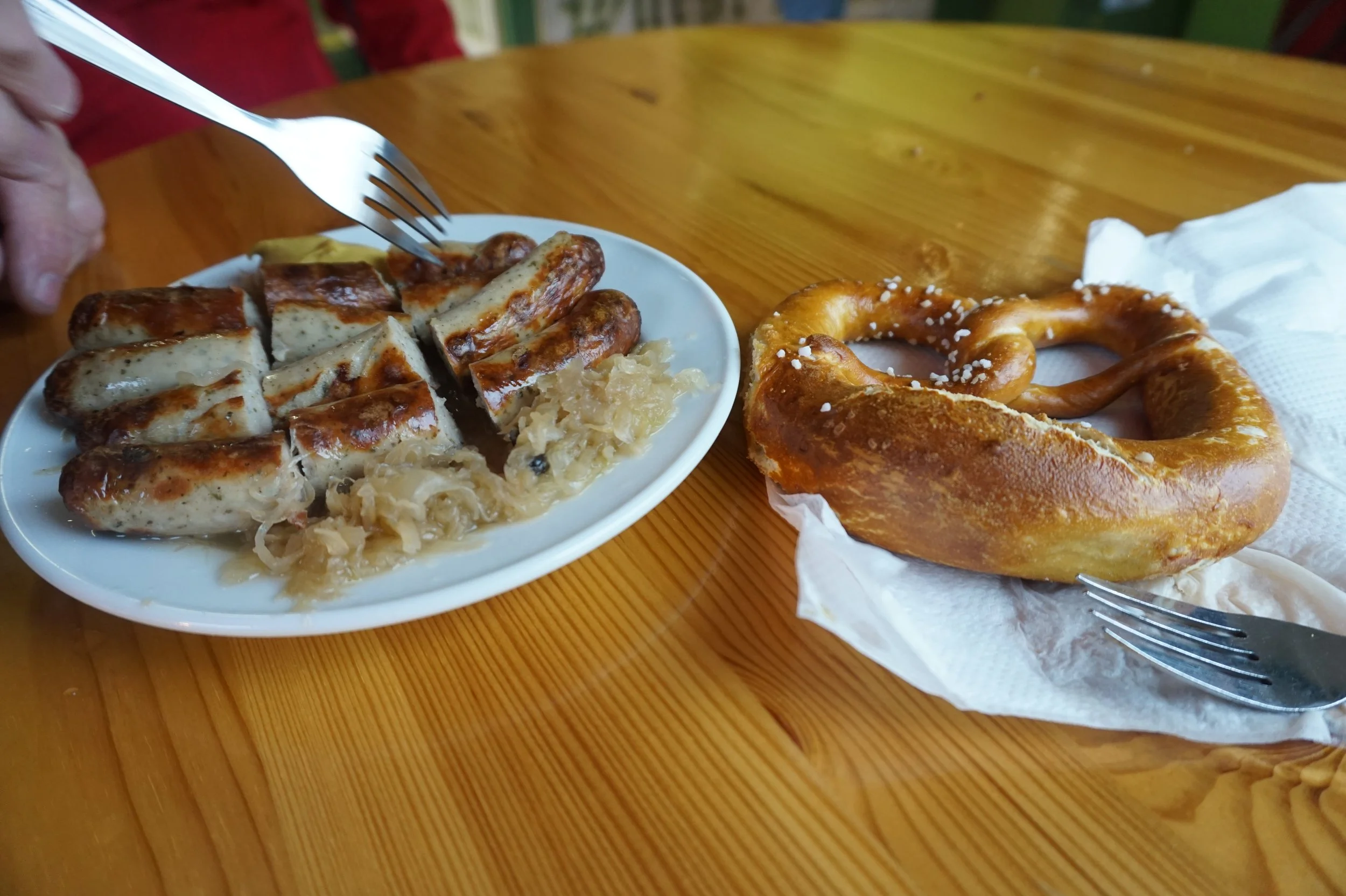
Pretzel and sausage from Teltschik's Wurst-Standl in the Viktualienmarkt
Near the Vikualienmarkt is Cafe Frischhut with their out-of-this world schmaltznudel, a fried dough that's covered in sugar and cinnamon.
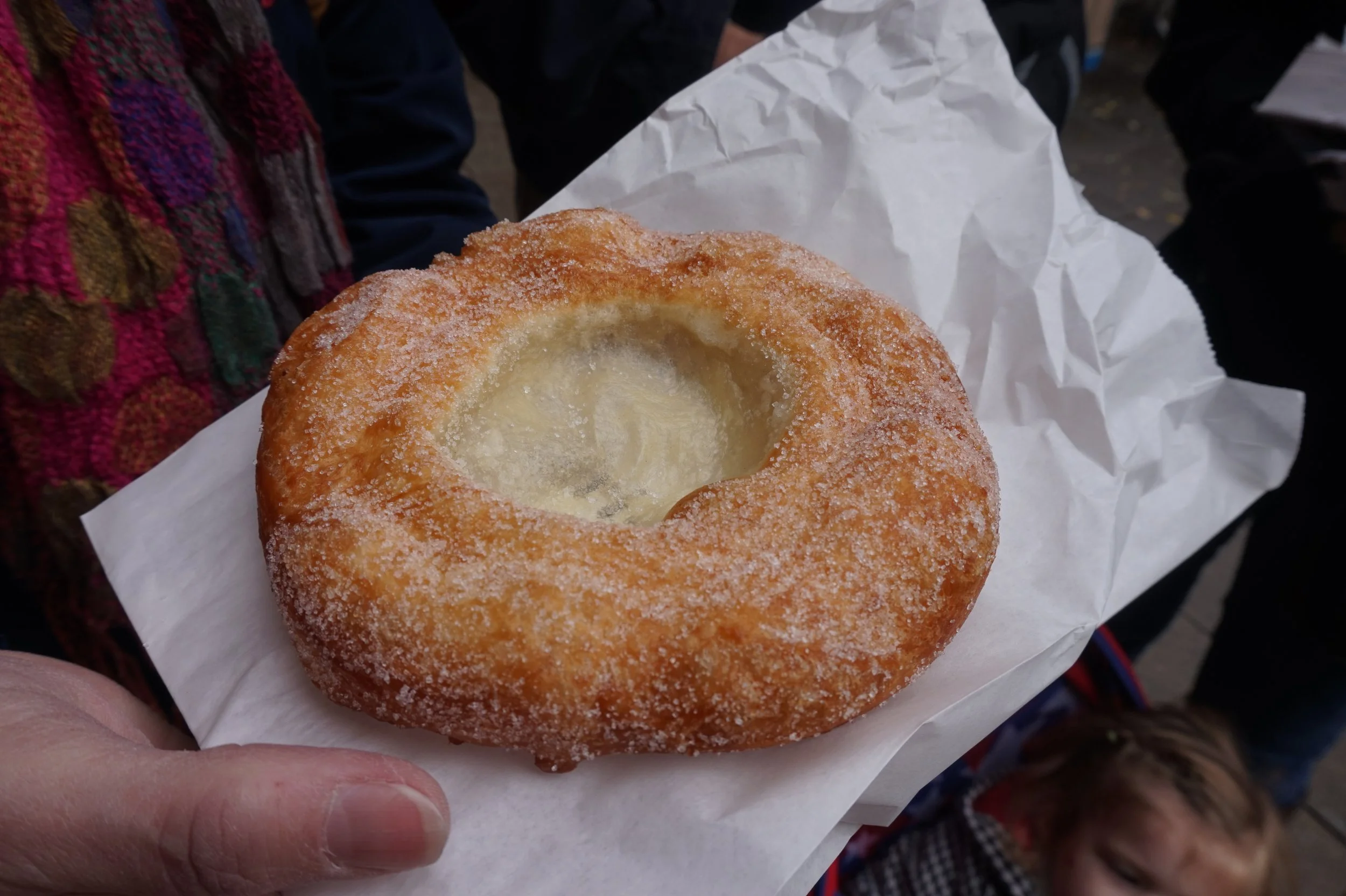
Schmaltznudel, I love you.
Try it. You won't be sorry.
I can’t imagine there is a kid in the world who wouldn’t like these pastries (dietary restrictions aside), so this might be a good option for the picky eater in your crew.
If you want a more extensive meal, you’ve probably considered the Hofbrauhaus, which is a Munich institution.
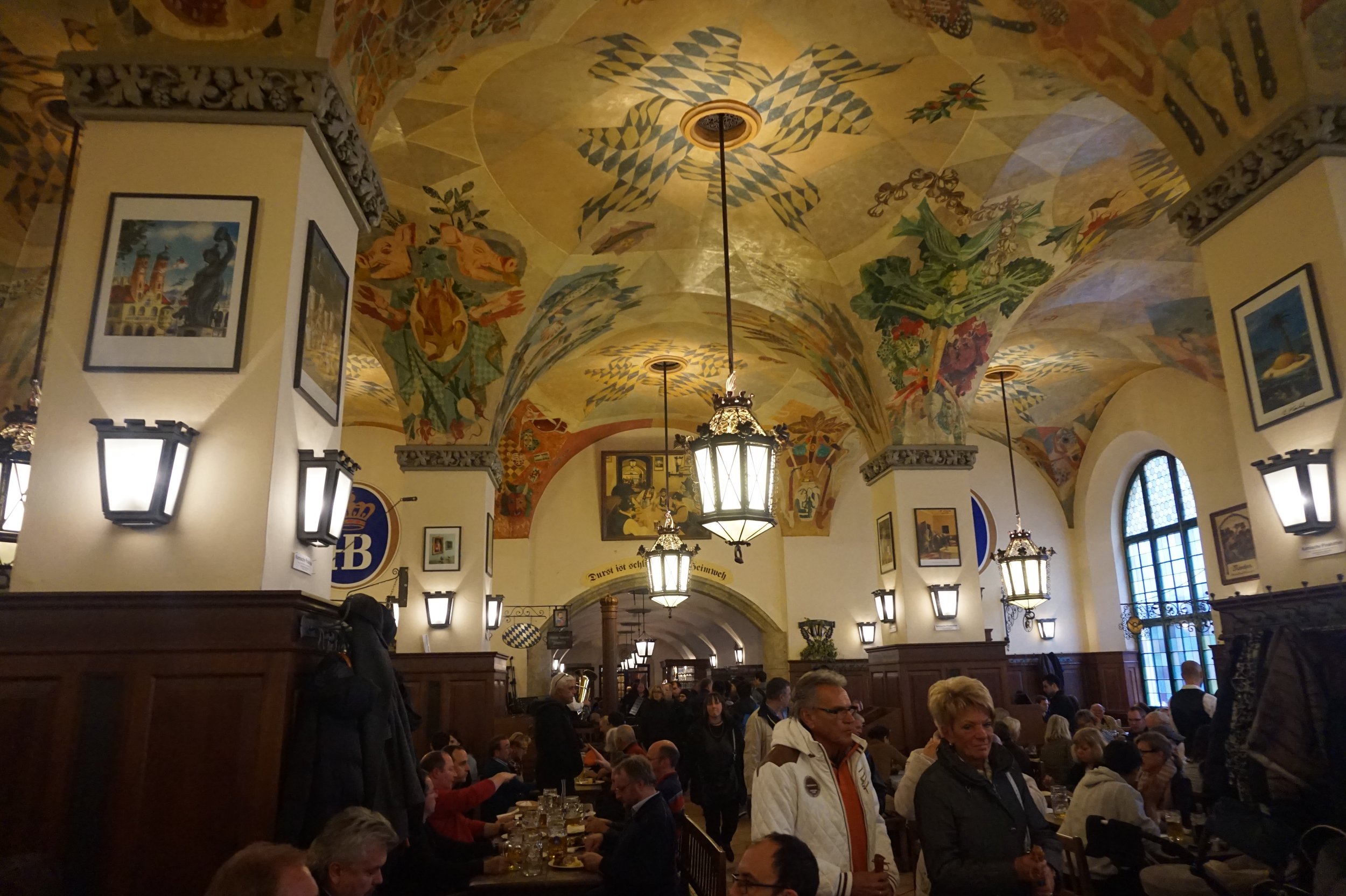
Crowded Hofbrauhaus, but pretty ceilings!
Founded in 1589, the Hofbrauhaus started as the official beer provider to the Bavarian crowd, but over the last 400+ years, expanded to serve the general public in its existing pub-style restaurant.
Today, it serves over 1.3 million people every year as diners and drinkers come from around the world to taste the revered beer and food.
I’m always wary of these types of restaurants, the ones that seem ready made for the front page of the annual tourism booklet.
So, here’s the good and the bad of the Hofbrauhaus.
The food and beer is actually pretty good, and it is kid-friendly, despite the vast number of pints that are served here every day. It’s also really convenient from Marienplatz and the rest of the Old Town.
But, it is crazy busy during any normal dining time, and you will find yourself waiting for a long time just to be seated. You can find similar food and beverage at smaller, less well known places around Munich.
You’ll have to decide if the history and general vibe around the place is worth the long wait.
As an alternative to the Hofbrauhaus, I recommend Wirtshaus Zum Straubinger on Blumenstrausse near the Viktulalienmarkt, which is another tavern and restaurant with similar German cuisine, but without the chaos that often accompanies the Hofbrauhaus.
If your kid will not try any of the German food that Munich is known for, head to Ruff’s Burger on Rindermarkt. While you might think it’s odd to get a hamburger in Germany, just remember that the sandwich is named for the German city of Hamburg in the north!
Because of this, I’ve found that the hamburgers and fries you can get in Germany often rival what you’d find anywhere in America, so this is a great back-up for kids who get tired of trying new foods.
Getting around Munich with Kids
If you’re not fluent in German, don’t worry.
We speak very, very little German and had never been to Munich prior to this trip.
Despite that, we were able to use the public transportation and get around the city with little problem.
You don’t need a rental car, and I don’t suggest one if you’re only staying in the city. Driving around Munich’s tiny, historic streets can be a challenge if you’re not familiar with them.
Instead, rely on the U-bahn, S-bahn, and local tram network to get around.
NOTE: Since this trip, I’ve been to Germany twice more, and have only improved my German the slightest amount. I’ve been able to get around all parts of Germany easily!
Between hand gestures, the signs that are often in both English and German, the basic English that most Germans know, and a few polite “English, bitte?” from me, I’ve managed to find my way in Frankfurt, Munich, Berlin, Hamburg, the German train system, and beyond.
If you're coming from the Munich airport (MUC), hop on the clean and efficient S-bahn that runs between Flughafen München and the Hauptbahnhof.
In the airport, or flughafen, look for signs for the S8 line, which will be colored yellow on the maps. This will take you to the Hauptbahnhof, or main train station, where you can connect up with the various lines of the U-bahn to make your way around the city center.
Since you’re traveling with your family, make sure to get the group ticket which will save you a few euro.
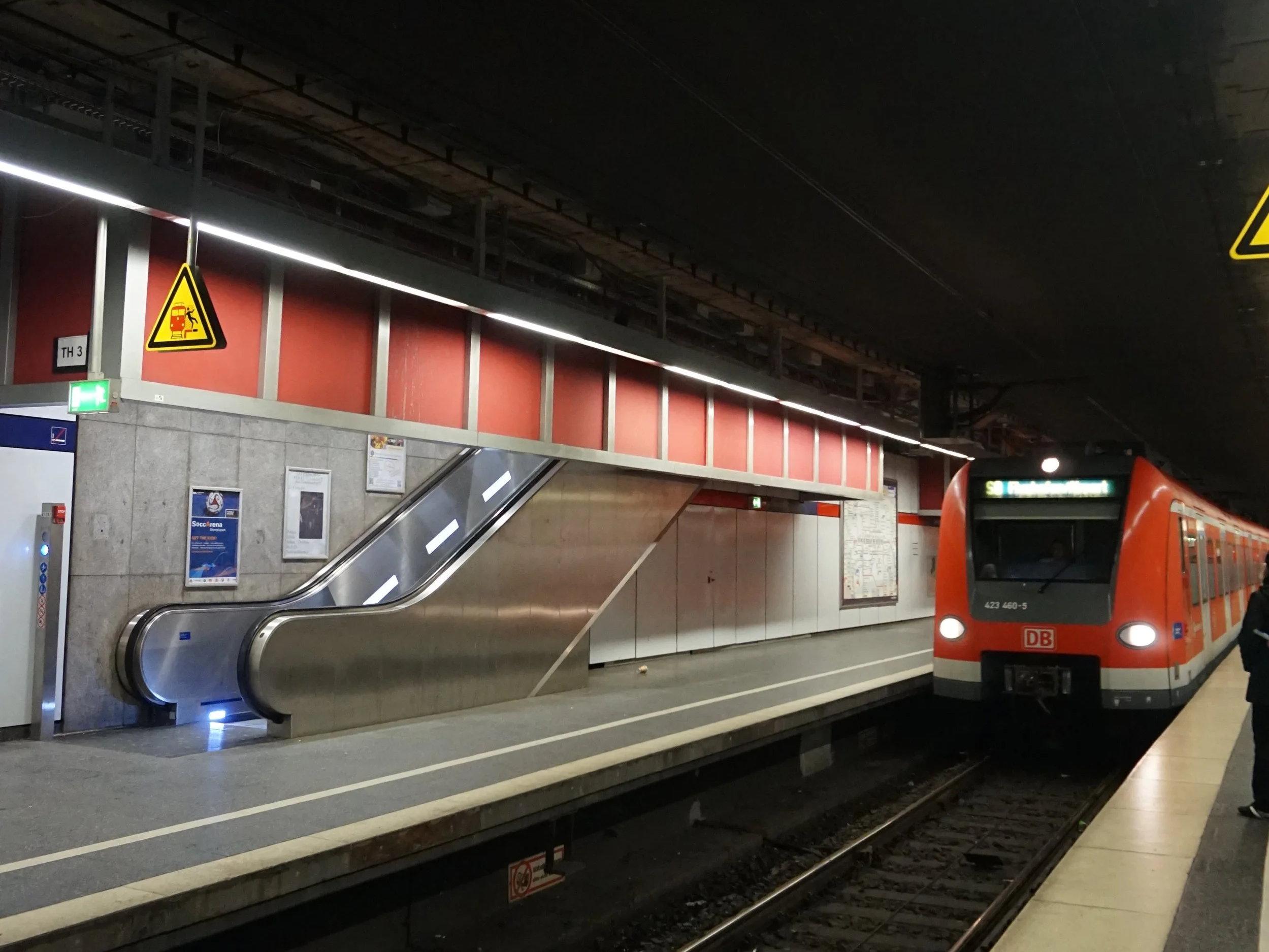
Waiting on the U-bahn at Hauptbahnhof
Once you’ve arrived in the Hauptbahnhof, get off of the S-bahn train S8 and get the U-bahn to other areas of Munich, including various areas of the Old Town.
To get around the city, the U-bahn is easy and quick. To get to major sites in Old Town like Karlsplatz or Marienplatz, take literally any train that’s going east. This includes the lines S1, S2, S3, S4, S6, S7, and S8.
On all of these lines, Karlsplatz will be one stop from the Hauptbahnhof and Marienplatz will be two stops.
If you want to go to Sendlinger Tor at the southwest corner of Old Town, take U1 or U2 from the Hauptbahnhof. It’s the next stop from the Hauptbahnhof on both lines.
I've been on my far share of subways, and none that I can remember have been this clean and safe-feeling. That includes the London Tube, which is generally great, and a public transportation system that I made extensive use of while I was studying abroad in London.
I was traveling with my parents, daughter, and sister, but I would've felt comfortable on the U-bahn even if I'd been traveling alone or just with my child.
The maps that you’ll see of the S-bahn and U-bahn interconnected network are similar visually to what you’ll find when visiting London, England and using the Tube there. Each line is assigned a different color, and the walkable connections at each station are easy to understand.
We also made extensive use of the tram network that connects both the S-bahn and U-bahn systems.
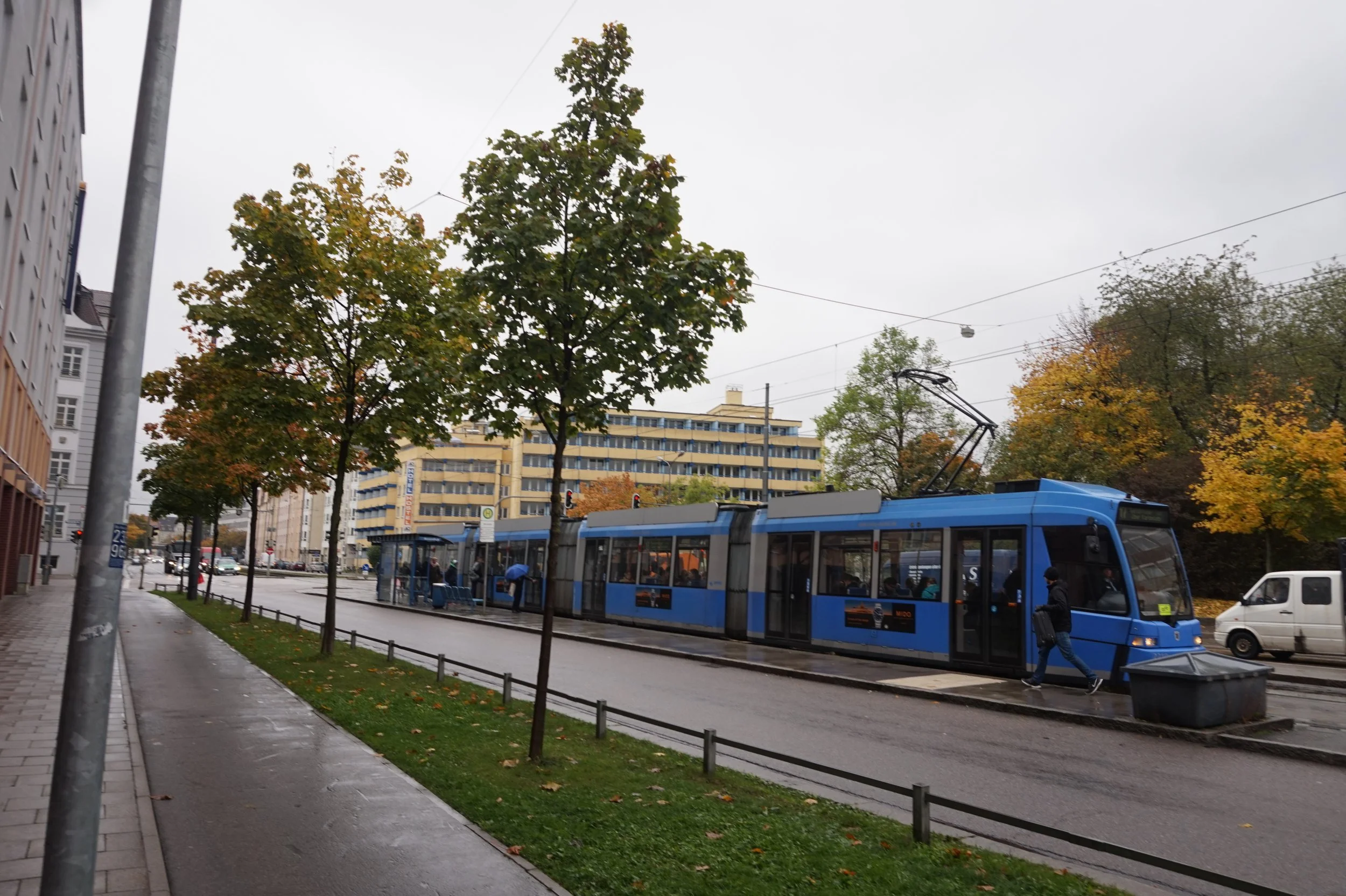
The tram station outside of my recommend hotel, the Citadines Arnulfpark Munich
These smaller, electric trams fill in the gaps in the S-bahn and U-bahn system, and make it easy to get anywhere in the city without walking 50 blocks.
These come in handy when you’re traveling with kids and they (and you) are so done at the end of the day.
This map clearly shows how the tram system in Munich is laid out, and you can see how you can take the tram to various areas of the city from the Hauptbahnhof.
Explore more of Germany with these helpful posts!
Visiting Trier, Germany: A Complete Guide on What to See and Do
A Guide to Bacharach on the Rhine: Where to Eat, Sleep and Explore
10 Days in Germany Road Trip: the Best of Bavaria and Beyond
Visiting Rothenburg ob der Tauber, Germany: Itinerary and Tips
The Perfect 1 Day Itinerary in Ettal, Germany: Castles, Abbeys, and the Alps
The Ultimate Guide to Visiting Neuschwanstein and Hohenschwangau Castles in Germany
Best Things to Do with Kids in Munich
AUTHOR’S NOTE: Before we dive into the best kid-friendly things to do in Munich, I want to include some guidance to parents.
Munich’s history is very focused on the events leading up to and during World War II, and you’ll see many walking tours and sites that emphasize that.
While that’s a great option for adults who are obsessed with history, you can easily get into material that is difficult for younger kids to comprehend. The most obvious of these would be the daily tours that run between Munich and Dachau, which is located just outside of the city.
Dachau is extremely difficult to tour, and I highly recommend that you do not take your younger or more sensitive older children. The tours of the concentration camp lay bare the horrors that took place here, and it’s one of those experiences that will weigh on your soul for quite a long time after you visit.
That being said, there are plenty of ways to learn about what happened here during World War II in a more age appropriate manner, and I’ve included some of those below in the suggested activities and tours.
Listen to the glockenspiel in the Marienplatz.
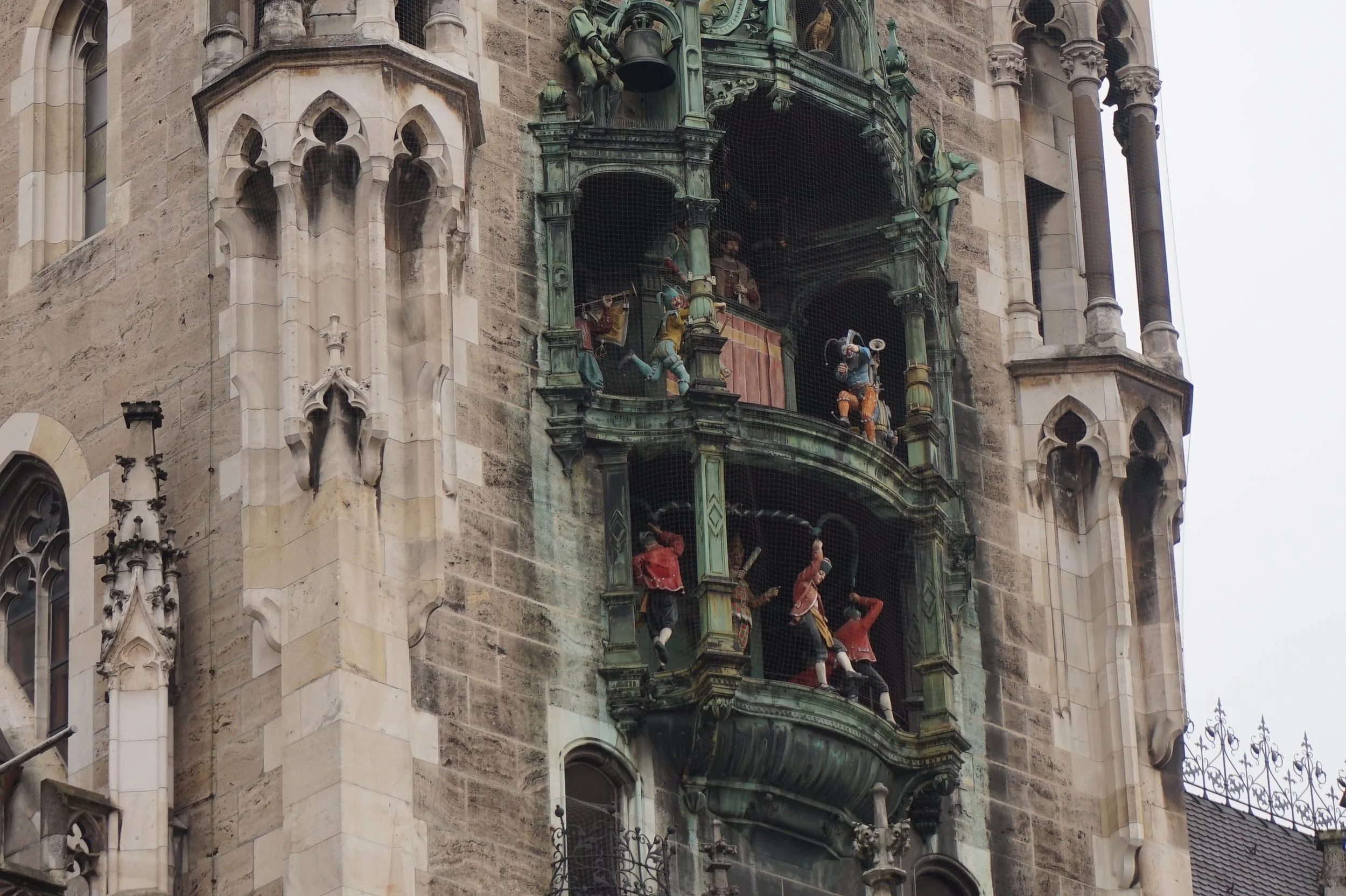
Part of the Glockenspiel show
This free and fun stop is a must-do while you’re in Munich, and it allows you a few minutes to admire the gorgeous architecture of Rathaus while you listen to the bells of the glockenspiel.
There’s no bad view or listening spot while you’re standing in the Marienplatz, a pedestrian only area in the heart of Old Town Munich.
Be in place at 11 AM or 12 noon to catch the carved wooden figures perform while the bells are ringing. (During the spring and summer, there’s another show at 5 PM.)
You’ll see monks and locals twirling around, a jousting match, and much, much more.
My child loved this so much that we ended up watching the show every day that we were in Munich!
The Marienplatz location is so convenient to everything else on this list that it makes it easy to run over for the quick show multiple times during your visit.
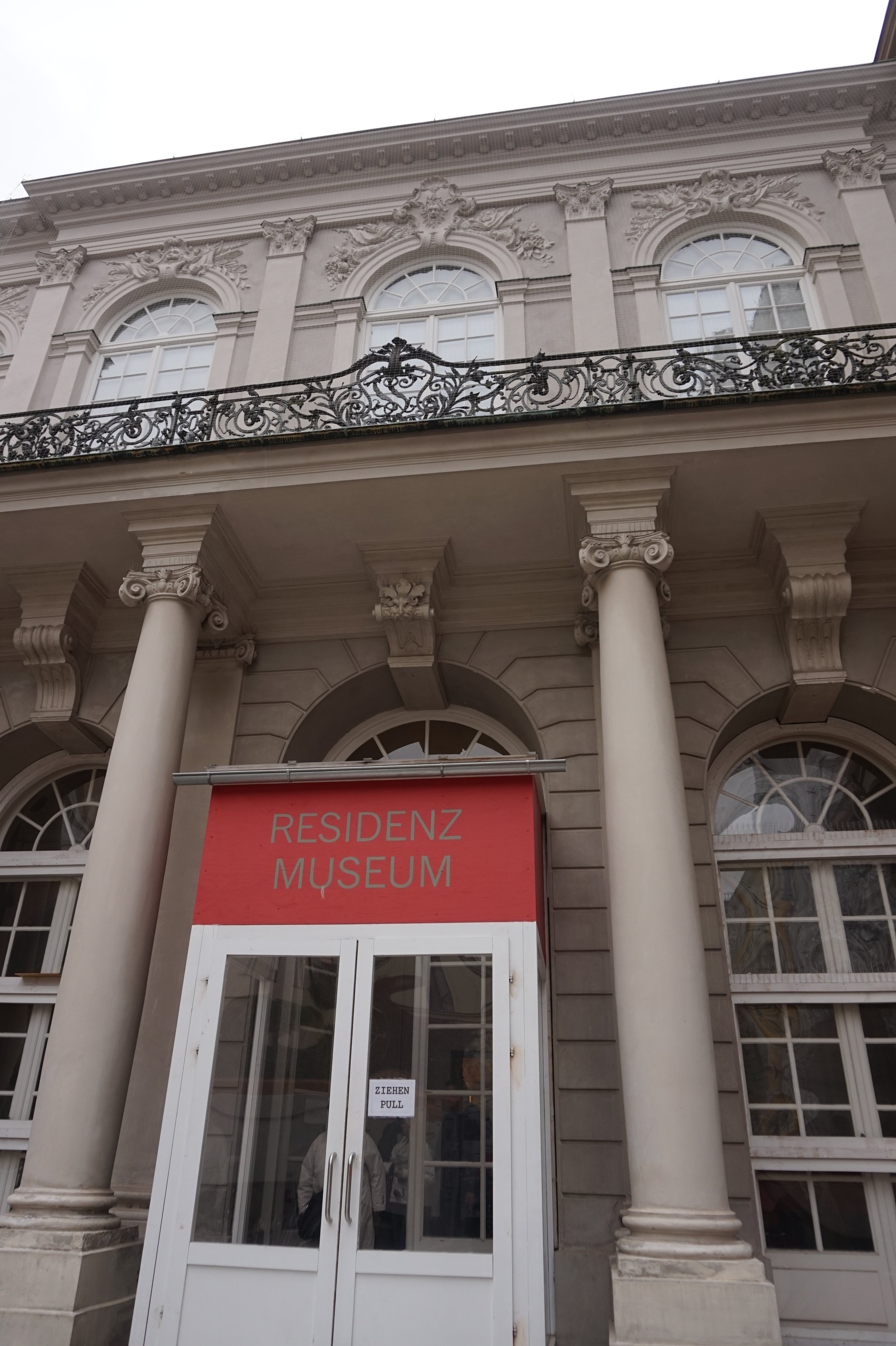
Get lost in the Residenz.
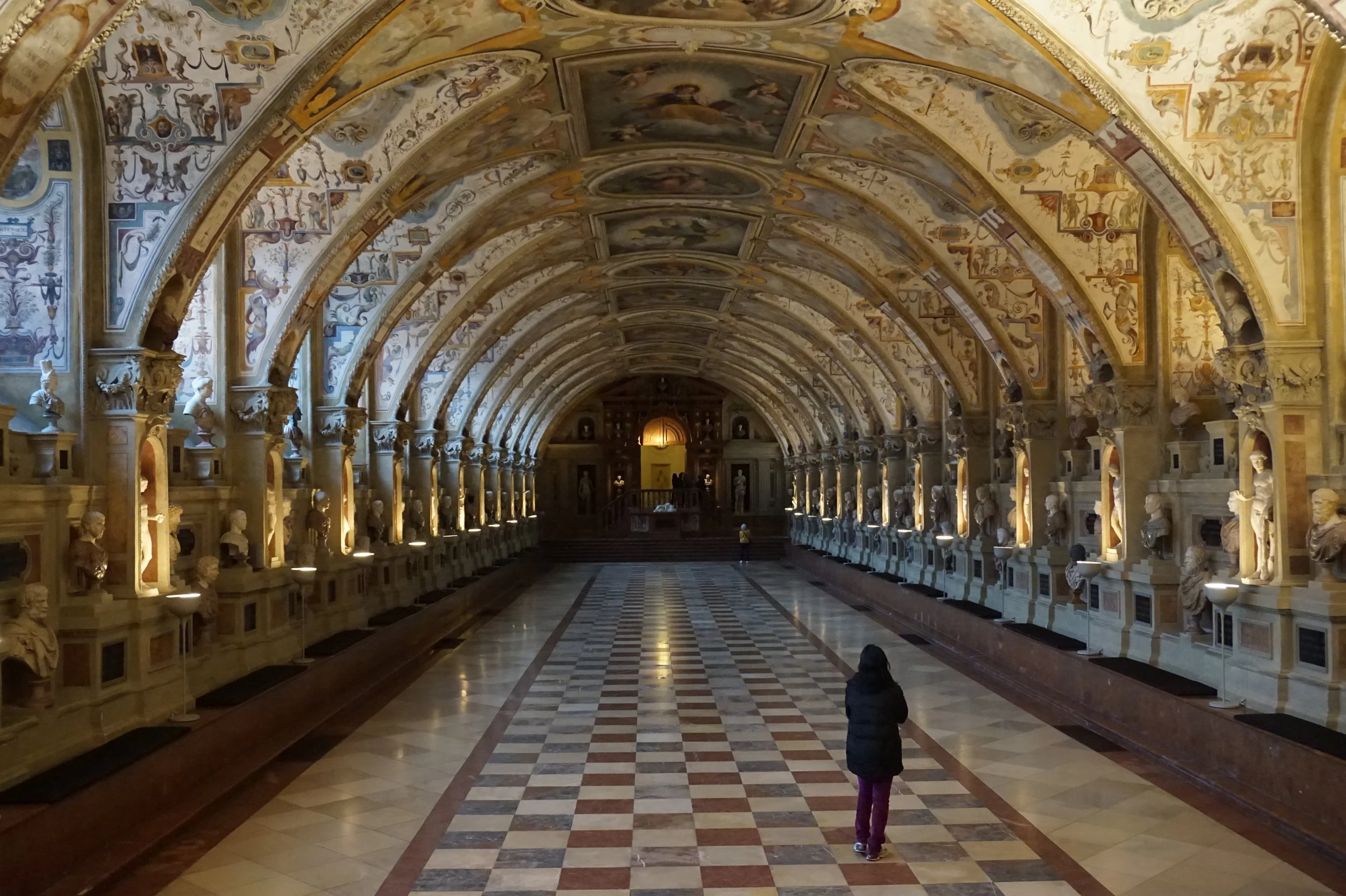
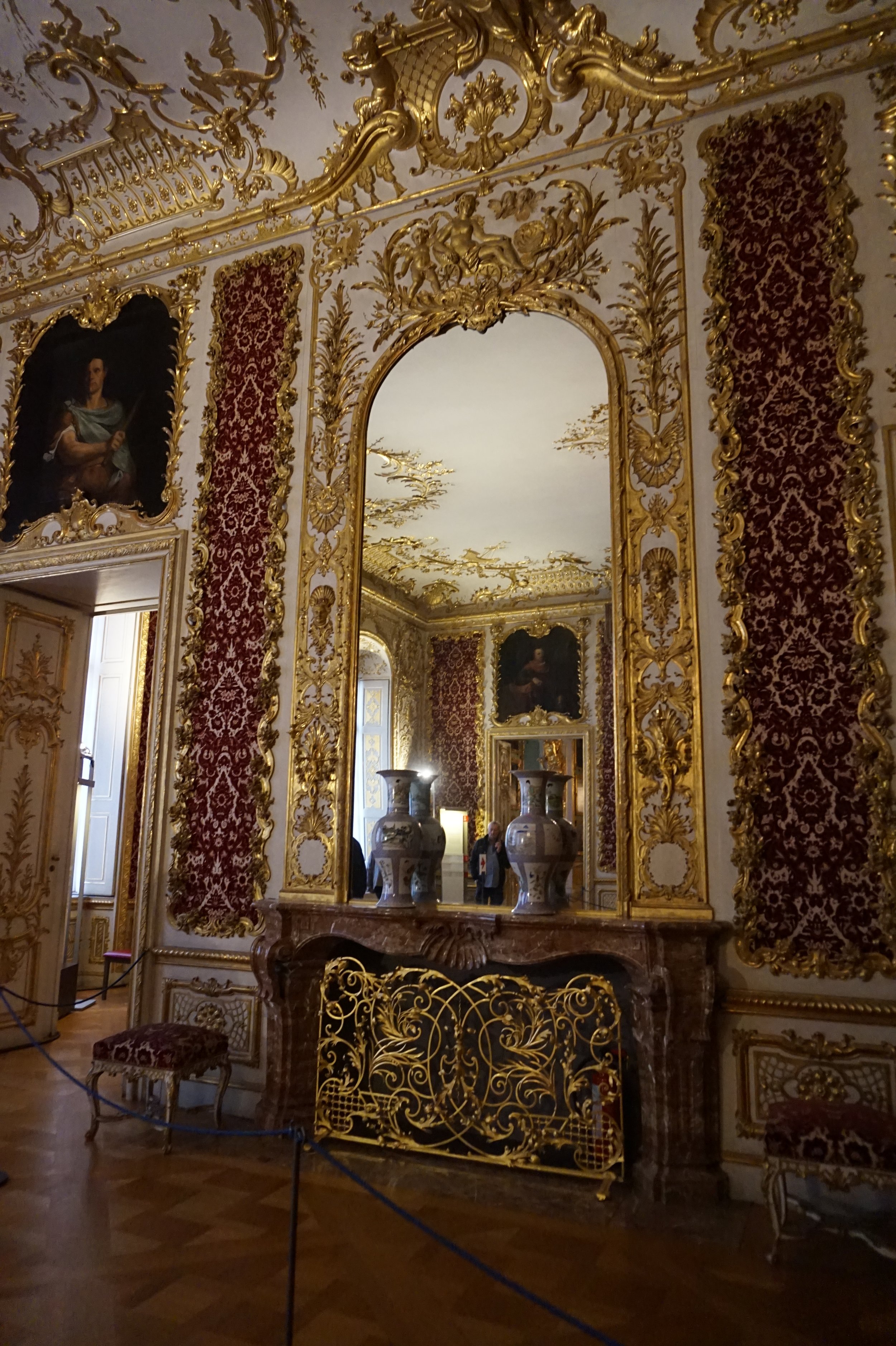
Part of the Residenz
This palatial mansion in the heart of Munich is perfect for kids who love history or dream of being a princess.
But be warned: it is huge.
We’ve toured many castles and palaces on our travels, including Holyroodhouse and Edinburgh Castle in Edinburgh, Scotland; Neuschwanstein in Germany; the Palace of Versailles in Paris, France; and the Tower of London in London, England, but none of them felt this big.
It is so large and sprawling, that is remains the only castle or palace that I’ve chosen the short cut to the exit rather than taking the full, 90 room tour.
Your kids will be amazed at all of the over-the-top Rococo decor, which included textured walls, colorful wall hangings, and gilded everything.
Because of the size of the Residenz and the elaborate finishings, it's easy to get overwhelmed by it all.
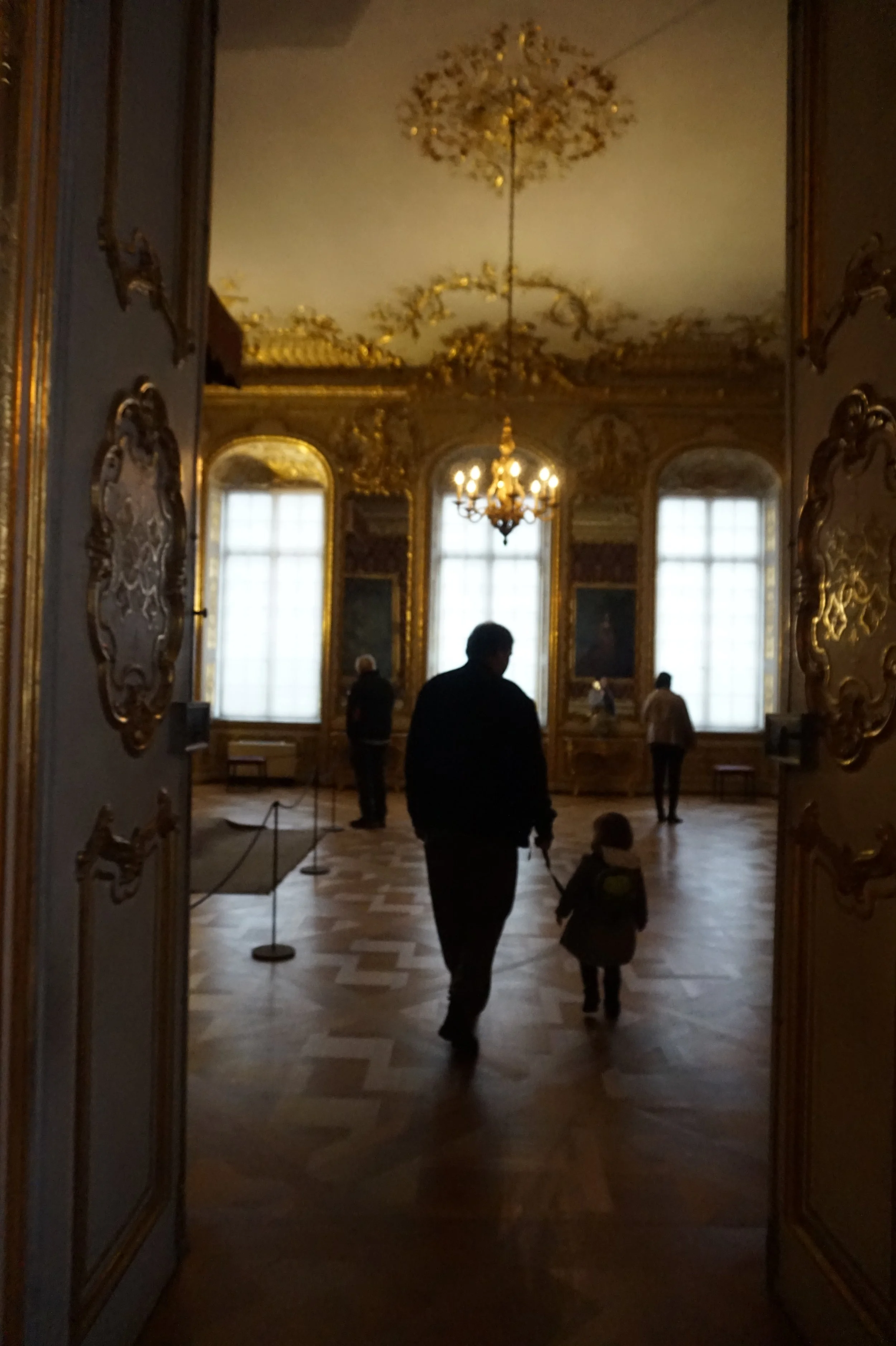
When visiting with kids, I wouldn’t commit to the complete tour since there’s only so much architecture and history that most young visitors can handle.
Thankfully, there is a short route for the easily overstimulated visitor, and a long route for those who want to soak in every single room.
Whether you give up 10 rooms in or you make it all the way through, the Residenz is an architectural and historical marvel and should not be missed.
See a skeleton at St. Peter’s Church.
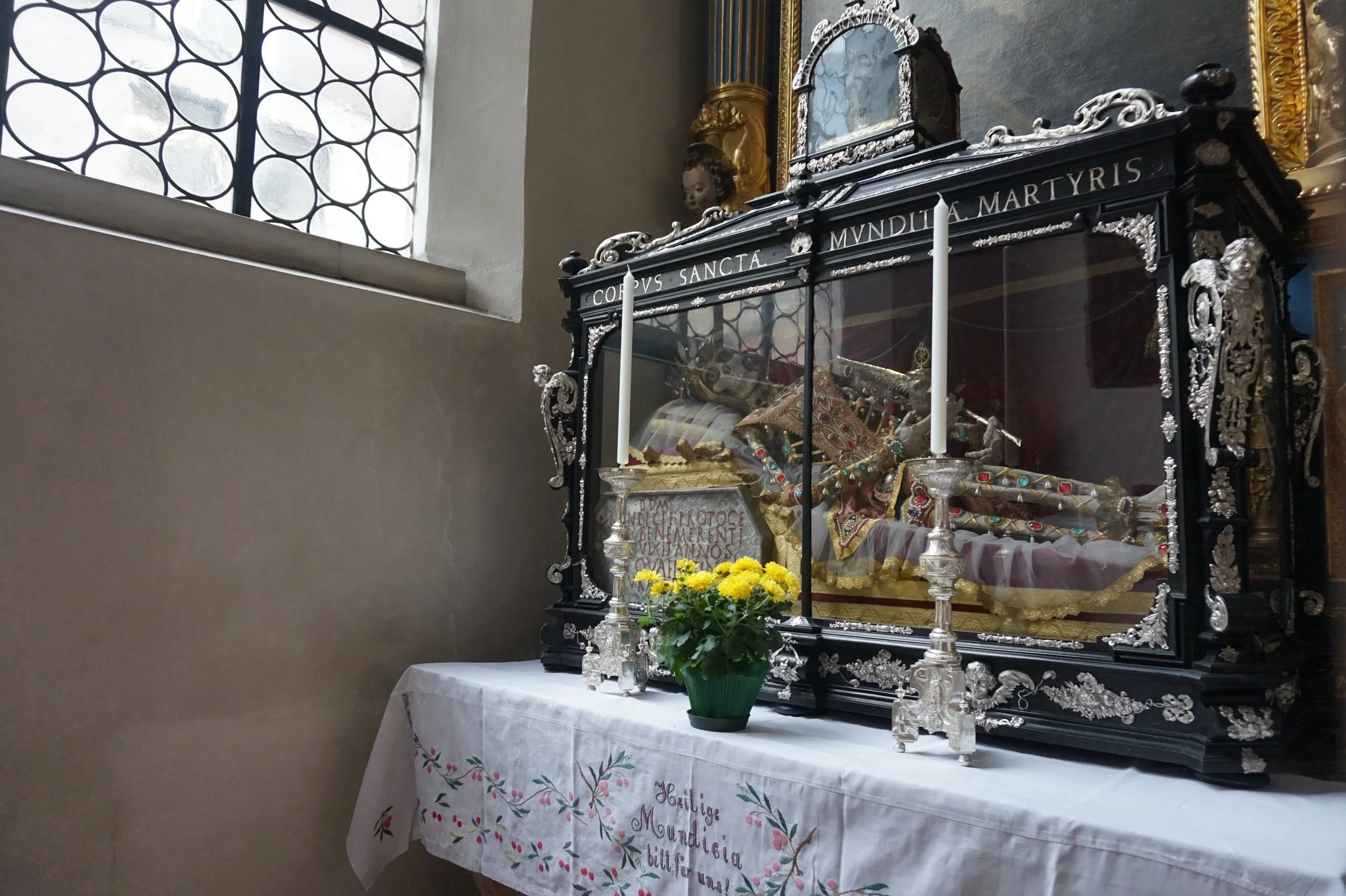
The very bejeweled skeleton of St. Munditia
St. Peter's Church, the oldest church in Old Town Munich, is seen by many as the symbol of the city and it is held in very high regard. It’s affectionately known as “Alter Peter” in German, which translates to “Old Peter.”
When the church was badly damaged during World War II, parishioners began to slowly collect the funds to rebuilt it.
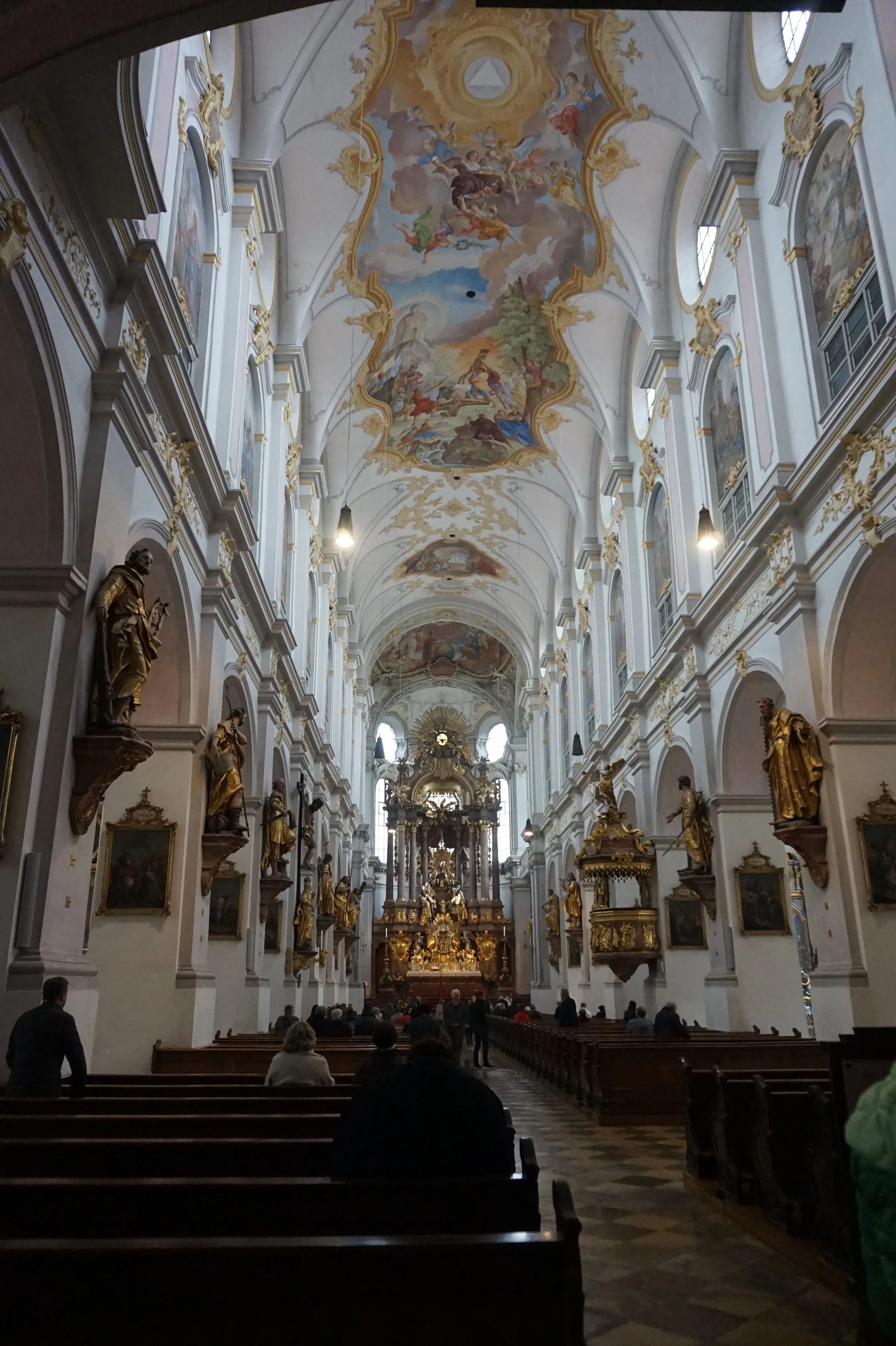
The nave and main alter of St. Peter’s
As a reminder that their work was not finished, the church's bells would ring the normal song on the hour, but would leave off the final note. (Which, by the way, would drive me insane. I NEED resolution!)
The parishioners listened to that for over 50 years until the church finished its restoration in 2012, and today, the entire song rings each hour.
While that’s a fun anecdote to tell your kids, there are a couple of other things that will grab their attention even more, including an actual skeleton that’s on display.
Tucked away in the corner of the church is a bejeweled skeleton, complete with a gold crown and holding a vial of blood.
This fascinating and slightly spooky situation is on full display inside the church, where visitors can walk right up to the glass coffin of St. Munditia and stare right into the glass eyes placed into her skull.
While more squeamish or easily spooked kids will need to skip over this site, older or more adventurous kids will find it perplexing, weird, and unforgettable.
If you do need to keep one or more of your kids from seeing St. Munditia, she’s in an alcove off of the main church area, so you don’t have to walk past unless you want to.
Elsewhere in the church are beautiful ceiling frescos, and an explosion of different architectural styles. There are Gothic-style paintings, a medieval wood alterpiece, and Rococco gilding.
Go on a scavenger hunt for monks.
No, I’m not advocating that you stalk actual monks!
Instead, you’ll be looking up, down, and all around for a symbol of the city of Munich.
Several centuries ago, the Benedictine monks established a monastery here long before Munich was an established city.
As a nod to the monks who gave the city its name, the Munich coat of arms features a hooded brother when it was created.
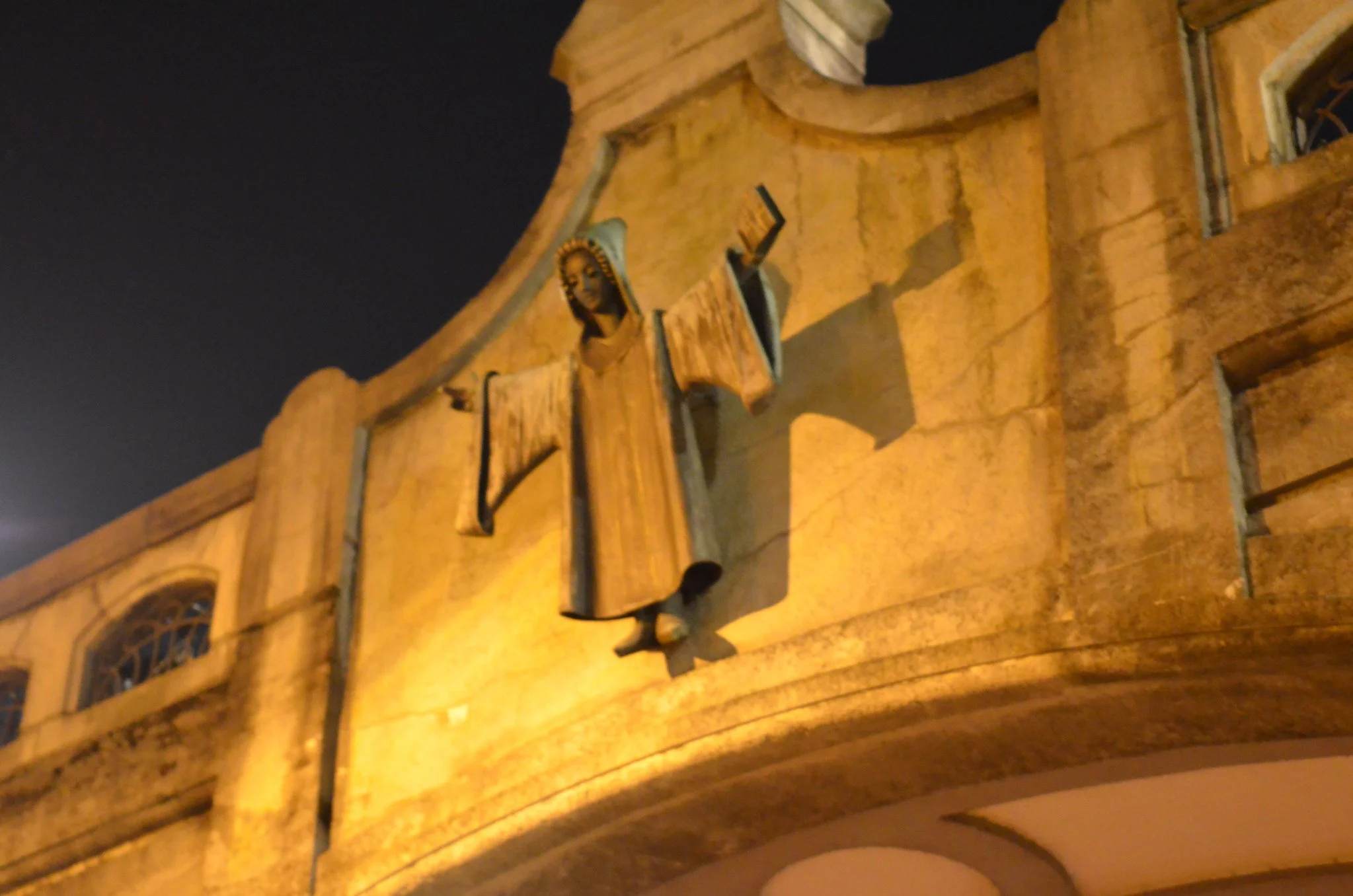
One example of the Münchner Kindl on a bridge in Munich
Over the years, the iconic monk has become younger in his portrayal, and you'll often see him as a young boy without the hood.
More recently, the Münchner Kindl, or Munich Child, is shown as a girl.
Once you know what you're looking for, you'll find the monk/boy/girl everywhere.
Much like the Hidden Mickeys at the Disney parks, the Münchner Kindl pops up in the least expected of places, including manhole covers and on top of the Glockenspiel!
See how many you and your kids can spot as you wander the city center.
Be amazed at the WOW Museum.
The fun, illusion-based WOW Museum is going to blow your kids’ minds!
After you’ve had a more traditional museum experience at the Bavarian National Museum (below), head here to let out some energy and dive into some hands-on learning.
You and your kids will experience all sorts of fun optical illusions as you work your way through the museum. In one room, the person on the left side will look massive compared to the person in the right corner.
In another, you’ll have to reimagine what gravity looks (and feels) like. In yet another, you’ll be fooled by hundreds of mirrors on every available surface.
Also included in the ticket is a self-guided tour available via QR code on your smartphone. You’ll get the code at check-in.
This is a great addition to your Munich with kids itinerary as it provides a playful, memorable balance to all of the history, arts, and culture elsewhere on this list.
To get to the WOW Museum, head towards the Isar River after passing the Hofbrauhaus, heading away from the Marienplatz.
Learn about play at the Toy Museum Munich.
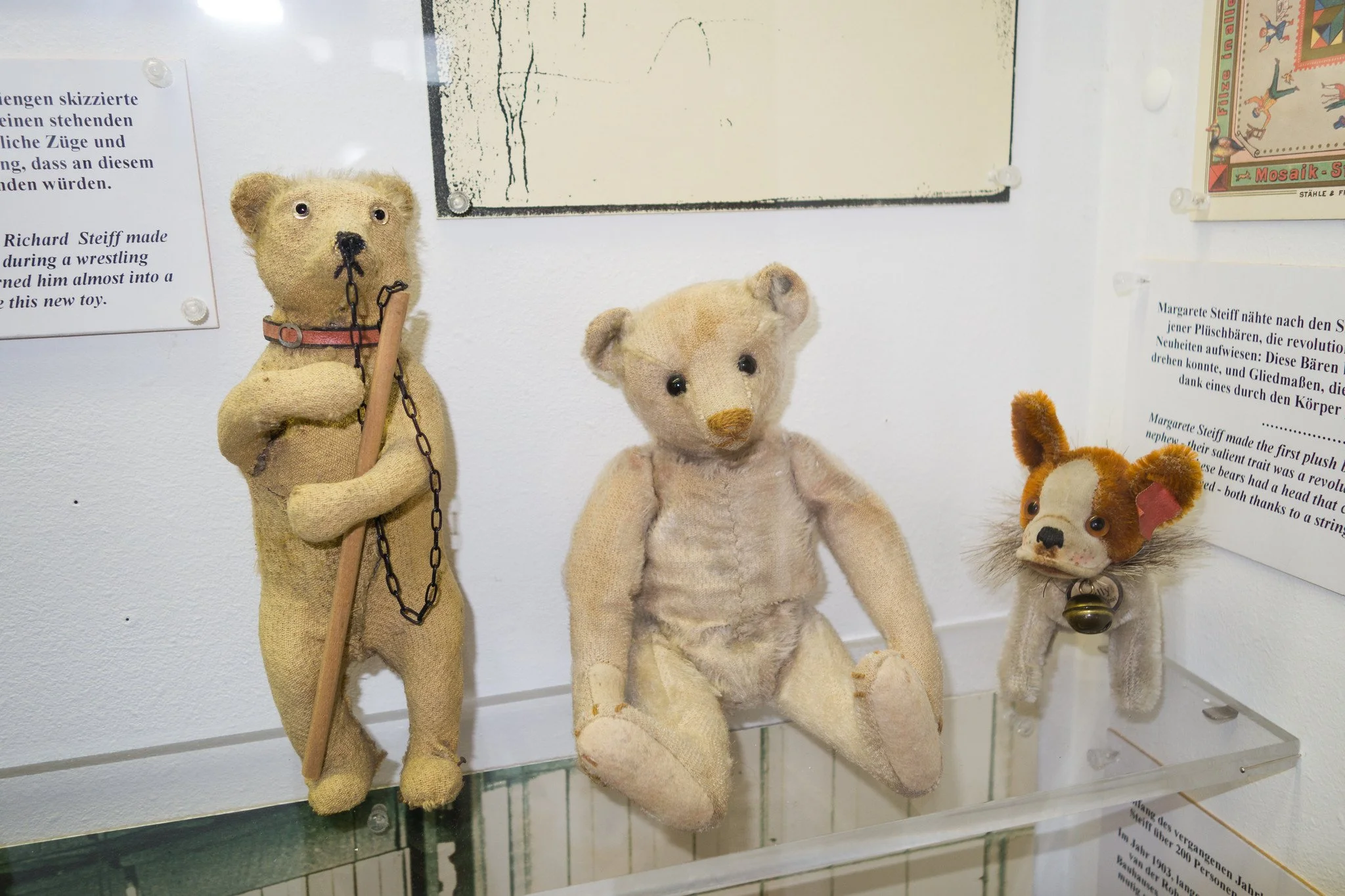
Vintage stuffed animals on display at the Toy Museum | source
The Munich Toy Museum, or Spielzeugmuseum, is another convenient place to stop by while you’re in Old Town Munich.
Kids, and kids-at-heart, can wander the four floors of this cute museum to look at the many ways that kids have played since the mid-1800s.
You’ll find everything from wind-up tin toy soldiers to a historical collection of Barbies here, and kids will love seeing how their favorite toys have changed over the years.
There’s a free audioguide that you can download onto your phone to listen to while you explore the museum, and it has an English option.
Getting to the Toy Museum is very easy, as it is just a few steps from the Glockenspiel on the Marienplatz, making it an easy add-on after you’ve taken in the Glockenspiel show.
Dive into centuries of history at the Bavarian National Museum.
It’s surprising to think that the country of Germany as we understand it today is only about 150 years old! Before unification in 1871, it was a group of allied states, including Saxony, Westphalia, Hanover, Prussia, and Bavaria.
Even today, post-unification, many of these areas, including Bavaria, retain their own cultural practices, accents, and food.
You can learn about Bavarian culture, history, and art in the beautifully done Bavarian National Museum.
There is also a wide collection of European art and sculpture for a more robust understanding of the larger cultural changes in this part of the world, starting with the Romans.
Even better, kids 18 and under get in free every day.
Burn off some energy at the Munich English Garden.
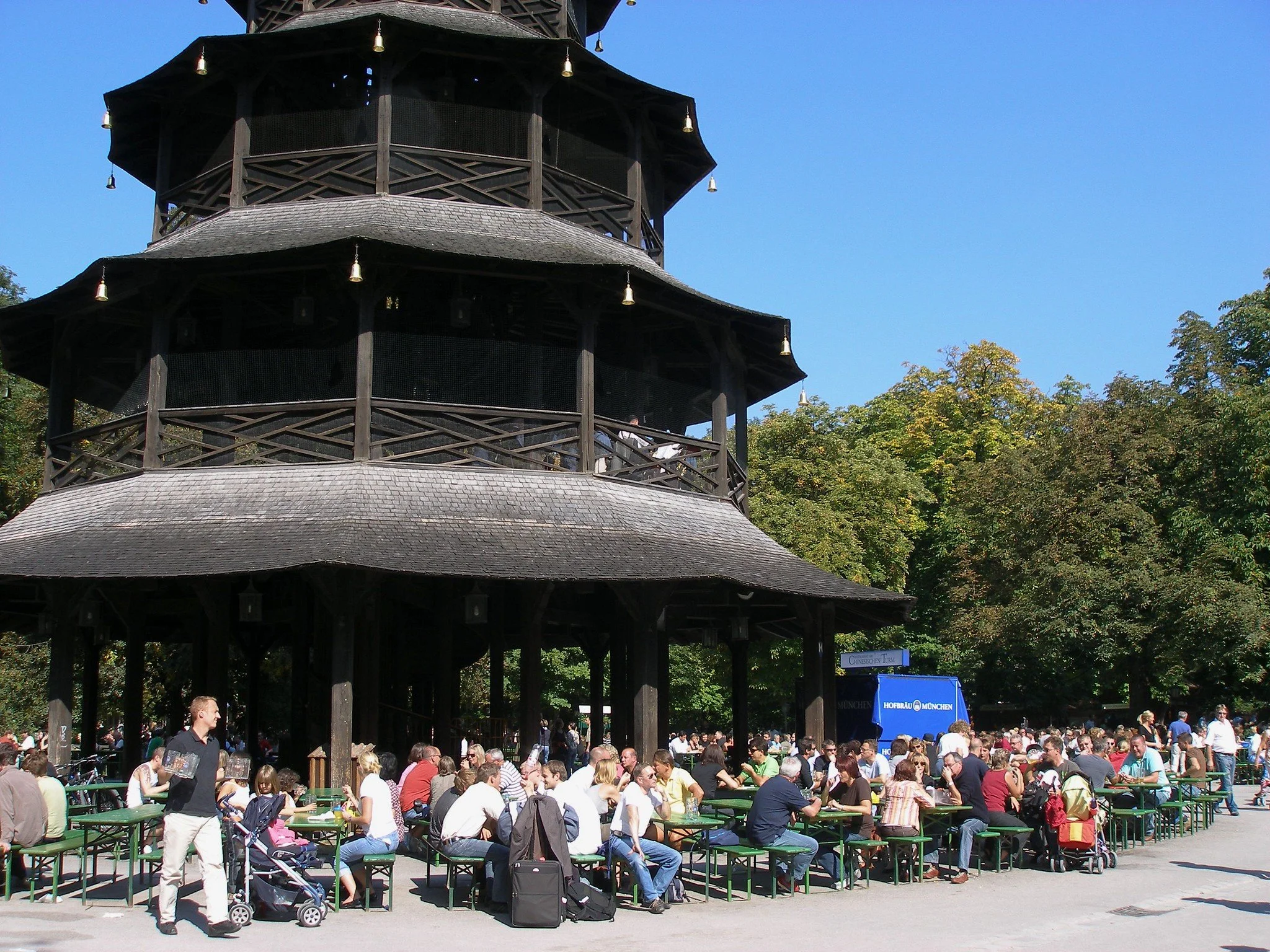
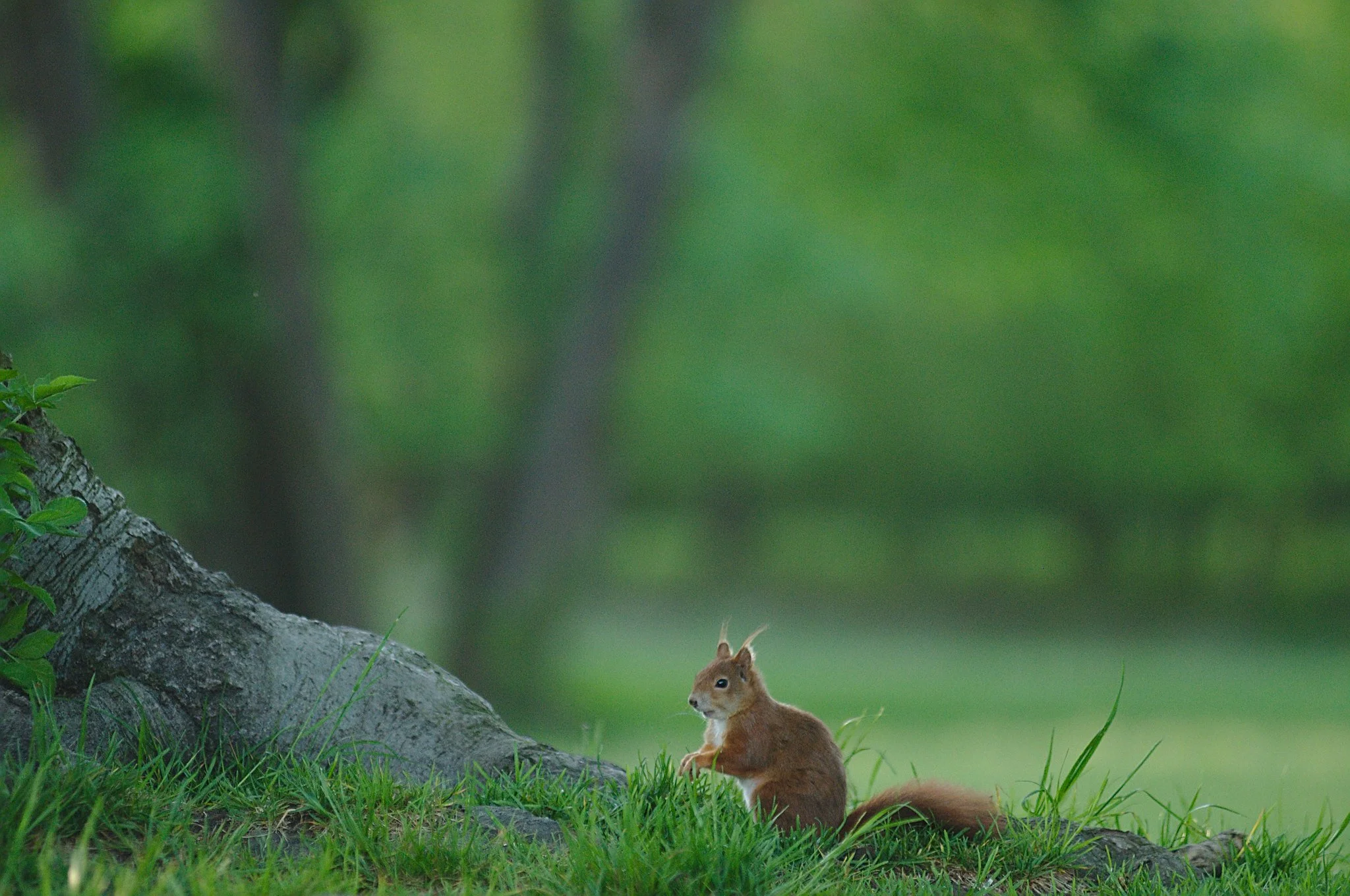
Do not miss an opportunity to enjoy this incredible green space in the middle of the city on a beautiful day. Half of Munich will also be there enjoying it with you!
This long, skinny public garden has its southern end about a block from the Residenz, so strongly consider using it for a quick picnic area and lunch break.
If you’re looking for a delicious snack to have while you’re relaxing in the garden, grab some freshly made hand rolls, pretzels, and pastries at the Baeckerei Wimmer on Wagmüllerstrasse, just a block off of the southern end of the garden.
Another fun thing to do in the English Garden (or Englischer Garten in German) is to watch the surfers take on the artificial waves on the Eisbachwelle. You can find this on the southern end of the garden very close to Prinzregentenstrasse.
Use the Hop on Hop Off Bus Tour of Munich.
Don’t wear out your kids just getting from one place to the next! Instead, use the Hop on-Hop off Bus Tour of Munich to make that transit time fun and engaging.
I am a big fan of this style of tour when we’re traveling in Europe with our kids for a couple of reasons:
It’s easy to see the highlights in a city since the tour takes you right to them,
It gives your kids some downtime from walking (and there’s always a TON of walking when visiting Europe), and
It allows you to sneak in some extra learning from the live or recorded audio tour that plays while you’re traveling.
The bus tour in Munich takes you right up the entrance of many of the recommended sites above, so you’ll spend more time sightseeing and less time worrying about how to get your kids around the city.
Best Hotel for Kids in Munich
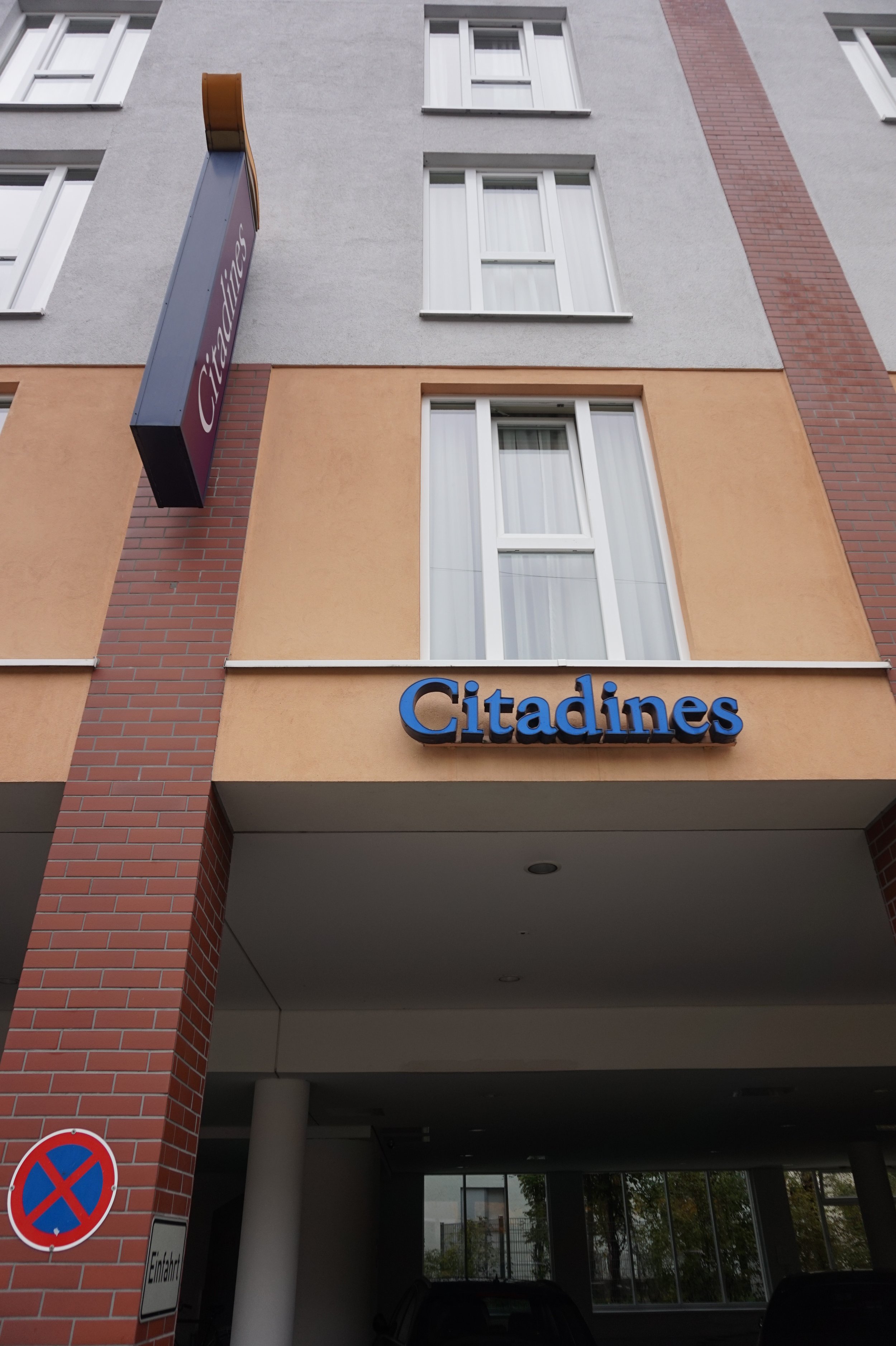
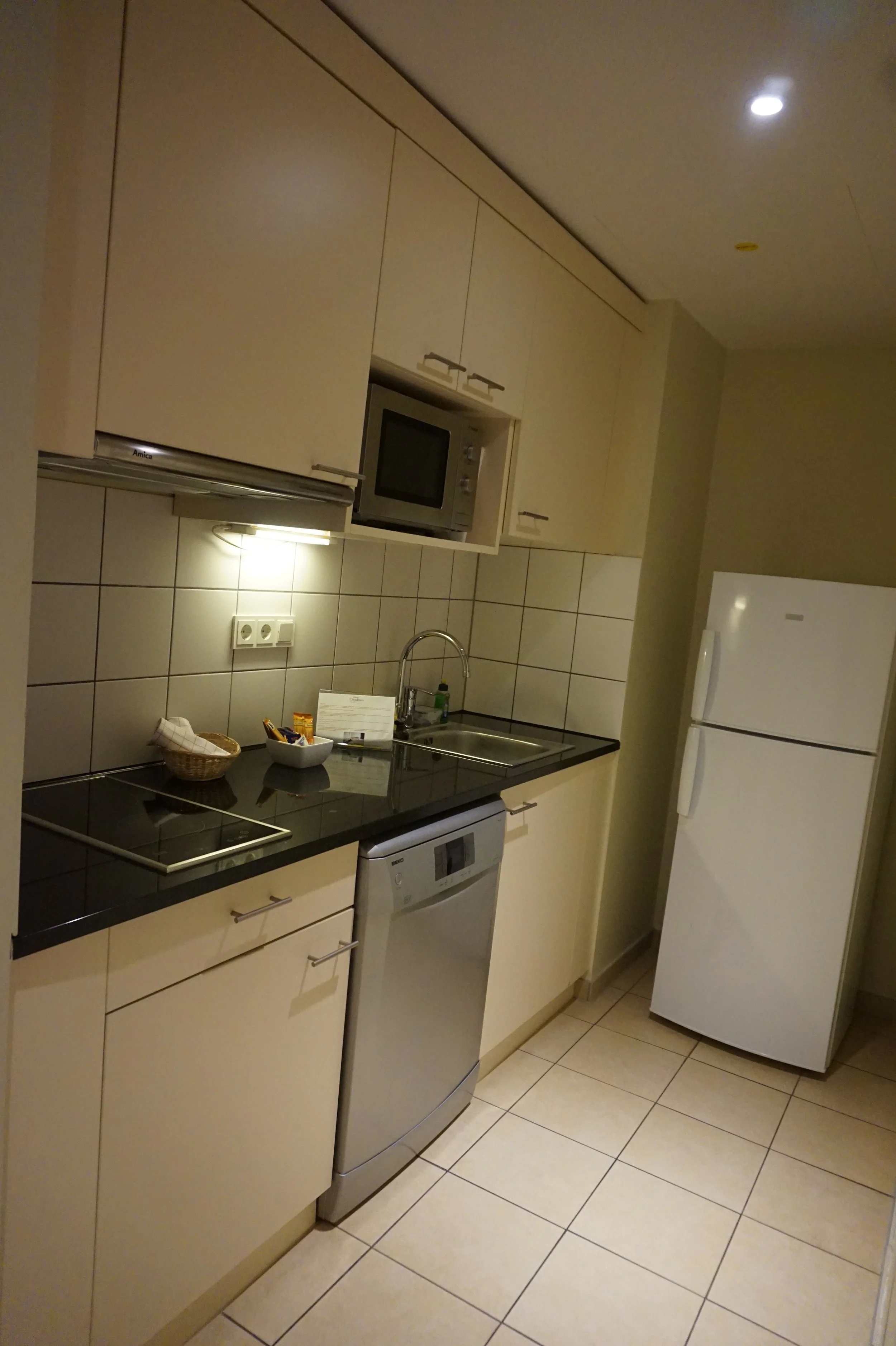
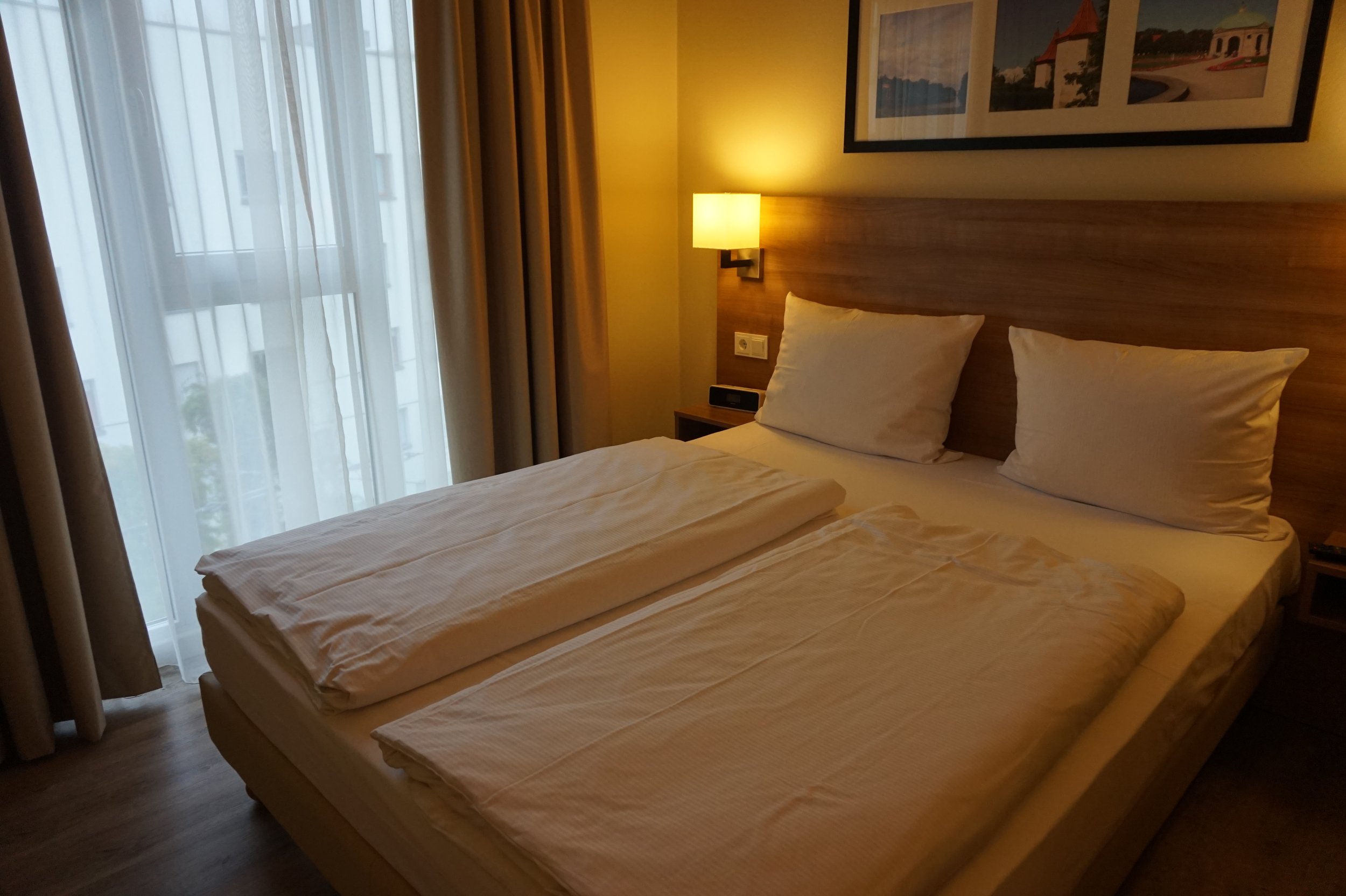
Finding a hotel for your family in Europe is not the same thing as finding a hotel for your family in the U.S.
It is so much harder!
European hotel rooms tend to be very small, and many come with just one bed, which is a departure from the standard double-double or double-queen found in most hotels in the United States.
If you are able to find a second bed for your kids, it’s usually in the form of a rollaway bed, which isn’t the most comfortable, even for little kids.
So, when I find a full sized hotel room in Europe that also has more than one bed, a kitchenette, and a distinct living space, I can’t contain my happiness.
The Citadines Arnulfpark Munich provides just that, and it’s my top pick for where to stay with kids in Munich because of it.
The hotel is also right next to Marsstrasse tram stop on tram line (light rail) route 16. All you need to do is take the tram 6 short stops to Karlsplatz, getting off at the Karlstor (gate).
Walk about 2 blocks on the pedestrian only street and you’re at the Marienplatz!
NOTE: If you’re coming to the Citadines Arnulfpark Munich directly from the airport, take the U-bahn line S8 (yellow) to the Hauptbahnhof. Then take the tram line 16 to Marsstrasse, where the hotel will be to your left as you exit the tram.
Just watch for traffic as you’ll have to cross a 2 lane road with cars headed towards the city center to get to the hotel. There is a protected pedestrian crosswalk to help you.
What else to know before visiting Munich
Everyone we met was very friendly.
You never know what you're going to get in the way of help in a big city. I've been snubbed in some cities, while other places have locals who are happy to help.
Munich, I'm glad to report, falls into the latter category.
I’ll also note that I have traveled all over Germany, and none of the other big cities, including Hamburg and Berlin, were as welcoming as Munich.
From the front desk clerk at our hotel to the lady who served me my first taste of wurst and bretzel, we continually found people who welcomed us to their city and did what they could to make our visit better.
The city stays clean.
There are a lot of people in big cities, and, with large groups of people in a small area, trash piles up quickly.
Not so in Munich.
At least in the areas that we visited (Old Town and Maximilianstrasse), the streets were free of trash.
Throughout our visit to Munich, my family and I remarked at the difference between other large European cities and Munich. I don't know what their secret is, but it's working.
Several areas are pedestrian-only.
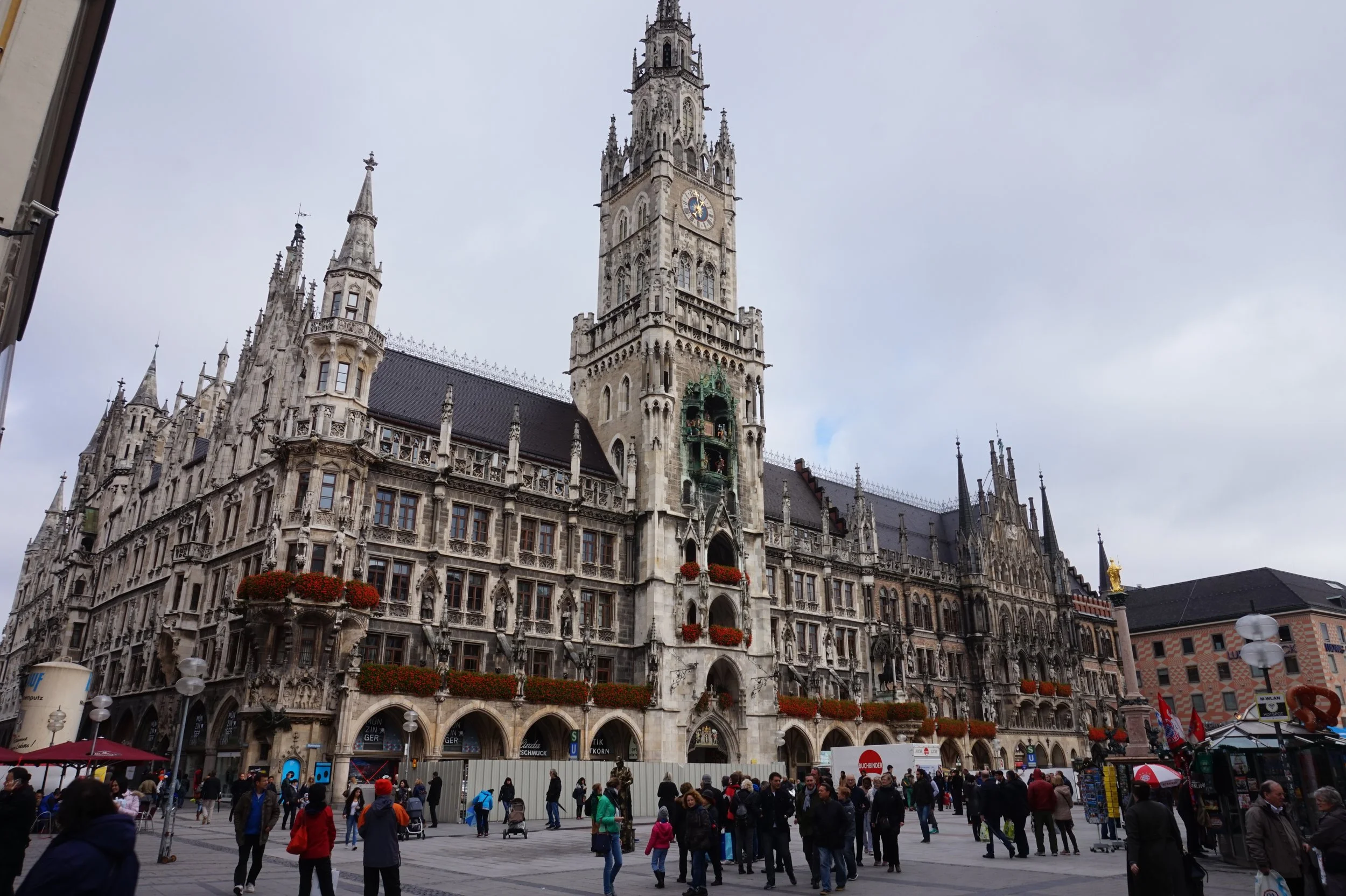
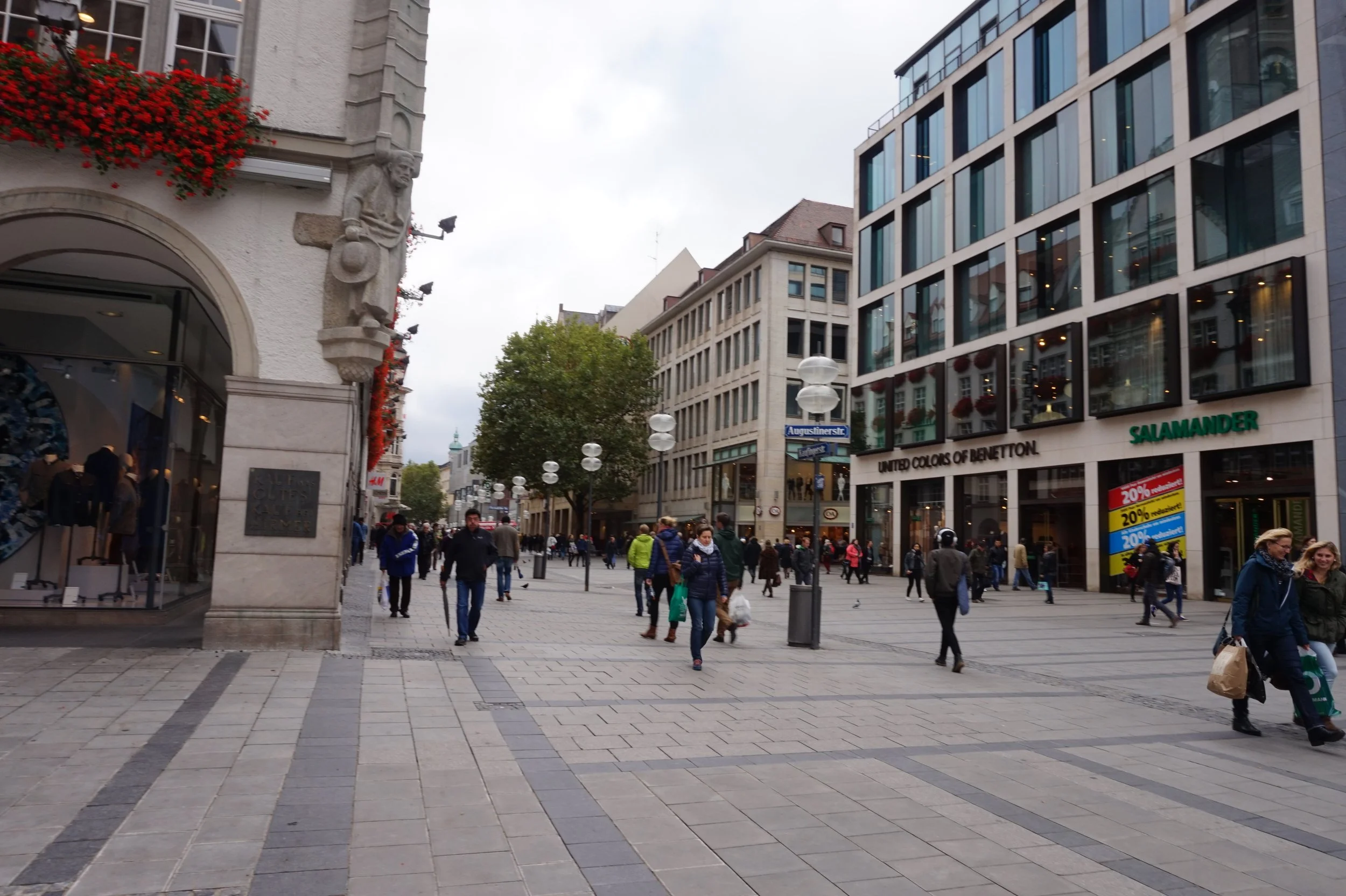
Back when Munich was chosen to host the 1979 Olympics, city officials decided to turn Kaufingerstrasse into a pedestrian-only zone, and business owners panicked because they thought they were going to lose business.
In reality, their businesses skyrocketed as people flooded into the car-free areas to shop and sightsee, and, today, more streets in the area are petitioning to be pedestrian-only as well.
The area around the Glockenspiel is filled with tourists, but no cars!
Along this pedestrian area are hundreds of shops, the famed Glockenspiel, and Michaelskirche (where Ludwig II is buried).
Munich is, in general, very pedestrian friendly, so lace up those walking shoes and pound some pavement.
The city’s architecture is not as old as it looks.
As I mentioned above, Munich took a beating during World War II, and the city was nearly unrecognizable by 1945.
When the war ended, Münchners had two options: take the easy way and bulldoze the entire place and start over again, or do the more difficult thing, and try to salvage what they could.
They went the second route, and, because of their persistence, 21st century travelers can still see what those historic buildings looked like before the bombings.
Instead of creating new architecture, the city rebuilt the old buildings as close to the originals as they could.
I've read about other travel bloggers' disdain for the city's architecture because of this, but I applaud Munich's decision to do so.
After the war was over, and they were trying to rebuilt their homes and churches and businesses, they went the extra mile to make their city look like their city again--I cannot find fault with a city reeling from that experience as they sought comfort in what they'd once known.